Many small factories run on spreadsheets, paper job cards and a basic accounting package. At first, that works. Then orders grow, stock goes missing, deadlines slip and owners lose sight of costs. The right ERP for small manufacturers brings all of this into one simple system. In this post, we explain the big advantages ERP gives small firms and what it should cover. We also share how to choose one that fits your budget.
Built for Indian Small-Scale Industries
We designed eresource as a web-based ERP for Indian small-scale industries. Today, many small and medium manufacturers use it, along with construction companies.
In fact, it keeps track of everything, from major projects to everyday client requests. For a wider look at why smaller firms choose it, read about our ERP system for small businesses.
Project Management Inside Your ERP
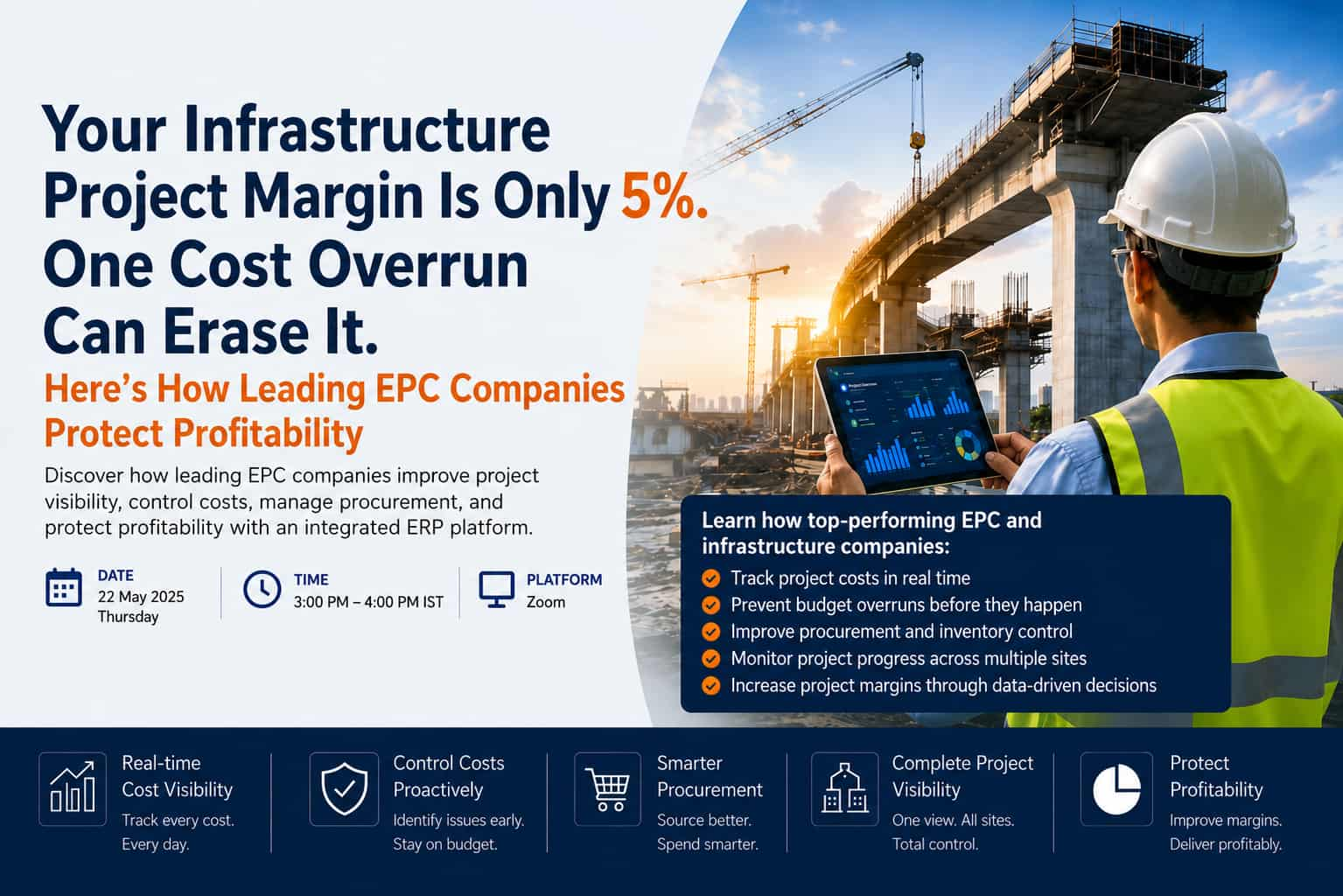
Small companies also find real value in project tools within their ERP. For example, teams plan resources and schedules in the same system that runs orders and stock.
As a result, a project manager sees materials, labour and costs together. So delays and budget overruns show up early, while there is still time to act.
Benefits That Go Beyond Cost Savings
ERP touches every part of running a business. Its benefits go well beyond lower costs:
- Better customer service: Staff answer queries and solve issues faster. See how ERP improves customer service.
- Linked locations: Several factories or warehouses share one set of data. Learn more about multi-plant ERP.
- Standard processes: Every site follows the same proven steps, so work moves faster.
For more, read the advantages of web-based ERP.
Faster Orders and Stronger Partner Links
eresource also streamlines order fulfilment, from sales order to dispatch and invoice. Moreover, it can connect with the systems of your partners and suppliers through IoT and open APIs.
In addition, it keeps the records you need for audits and government rules, such as labour and environmental laws. Read more about collaboration with suppliers and customers.
What ERP for Small Manufacturers Should Cover
A good system handles both financial and non-financial work. Look for these modules:
- Production: The production module plans and schedules jobs on the shop floor.
- Stock: The store module tracks raw materials, work in progress and finished goods.
- Purchase: The purchase module manages suppliers, quotes and orders.
- Quality: Total quality management records checks at every stage.
- People: The HRMS solution handles payroll, training and attendance.
- Accounts: The integrated finance module ties every transaction to the books.
Live Visibility for Owners
First, eresource automates many manual tasks. As a result, production schedules become easier to manage, and stock figures stay accurate.
You can also measure business performance as a whole, not one department at a time. This gives owners real-time visibility into every process. In turn, they make better decisions and can compete in larger markets, including exports.
Results You Can Measure With ERP for Small Manufacturers
Results differ from firm to firm. Still, small manufacturers often track gains such as lower stock, less warehouse space and a faster month-end close. Many also handle more sales without adding staff.
To see real results, read how a leading transportation firm counts on eresource ERP. You can also learn how SMEs get a quicker ERP ROI.
How to Choose ERP for Small Manufacturers
Follow these steps to find the right fit:
- List your pain points: Note where you lose time, stock or money today.
- Start with core modules: A modular ERP lets you add more later.
- Check industry fit: Pick a vendor with a ready edition for your sector.
- Ask about the timeline: See a typical ERP implementation timeline.
- Compare total cost: Include licences, setup, training and support. Read our guide to ERP software price.
- See it with your own data: Ask for a demo built around your real processes.
Get the Right ERP for Small Manufacturers
In short, eresource gives small firms the tools of a large company at a price that fits a small budget. To find out where ERP can help most, start with a free ERP assessment or book a free ERP demo.
Also Read – ERP Software for Automotive Industry
FAQs About ERP for Small Manufacturers
Do small manufacturers really need ERP?
Yes, once orders, stock and staff grow beyond what spreadsheets can handle. ERP puts production, stock, purchase, quality, payroll and accounts in one system. So owners see live figures instead of chasing reports.
What modules should ERP for small manufacturers include?
Look for production, stock, purchase, quality, HR and finance modules. You can start with the core modules and add more as you grow. A modular ERP keeps the first cost low.
Is eresource ERP affordable for small companies?
Yes. We designed eresource with Indian small-scale industries in mind. Because it runs on the web, you need less hardware and fewer IT staff. You also pay only for the modules you use.
How long does it take a small manufacturer to go live?
Our 3X faster implementation method aims for go-live in under four weeks. The exact time depends on your modules, data and number of sites.
Can eresource ERP handle more than one factory?
Yes. Several factories or warehouses can share one set of data and follow the same standard processes. Managers can then compare costs and output across sites.