Small and medium enterprises (SMEs) have driven much of the growth of ERP in India. Yet many firms now find that their older ERP no longer delivers what it promised. Business runs on the internet today, and rigid systems struggle to keep up. A web-based ERP for SMEs solves this by connecting staff, customers and suppliers through any browser. In this post, we explain why it fits growing firms so well. We also share what to look for when you choose one.
Why Older ERP Systems Stop Delivering
Lately, many companies have realised that their ERP no longer gives the benefits they expected. The reason is simple. Business models keep changing as firms use the internet to buy, sell and work together.
At the same time, few companies plan for the full life of their ERP. In fact, the benefits can keep growing long after go-live, through new modules, upgrades and training. So plan for that journey from day one. See the latest ERP trends shaping the years ahead.
Why ERP and eBusiness Belong Together
ERP and eBusiness are steadily merging. For eBusiness to work well, it needs a web-based ERP underneath it. Only then can a firm take full advantage of business processes that run online.
In turn, an effective ERP becomes a key part of the company’s success. Learn how ERP and eBusiness together raise operational efficiency with ERP. You can also read about the competitive advantage of ERP.
Online Collaboration With Customers and Suppliers
Indeed, no industry has escaped the changes the internet has brought. Every day, smooth online teamwork between companies, customers and suppliers becomes more real.
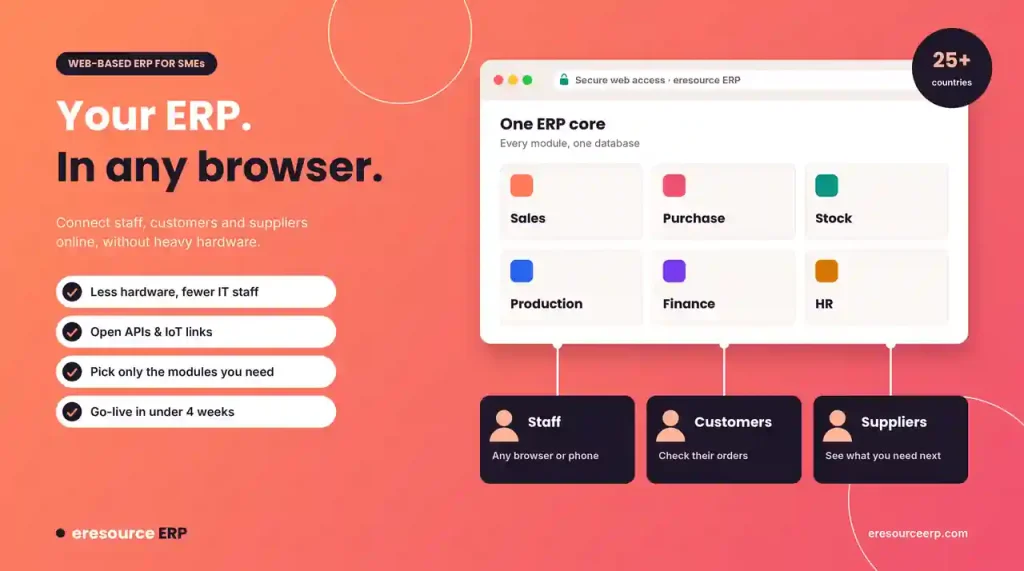
As a result, ERP sits at the centre of this shift. For example, customers can check orders, and suppliers can see what you need next. Read more about collaboration with suppliers and customers.
Why Web-Based ERP for SMEs Makes Sense
SMEs gain the most from ERP, and they are the main force behind its growth in India. However, the early ERP suites from large global vendors were often rigid. Firms had to customise them heavily, which drove costs up.
Fortunately, a web-based ERP for SMEs avoids these problems. Staff use it through a browser, so you need less hardware and fewer IT staff. You can also run cloud ERP on a monthly plan. For a closer look at costs, read our guide to ERP software price.
From Best-of-Breed to Best-for-Business
In the past, many firms bought a separate best-of-breed tool for each task. Now, more customers choose a best-for-business approach instead.
In other words, they prefer to extend their core ERP with tools for planning, business intelligence and knowledge management. This keeps all data in one place. See why an integrated ERP system beats separate tools.
Key Features of Web-Based ERP for SMEs
Overall, eresource gives SMEs a wide set of tools and services:
- Broad coverage: Modules for sales, purchase, stock, production, finance and HR.
- Industry editions: Ready industry-specific ERP for many sectors.
- Open architecture: Links to other systems through IoT and open APIs.
- Extra modules: CRM, supply chain and business intelligence.
- Fast rollout: The 3X faster implementation method aims for go-live in under four weeks.
- Ongoing support: Training, documentation, product updates and support for customers in more than 25 countries.
Standard Modules for Unique Processes
Of course, every company follows some standard industry practices and some unique ones. So a good ERP must handle both.
eresource combines standard modules with specific features for the processes that make your firm different. Moreover, you choose only the modules you need. Learn more about this modular ERP approach.
How to Choose Web-Based ERP for SMEs
Follow these steps to find the right fit:
- Check access: Make sure staff can work from any browser and from a phone.
- Look for your industry: A ready edition saves time and custom work.
- Check integration: The system should connect with your other tools.
- Plan the life cycle: Ask how upgrades and new modules will work.
- Compare total cost: Include licences, setup, training and support.
- See it working: Ask for a demo built around your own processes.
Get Web-Based ERP for SMEs From eresource
eresource has helped SMEs grow with web-based ERP since 2006. To see how it fits your business, book a free ERP demo.
Also Read – ERP for Solar Industry
FAQs About Web-Based ERP for SMEs
Why does web-based ERP suit SMEs?
Staff use web-based ERP through a browser, so you need less hardware and fewer IT staff. You can also start small, add modules as you grow and work with customers and suppliers online.
How does web-based ERP differ from older ERP systems?
Older ERP suites often ran on local servers and needed heavy customization. Web-based ERP runs online, links easily with other tools and adapts faster as your business changes.
What does best-for-business mean in ERP?
It means extending one core ERP instead of buying a separate tool for each task. Firms add tools for planning, business intelligence and knowledge management. This keeps all your data in one place.
Can web-based ERP connect with our other systems?
Yes. eresource connects with other tools and machines through IoT and open APIs.
How long does it take an SME to go live?
Our 3X faster implementation method aims for go-live in under four weeks. The exact time depends on your modules, data and number of sites.