


Operational Efficiency With ERP and eBusiness: How to Connect Your Whole Value Chain
Some companies still ask why they need a web-based ERP at all. The answer is simple. A well-run, web-enabled ERP makes the entire value chain stronger. When you connect it with eBusiness, operational efficiency with ERP reaches far beyond your own walls. It extends to your suppliers, partners and customers.
In this post, we explain how ERP and eBusiness work together. We also show the gains you can expect and the steps to get there.
What eBusiness Changes
Traditional businesses spend a lot of time and effort sharing information and handling payments. Staff send documents back and forth, chase approvals and match payments by hand. eBusiness does the same work over digital networks instead.
As a result, the savings in time, effort and errors are dramatic. For example, a company can accept card and online payments over the internet. Digital records also cut the time each transaction takes. At the same time, the business process behind each transaction runs on its own.
Why ERP Is the Backbone of eBusiness
Many companies now see web-enabled ERP as their most strategic platform. That is because it gives eBusiness a solid foundation and a single information backbone.
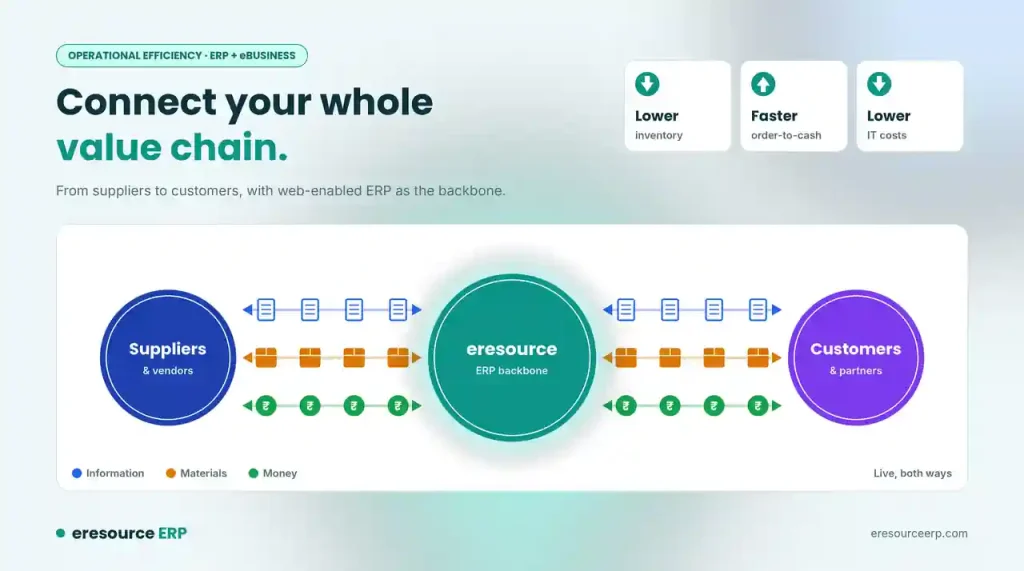
When you add eBusiness features to ERP, the two strengthen each other. ERP keeps the data clean and consistent. Meanwhile, eBusiness shares that data with partners in real time, which creates strong B2B links. Over time, companies that do this well can even help their suppliers join the same connected system.
Key Gains From Operational Efficiency With ERP
A fully integrated, web-based ERP like eresource captures accurate, consistent and timely data. In turn, that data supports smarter business decisions. The main gains include:
- Lower inventory: You hold only the stock that plans and orders need.
- Leaner staffing: Less manual work means fewer people tied up in admin.
- Better order and cash management: Orders, invoices and payments flow without delays.
- Faster customer response: Staff answer questions with live data.
- Lower IT costs: One system replaces many separate tools.
- More value-added work: Teams spend time on growth instead of paperwork.
Connect Your Supply Chain
Successful companies keep improving how they serve their clients. This steady effort also lifts their profit margins. To get there, they link the whole supply chain.
In a connected chain, information, materials and money move up and down quickly and without glitches. For instance, the purchase module raises orders from live stock and sales data. Suppliers then deliver against clear schedules, so nobody waits for missing parts.
Keep Customers Loyal With Better Service
Customer loyalty is no longer stable. Information is freely available online, so buyers can switch to a better offer without warning. Therefore, companies must learn what each customer wants.
To do this, collect and study customer data, such as preferences and buying patterns. A good CRM system makes this easy. Because it shares data with ERP, sales teams see orders, stock and payments in one place.
Efficiency Comes First
Happy customers and personal service help, but they are not enough on their own. If your operations run poorly, good service cannot save your margins.
So, to improve efficiency and connect your information, you need an effective web-enabled ERP. Read how to select the right ERP system for long-term benefit. With a well-run system like eresource, productivity can rise sharply.
How to Improve Operational Efficiency With ERP
Follow these steps to get the most from your system:
- Map your processes: Draw each process from first enquiry to final payment.
- Use one system: Move all core data into a single ERP database.
- Connect partners online: Share orders, invoices and delivery updates with suppliers and customers.
- Automate routine work: Let the system handle approvals, reminders and payment matching.
- Track the results: Watch key numbers on live dashboards. Learn more about ERP with business intelligence.
Start Building Operational Efficiency With ERP
eresource has helped businesses connect their value chains since 2006. To see how it fits your company, book a free demo. You can also take the free ERP assessment to find gaps in your current setup.
Also Read – ERP for Trading Company
FAQs About Operational Efficiency With ERP
How does ERP improve operational efficiency?
ERP puts all core data in one system, so teams stop typing the same data twice. As a result, orders, stock and payments move faster and with fewer errors.
What is the link between ERP and eBusiness?
ERP keeps business data clean and consistent. Then eBusiness shares that data with suppliers, partners and customers over the internet.
What gains can a company expect from ERP?
Common gains include lower inventory, leaner staffing, better order and cash management, faster customer response and lower IT costs.
Why does a business need CRM along with ERP?
Customer loyalty changes quickly. A CRM helps you track preferences and buying patterns. Because it shares data with ERP, sales teams see orders and payments too.
How can we start improving efficiency with eresource?
Start with a free demo or the free ERP assessment. Then our team maps your processes and plans the rollout.


