Industry-Specific ERP System: Why Your Business Needs ERP Built for Its Industry
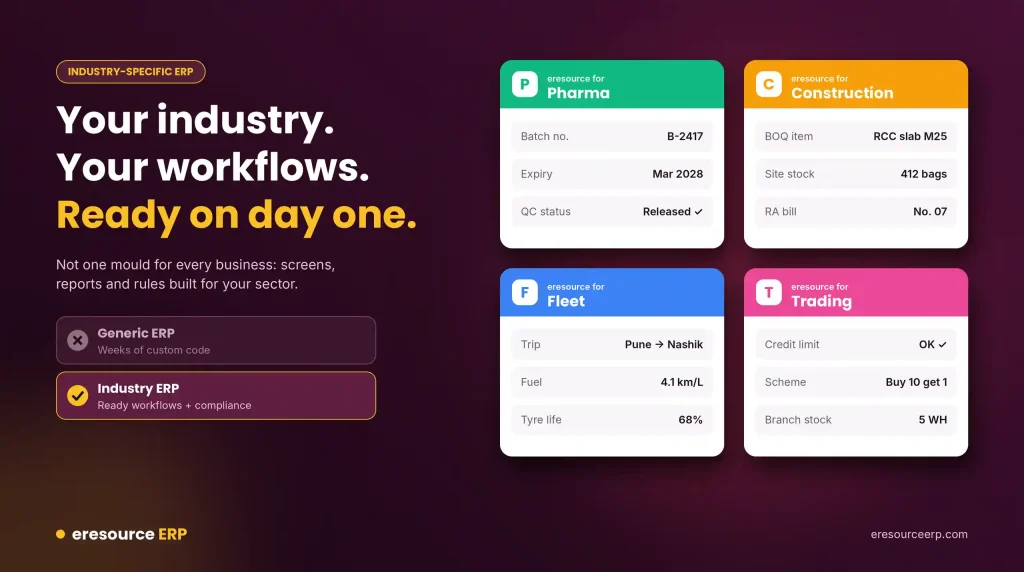
Every industry works in its own way. A pharma plant tracks batches and expiry dates. Builders track BOQs and site stock, while transporters track trips and fuel. Yet a generic system forces all of them into one mould. An industry-specific ERP, on the other hand, comes with the processes, reports and rules of your sector already in place.
In this post, we explain what that means and how it differs from a generic system. We also show which industries eresource serves and how to choose the right system.
What Is an Industry-Specific ERP?
An industry-specific ERP serves one vertical market, such as manufacturing, construction or trading. It follows the standards and best practices of that industry from day one.
Some vendors go even further and serve narrow niches within an industry. For example, a plastic moulder and an auto parts maker are both manufacturers. Yet each needs its own screens, reports and workflows. So eresource builds products for whole industries and for the niches inside them.
Industry-Specific ERP vs Generic ERP
A generic ERP can work for almost any business, but only after heavy changes. Here is how the two compare:
- Setup: Generic systems need weeks of custom work. In contrast, an industry ERP ships with ready workflows.
- Cost: Custom code adds cost and delay. So a ready fit usually costs less over time.
- Compliance: Industry rules and tax needs come built in, instead of as add-ons.
- Reports: You get the reports and dashboards your sector actually uses.
- Upgrades: Heavy custom code can make upgrades harder. Meanwhile, the vendor maintains industry features for you.
In short, a ready fit helps you go live faster and adapt sooner when the market shifts.
Why Industry-Specific ERP Matters for SMEs
Small and mid-sized firms face tough competition and constant pressure on prices. They cannot afford long projects or costly custom code. Therefore, an integrated ERP that already fits their industry gives them a real edge.
With the right system, SMEs can grow faster, cut costs and keep customers longer. Read more about the benefits of ERP for SMEs.
Industries eresource Serves
eresource offers industry editions on one shared platform. Each one comes with its own screens, reports and workflows:
- Manufacturing: Production planning, bills of materials and shop-floor control.
- Process manufacturing: Formulas, batches and quality checks.
- Pharmaceuticals: Batch tracking, expiry control and quality records.
- Chemicals: Recipes, batch costing and stock control.
- Automotive: Parts, suppliers and production schedules.
- Construction and infrastructure: BOQ, project costing and subcontractor billing.
- Fleet management: Trips, fuel, tyres and vehicle maintenance.
- Trading: Multi-branch stock, credit control and schemes.
To see how eresource grew from manufacturing into all these sectors, read our story on ERP for different industries.
How eresource Builds Best Practices Into ERP
eresource builds the best practices of each industry into its products. As a result, firms can simplify their work and react fast when the market shifts.
All editions run on one platform with 37 modules and six industry clouds. So you can start with the modules you need and add more later. In addition, no-code tools let your team adjust forms and workflows without a developer. The 3X faster implementation method also aims for go-live in under four weeks.
How to Choose an Industry-Specific ERP
Before you decide, check each vendor against these points:
- Proven fit: Does the vendor already serve clients in your industry?
- Ready workflows: Do the screens and reports match how you work today?
- Compliance: Does it handle GST, e-invoicing and other local rules?
- Flexibility: Can your team make changes without writing code?
- Room to grow: Can you add modules, users and branches easily?
- Support: Will the vendor guide you through setup, data transfer and training?
See eresource in Action for Your Industry
eresource has built ERP for specific industries since 2006. To see the edition for your sector, book a free demo. You can also take the free ERP assessment to find gaps in your current setup.
Also Read – ERP for Transport Industry
FAQs About Industry-Specific ERP
What is an industry-specific ERP?
An industry-specific ERP serves one industry, such as manufacturing, construction or trading. It comes with that industry's processes, reports and rules already in place.
How is industry-specific ERP different from generic ERP?
A generic ERP needs heavy custom work to fit your business. In contrast, an industry ERP ships with ready workflows. So setup is faster and cheaper.
Is industry-specific ERP more expensive?
Usually not. It needs less custom work and goes live faster. So it often costs less over time.
Which industries does eresource serve?
eresource serves manufacturing, process manufacturing, pharma, chemicals, automotive, construction, infrastructure, fleet management and trading.
Can we change eresource to fit our own process?
Yes. With eresource, no-code tools let your team change forms, screens and workflows without a developer.