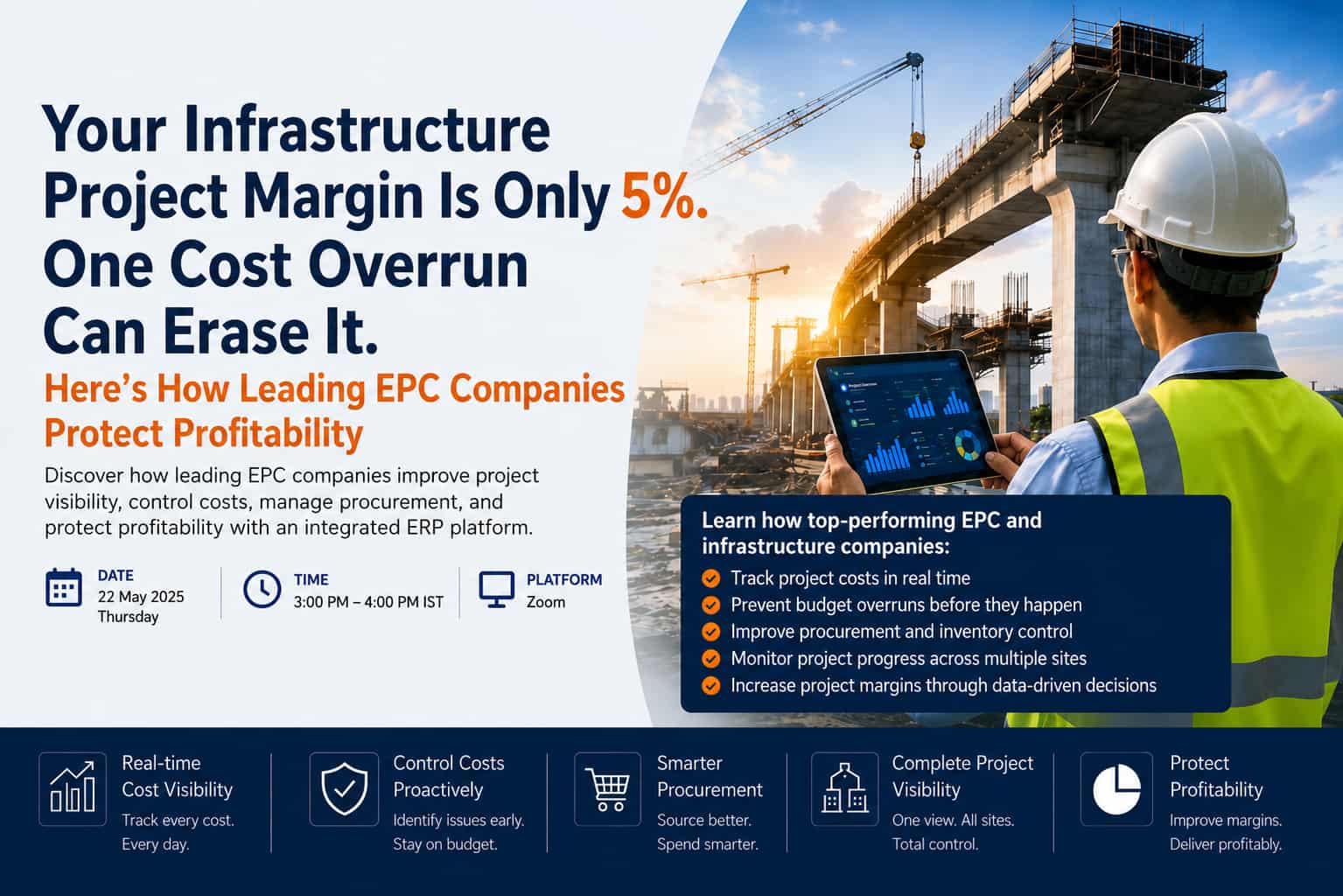
How eresource ERP Creates Transparency, Accountability, and Better Business Control
In today’s competitive business environment, leaders need more than reports and spreadsheets to manage operations effectively. They need accurate information, real-time visibility, and clear accountability across departments. When business data is scattered across multiple systems, decision-making slows, communication gaps widen, and operational inefficiencies become harder to identify.
An integrated ERP system addresses these challenges by connecting business functions into a single source of truth. The eresource ERP platform helps organisations improve transparency, strengthen accountability, and establish greater control over day-to-day operations.
Why Transparency Matters in Modern Businesses
As organisations grow, managing information across departments becomes increasingly complex. Finance, procurement, inventory, production, sales, projects, and human resources often operate using separate processes and data sources. This creates silos that limit visibility and make collaboration difficult.
A modern ERP system provides a unified platform where business information is accessible in real time. When teams work from the same data, management gains a clearer understanding of operational performance, project status, inventory levels, financial health, and resource utilization.
This transparency enables faster decision-making and reduces dependency on manual reporting and information gathering.
Read also – ERP and business process improvement
Building Accountability Through Real-Time Information
Accountability improves when responsibilities, workflows, and business activities are clearly visible.
With eresource ERP, every transaction, approval, update, and workflow activity is recorded within the system. This creates a structured environment where employees understand their responsibilities and management can track progress without unnecessary follow-ups.
Instead of relying on disconnected communication channels or manual documentation, organisations can:
-
Monitor task ownership and completion status
-
Track approvals and workflow movements
-
Review department-wise performance metrics
-
Access audit trails for critical business processes
-
Improve compliance and governance standards
When employees have access to the information they need and understand how their work contributes to organizational goals, productivity and accountability naturally improve.
Read also – Customer Portal
Breaking Down Departmental Silos
One of the most common challenges businesses face is poor coordination between departments. Delays often occur because information is stored separately or shared manually.
An integrated ERP platform enables seamless communication between teams by connecting critical business functions. Information entered by one department becomes available to authorised users across the organisation, eliminating duplication and reducing errors.
For example:
-
Procurement teams can access inventory requirements instantly.
-
Finance teams can monitor purchasing and project expenditures in real time.
-
Project managers can track resource utilisation and progress without waiting for manual updates.
-
Senior management can review performance dashboards across multiple business units.
This connected approach helps organisations operate more efficiently and respond faster to changing business requirements.
Read also – ROI of ERP implementation
Improving Decision-Making with Real-Time Visibility
Business leaders often struggle when important decisions are based on outdated information. Delayed reporting can lead to missed opportunities, budget overruns, inventory shortages, and project delays.
eresource ERP provides real-time access to operational and financial data, allowing decision-makers to act with confidence. Managers can monitor key performance indicators, identify potential issues early, and take corrective actions before problems escalate.
Benefits include:
-
Faster management reporting
-
Better financial control
-
Improved project monitoring
-
Enhanced inventory visibility
-
Accurate forecasting and planning
-
Data-driven business decisions
Organisations that leverage real-time insights are better positioned to improve operational performance and maintain a competitive advantage.
Supporting Employee Productivity
An effective ERP system does more than automate processes—it helps employees work smarter.
By reducing manual tasks, repetitive data entry, and unnecessary administrative work, employees can focus on activities that add greater value to the organization. Automated workflows, alerts, approvals, and centralised information improve efficiency across departments.
Employees benefit from:
-
Faster access to information
-
Reduced dependency on manual processes
-
Improved collaboration between teams
-
Clear visibility into assigned responsibilities
-
Better workflow management
As a result, organisations experience improved operational consistency and stronger employee engagement.
Preparing for Successful ERP Adoption
Technology alone does not guarantee success. Organisations must prepare their teams, processes, and leadership structure before implementing an ERP system.
Successful ERP adoption typically requires:
-
Executive sponsorship and leadership commitment
-
Clearly defined business objectives
-
Process standardization
-
Employee training and change management
-
Continuous performance monitoring
When implemented with the right strategy, ERP becomes a long-term foundation for operational excellence and business growth.
Conclusion
Transparency and accountability are essential for sustainable business growth. Organisations that operate with disconnected systems often struggle with visibility, communication, and decision-making.
eresource ERP provides a centralised platform that connects people, processes, and information across the enterprise. By enabling real-time visibility, structured workflows, and integrated business operations, organisations can improve accountability, strengthen collaboration, and make more informed decisions.
For businesses seeking greater operational control and future growth, a well-implemented ERP system can be a valuable strategic asset.