ERP for Construction and Infrastructure Industry: Benefits
Construction and infrastructure companies manage large project networks, multiple sites, teams, materials, and budgets. Therefore, they need fast access to accurate business information.
Daily site updates play an important role in project planning. With real-time information, managers can monitor work progress and make faster decisions.
Why Construction and Infrastructure Companies Need ERP
Construction businesses often manage several projects at different locations. As a result, teams may struggle to share information between head offices, branches, and site offices.
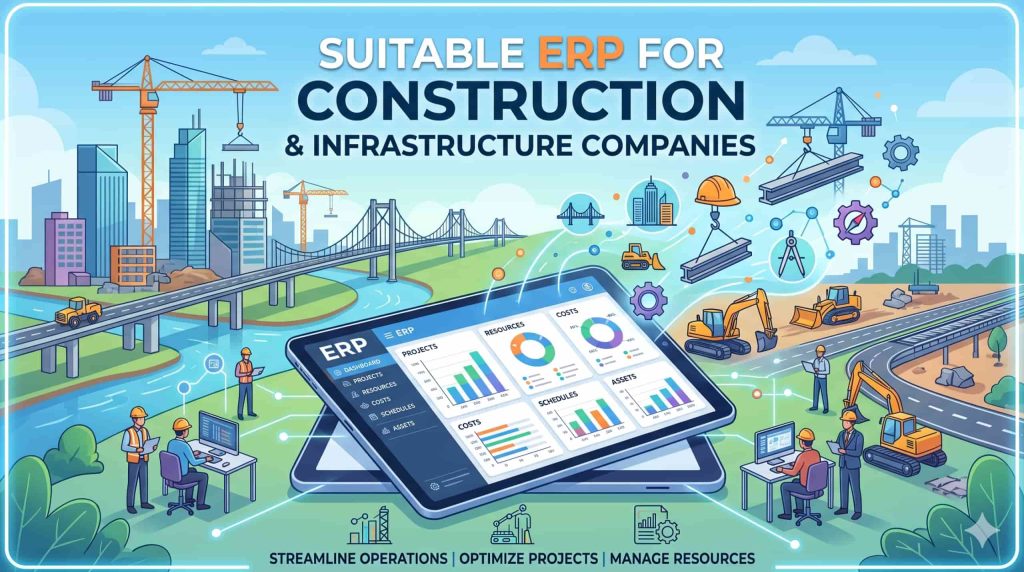
An ERP for Construction and Infrastructure Industry connects these locations through a central system. It gives managers better access to project, finance, purchasing, inventory, and site information.
The eresource Nfra ERP for Construction and infrastructure solution includes modules that connect business operations. It can also collect daily information from project sites.
Furthermore, companies do not need expensive hardware at every site. A computer and a reliable internet connection can provide access to the web-based ERP system.
How eresource Nfra ERP Improves Construction Management
eresource Nfra ERP helps construction and infrastructure companies connect their business operations. It brings project and site information into one platform.
As a result, management teams can view important information without waiting for manual reports.
The system also improves information sharing between departments. Therefore, teams can coordinate purchasing, project work, finance, materials, and other activities more effectively.
Key Benefits of ERP for Construction and Infrastructure Industry
The key benefits of eresource Nfra ERP for construction and infrastructure industry include the following:
1. Connect Offices and Project Sites
ERP software connects offices, branches, departments, and site offices through one platform.
Therefore, employees can share business information without maintaining separate systems at each location.
2. Improve Information Flow
Construction projects involve many departments and teams. An integrated ERP system helps these teams share information through a central platform.
As a result, managers can access the information they need more quickly.
3. Improve Fund Management
Construction projects require close control over budgets, payments, and project costs. ERP software brings financial information together.
Therefore, management can monitor funds and review project-related expenses with better visibility.
4. Get Real-Time Project Information
Managers need current information to control construction projects. An ERP system provides access to project data, reports, and updates through a connected platform.
Moreover, real-time information can help teams identify issues earlier and respond faster.
5. Automate Purchasing Processes
Purchasing plays a major role in construction and infrastructure projects. Teams need materials at the right time and at the right cost.
ERP software can connect purchasing with project requirements and other business processes. As a result, companies can improve purchasing control and reduce manual work.
Improve Construction Project Coordination
Construction companies often manage several project sites at the same time. Each site generates information about materials, costs, work progress, and resources.
Without a connected system, teams may spend more time collecting and checking data.
However, an integrated ERP system keeps project information connected. Therefore, head office teams can coordinate with site offices more efficiently.
Connect Projects With the Head Office
The construction and infrastructure industry depends on strong coordination between project sites and the head office.
The ERP solution from eresource helps connect these operations. It supports better information flow between projects, site offices, branches, and management.
In addition, centralized information helps managers review project performance from a single system.
Improve Project Cost Visibility
Project costs can change as work progresses. Material purchases, labour, equipment, and other expenses can affect the project budget.
Therefore, managers need clear cost information throughout the project.
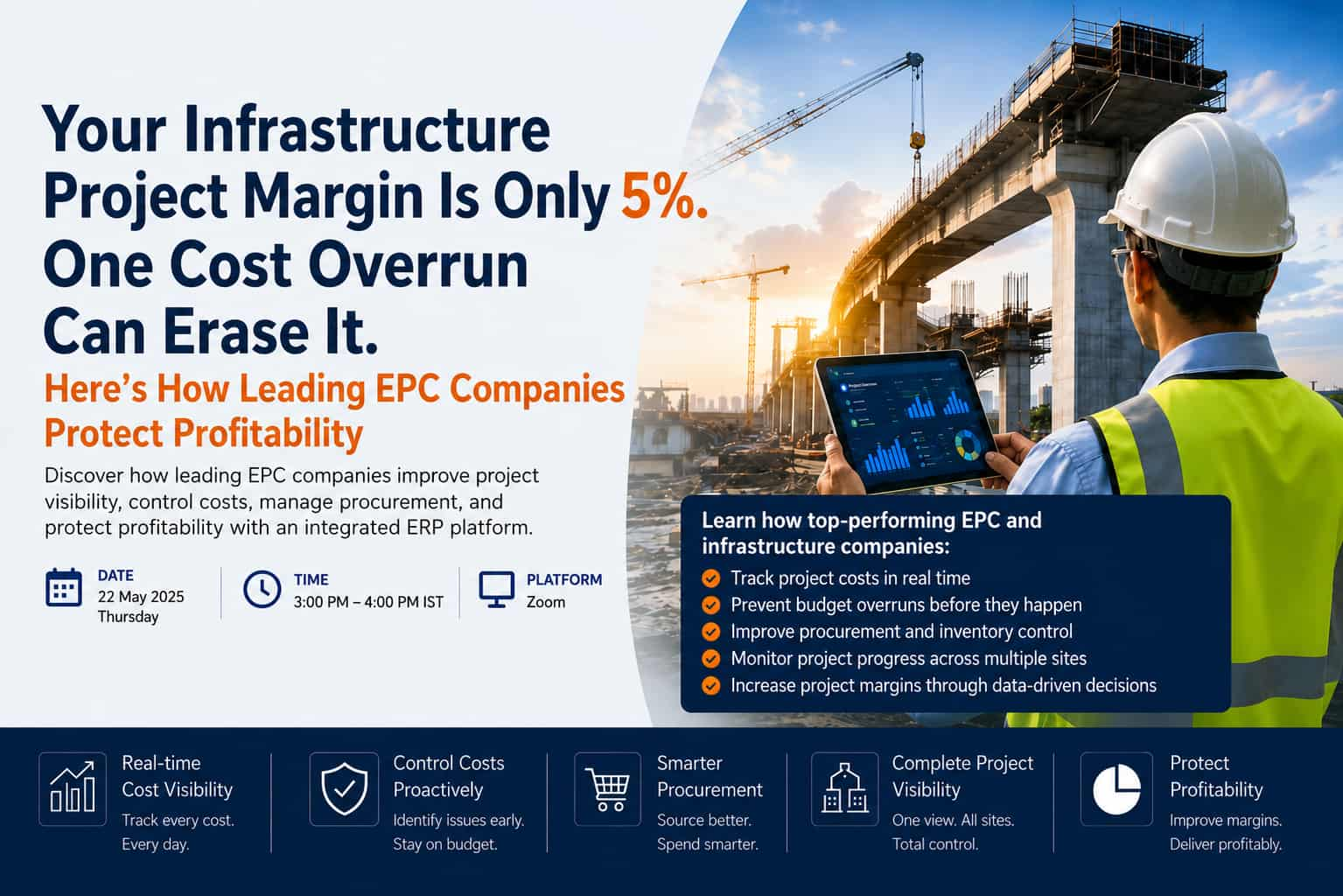
With ERP software, companies can connect project information with financial and operational data. As a result, managers can review project costs and identify areas that need attention.
Improve Decision-Making With Real-Time Data
Construction decisions often depend on current information. Delayed reports can make it harder for managers to respond to project issues.
An ERP system provides a central source of business information. Therefore, managers can review reports and take action faster.
Furthermore, better data visibility improves coordination between project teams and management.
Why Choose eresource Nfra ERP?
eresource Nfra ERP is designed to support construction and infrastructure business processes. It connects project sites, offices, departments, and management through an integrated platform.
The system can help companies manage information, purchasing, finance, projects, and other operations from one place.
Moreover, web-based access makes it easier for authorized users to work with business information from different locations.
Conclusion
An ERP for Construction and Infrastructure Industry can help companies improve project coordination, information sharing, purchasing, financial control, and reporting.
More importantly, an integrated ERP system connects project sites with the head office. This connection gives management better visibility across business operations.
Therefore, construction and infrastructure companies can use ERP software to improve process control and support better business decisions.
Also Read – ERP for packaging industry