ERP Software Is Not a Magic Wand: How to Get Real Business Benefits
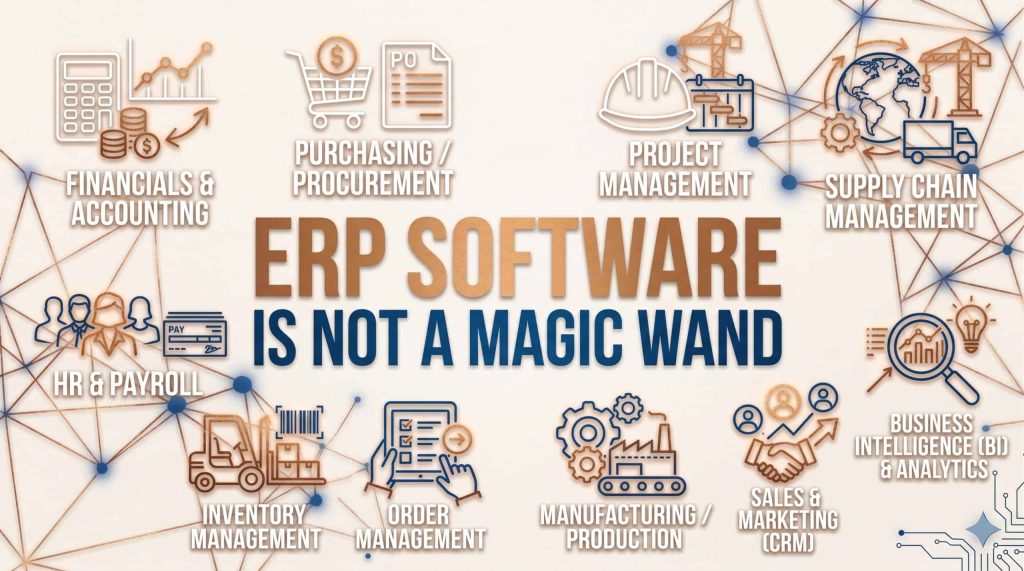
ERP software can transform business operations. However, ERP is not a magic wand.
An ERP system works best when a business prepares its processes, people, and goals. Companies must also choose the right ERP solution and implement it carefully.
The real value comes from proper planning and effective use. Therefore, businesses should focus on strategy before expecting ERP to solve every problem.
ERP Software Needs Proper Preparation
The purpose of ERP applications is to support important business processes. These processes should also support the company’s strategic goals.
Businesses need to understand this basic ERP principle. ERP software cannot replace proper planning or strong management.
There is no magic in an ERP software system. Its benefits depend on preparation, implementation, and daily use.
Therefore, businesses should avoid expecting an instant solution. A quick fix may create more problems during ERP implementation.
ERP Cannot Fix a Weak Business Strategy
Advanced technology cannot replace a poor business strategy. It also cannot fix every inefficient business process.
Businesses should first define their strategic goals. These goals should support growth and improve their competitive position.
Next, companies should review their current business processes. They can then identify gaps and define clear improvement objectives.
Once these steps are complete, businesses can select and implement ERP software more effectively.
Choose ERP Software Based on Business Needs
ERP selection should start with business requirements. Companies should not choose software only because it has many features.
A suitable ERP system should support current operations. It should also adapt to changing business conditions.
For example, manufacturers need fast access to operational information. They may need data from production, inventory, purchasing, sales, and supply chain processes.
A flexible ERP system can connect these areas. It can also help teams respond faster to changing business needs.
Prepare for ERP Implementation
ERP implementation requires strong preparation. Businesses should create a clear implementation plan before deployment.
An experienced ERP software implementer can help the company plan the project.
Management should also define:
ERP implementation goals
Project responsibilities
Implementation timelines
Business process changes
User training requirements
Data migration needs
Testing requirements
Go-live activities
This preparation helps teams understand their responsibilities. It also reduces confusion during implementation.
Give ERP Implementation Strong Leadership
Senior management should actively support the ERP project. A senior executive should have the authority to make important decisions.
The project also needs clear accountability. Teams should complete preparation and implementation tasks within agreed timelines.
In addition, management should create a sense of urgency. However, teams should not rush critical activities just to meet a deadline.
Strong leadership helps different departments work toward the same ERP goals.
Break Down Business Silos
ERP connects different departments through shared information. Therefore, companies should reduce unnecessary functional silos.
Traditional silos can slow information flow. They can also create communication gaps between departments.
An integrated ERP system can connect business functions through common processes and data.
However, technology alone cannot remove organizational barriers. Management must also encourage collaboration between departments.
Ask How Your Business Will Use ERP
Before implementation, businesses should ask an important question:
How will we use the ERP system?
The answer can reveal important process issues. It can also help management identify opportunities for improvement.
For example, a manufacturing company may combine demand-based planning with lean manufacturing methods.
These changes may reduce the need for some traditional ERP functionality.
Therefore, companies should design ERP processes around their actual business strategy.
Focus on Business Processes, Not Just Software
ERP selection is only one part of a successful project. Businesses must also review their processes and performance measures.
Contradictory objectives can create operational problems. Different departments may also follow different goals.
ERP software cannot solve these issues automatically.
Management must identify conflicting processes and redesign them where necessary. Business process improvement should work alongside ERP implementation.
How to Get More Value from ERP Software
Businesses can improve ERP results by following a practical approach:
Define clear business goals.
Review existing processes.
Identify process gaps.
Choose ERP based on business needs.
Prepare users before implementation.
Assign strong project leadership.
Integrate ERP into daily operations.
Monitor results after implementation.
Improve processes when business needs change.
This approach helps businesses use ERP as a long-term management tool.
Key Takeaways
ERP software can provide significant business benefits. However, technology alone cannot guarantee success.
Businesses need clear goals, efficient processes, strong leadership, and user adoption. They also need an ERP system that fits their operational requirements.
Therefore, companies should treat ERP as a business transformation project. The software should support the strategy rather than replace it.
Conclusion
ERP software is not a magic wand. It cannot automatically fix weak strategies, inefficient processes, or poor management practices.
The best results come from proper preparation and practical implementation. Businesses should define their goals, improve their processes, train users, and select suitable ERP software.
With the right approach, ERP can improve integration, information flow, process visibility, and operational control.
Also Read – ERP for packaging industry