ERP Investment: Why You Should Treat ERP as an Investment, Not a Cost
Many firms see ERP as just another IT bill. In truth, a well-planned ERP investment pays you back for years. Once the system goes live, manual work turns automatic, production plans get sharper and stock counts become accurate. So it makes sense to judge ERP the way you judge any other investment: by what it returns.
In this post, we explain where the savings come from and what else you gain. We also share how to check your needs before you commit.
What eresource Sets Out to Do
Our main goal is simple. We want to give mid-sized firms an effective ERP solution that helps them track their whole business in one place.
With eresource, leaders get a live view of every process. As a result, they can make better plans and faster choices. In short, a mid-sized firm can compete harder, even in global markets.
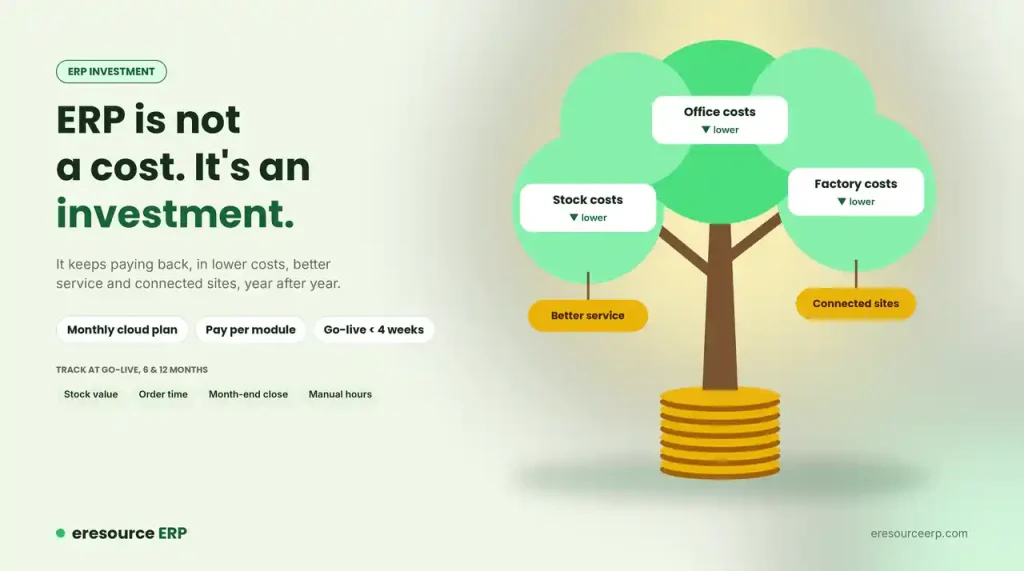
Three Areas Where Your ERP Investment Cuts Costs
A good rollout can lower costs in three main areas:
- Stock costs: You hold less spare stock because you can see real demand.
- Factory running costs: Plans, materials and machines work in step, so less time and material goes to waste.
- Office costs: Staff stop typing the same data into many tools.
To plan a rollout that brings these savings, read about choosing the right ERP implementation strategy.
Benefits Beyond Cost Savings
ERP touches every part of a business, so its gains go far beyond lower costs. For example, it helps you serve customers better and fix their problems faster.
For manufacturers with more than one plant, the gains grow even bigger:
- Connected sites: Every plant works on the same system and shares data easily.
- Standard methods: All sites follow the same steps, which speeds up production.
- Faster orders: The whole order process, from enquiry to dispatch, runs more smoothly. See how ERP helps you reduce cycle time.
- Partner links: You can also connect with the systems of your partners and suppliers. Learn more about collaboration with suppliers and customers.
Why a Web-Based ERP Adds Value
eresource runs fully on the web. Its features are easy to connect and reuse. So you can set up, run and grow the system faster and at a lower cost.
Moreover, you can change your processes quickly when the business changes. You can also link other tools through open APIs. Many mid-sized firms already run on eresource and enjoy these gains every day.
Pay as You Go: Cloud and Modular Options
One big shift in mid-market ERP is the move to on-demand, or software as a service (SaaS). eresource offers this through its cloud ERP on a monthly plan.
You can also choose a modular ERP and pay only for the parts you use. Both options suit firms with small IT budgets and few in-house tech staff. In addition, they help you react faster, with less fuss, when your company or your market changes.
Check Your Needs Before You Commit
Before you sign up for any ERP, take a close look at your own business. Ask what you need today and what you want to achieve with your ERP plan.
The answers tell you which parts and features you need. They also make the rollout much easier. A good place to start is our free ERP assessment.
How to Measure Your ERP Investment
Track a few simple numbers before go-live and again after six and twelve months:
- Stock value: How much money sits in your stores?
- Order time: How many days pass from order to dispatch?
- Month-end close: How many days does it take to close the books?
- Manual hours: How much time do staff spend on data entry?
- Customer issues: How fast do you solve complaints?
For a deeper look, read how ERP software delivers return on investment. Small firms can also see our guide to ERP ROI for SMEs.
Make a Smart ERP Investment With eresource
eresource has helped growing firms get more from their ERP investment since 2006. Our 3X faster implementation method aims for go-live in under four weeks. To see the system on your own processes, book a free demo.
Also Read – Manufacturing ERP Software
FAQs About ERP Investment
Why should we treat ERP as an investment?
A good ERP pays you back for years. It cuts stock, factory and office costs, and it also helps you serve customers better.
Where does ERP save the most money?
Most savings come from three areas: stock costs, factory running costs and office costs.
Can we pay for ERP on a monthly plan?
Yes. eresource cloud ERP runs on a monthly plan. You can also pick only the modules you need.
How do we measure the return on ERP?
Track stock value, order time, month-end close, manual hours and customer issues. Then compare them before go-live and after six and twelve months.
What should we do before choosing an ERP?
First, check what your business needs and what you want to achieve. Then use those answers to pick the right modules and features.