Table of Contents
Introduction: The Real Cost of Invisible Projects
Construction firms manage thousands of crores of rupees in projects annually. Yet most operate with fragmented visibility.
Consider this: A 2025 construction management report revealed that 73% of project delays are discovered after they have already cascaded into budget overruns. Delayed visibility costs time. Time costs money. And in construction, money disappears fast.
Your project budget is in one spreadsheet. Labor costs in another. Equipment allocation in a third. Schedule in a fourth. And site progress? That lives in emails and your PM’s phone.
This fragmentation doesn’t just create inefficiency. It creates blind spots. Expensive, project-threatening blind spots.
Why Data Fragmentation Kills Project Performance
Scattered data means scattered decision-making. And scattered decisions lead to:
- Decision Delays. When budget data is in one system and labor tracking in another, gathering the full picture takes hours. By then, the window for corrective action has closed.
- Inconsistent Reporting. Your CFO sees version A of the budget. Your site manager sees version B. Your CEO gets neither. Different versions of the truth breed bad decisions.
- Missed Opportunities. Cost-saving insights are buried in email attachments. Resource optimization opportunities hide in spreadsheet tabs nobody regularly opens.
- Communication Breakdowns. HQ doesn’t know what the site knows. The PM doesn’t know what operations planned. This miscommunication cascades into schedule conflicts and resource waste.
The Real ROI of Real-Time Project Visibility
Unified project visibility isn’t just operational polish. It’s a revenue multiplier.
Construction firms with real-time project visibility report:
- 20-35% faster decision-making. When all data lives in one dashboard, identifying problems and making adjustments happens in hours, not days.
- 12-18% reduction in project overruns. Real-time cost tracking catches budget drift before it becomes a crisis.
- 15-22% improvement in resource utilization. When labor and equipment availability are visible in real time, schedulers optimize allocation instead of guessing.
- 8-14% margin improvement. Better visibility drives better execution. Better execution protects margins.
Also Read: ERP for Construction Industry
What Real-Time Project Visibility Actually Means
Real-time project visibility isn’t about having more data. It’s about having the right data, instantly accessible to the right decision-makers.
It means your CFO can see current budget status with a single glance. No waiting for month-end reports.
It means your site manager knows exactly which resources are allocated and which are available. No more I think labor is free next Tuesday.
It means your PM receives alerts the moment schedule variance exceeds your threshold. Corrective action starts before delays compound.
It means your CEO has one source of truth about how every project is performing. No conflicting reports. No surprises at board meetings.
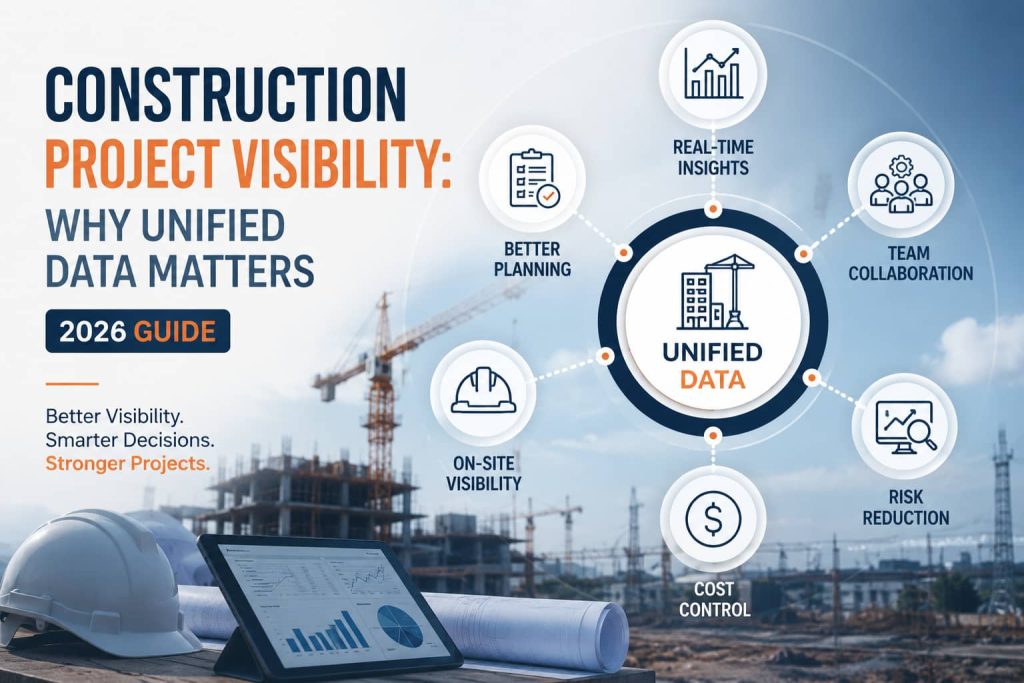
The Five Pillars of Unified Project Visibility
- Budget Intelligence. Real-time cost tracking by category, by phase, by department. Know exactly where money is flowing and flag overruns before they happen.
- Schedule Mastery. Visual progress tracking against planned timelines. Identify schedule risks immediately. Adjust resource allocation to keep projects on track.
- Labor Optimization. Live labor availability and allocation across projects. Eliminate idle time. Maximize utilization. Make smart decisions about hiring and subcontracting.
- Equipment Visibility. Know where every piece of equipment is and when it’s needed. Prevent costly conflicts. Improve equipment ROI through smarter allocation.
- Progress Transparency. Site-level progress data flows instantly to HQ. Everyone sees the same status. Communication improves. Decision-making accelerates.
Implementing Real-Time Visibility: Where to Start
Real-time visibility doesn’t require ripping out your entire system. It starts with consolidating your data sources into one unified platform.
- Step 1: Audit Your Current Data Sources. Identify where budget, labor, schedule, and equipment data currently live. Document the gaps and conflicts.
- Step 2: Establish Your Single Source of Truth. Migrate data into a unified project workspace. Ensure all team members access the same data.
- Step 3: Configure Real-Time KPI Dashboards. Set up dashboards for budget, schedule, labor, and equipment. Make them mobile-accessible so decisions happen on-site.
- Step 4: Enable Automated Alerts. Define your tolerance thresholds. Configure alerts for budget variance, schedule slip, labor utilization, equipment conflicts.
- Step 5: Train Your Team. Your system is only as good as the people using it. Invest in adoption and user enablement.
The Competitive Edge: See Your Projects. Control Your Projects. Win Your Projects.
Construction is a margins business. The firms that win are the ones that optimize fastest.
Real-time project visibility gives you that advantage. Better visibility drives better decisions. Better decisions drive better outcomes. Better outcomes drive better margins.

Your competitors aren't waiting. They're already seeing their projects in real time.
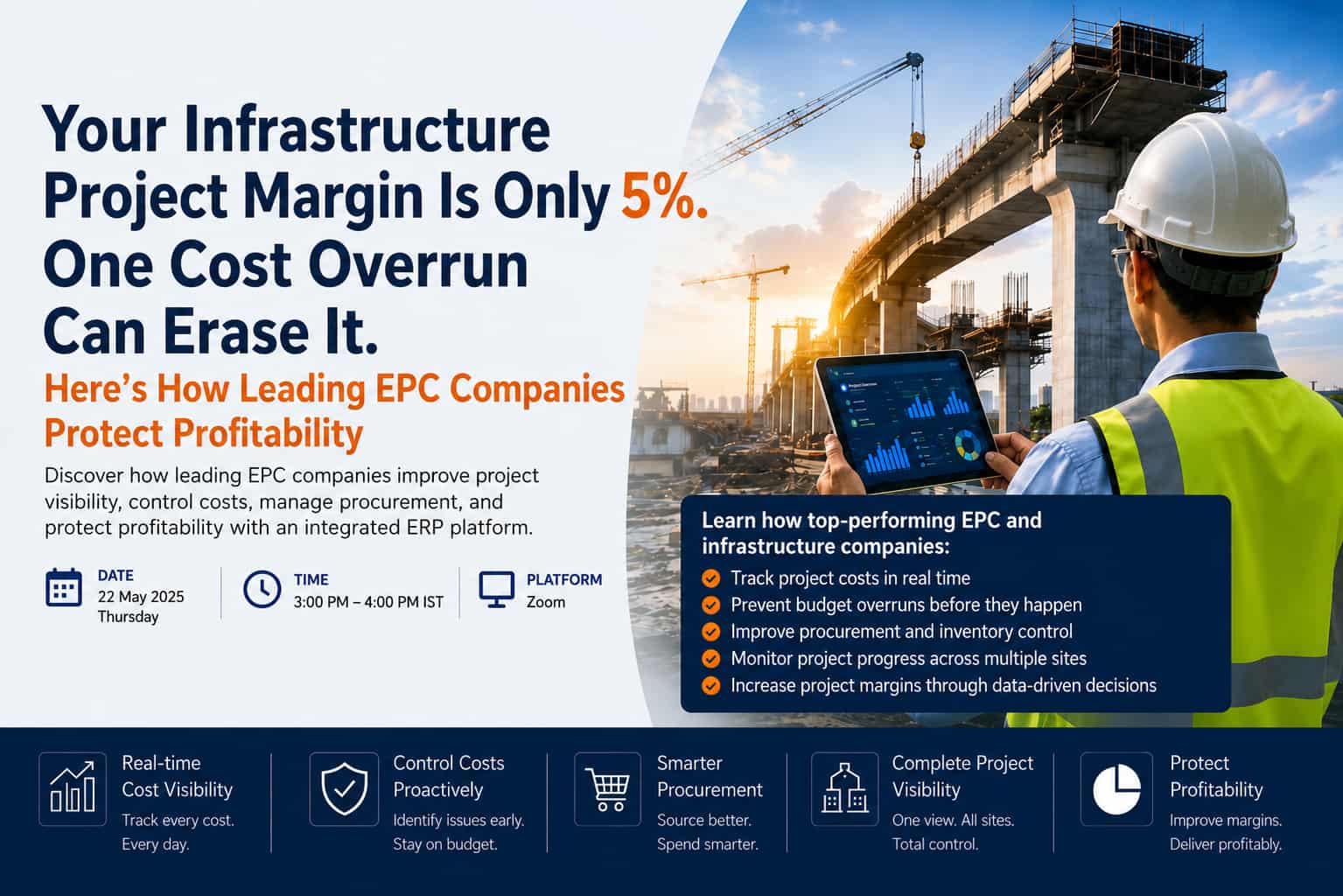
Free Project Intelligence Webinar
Frequently Asked Questions(FAQs)
Manufacturing ERP software integrates production, inventory, procurement, sales, finance, and reporting into a single platform.
Yes. Modern ERP solutions like eresource ERP are scalable and suitable for SMEs as well as large enterprises.
Yes. eresource ERP supports multi-location manufacturing operations from a centralized platform.
Yes. The system helps businesses maintain accurate GST records and generate required reports.
Absolutely. Cloud ERP provides flexibility, accessibility, scalability, and reduced infrastructure costs.