9 Signs Your Business Needs an ERP System
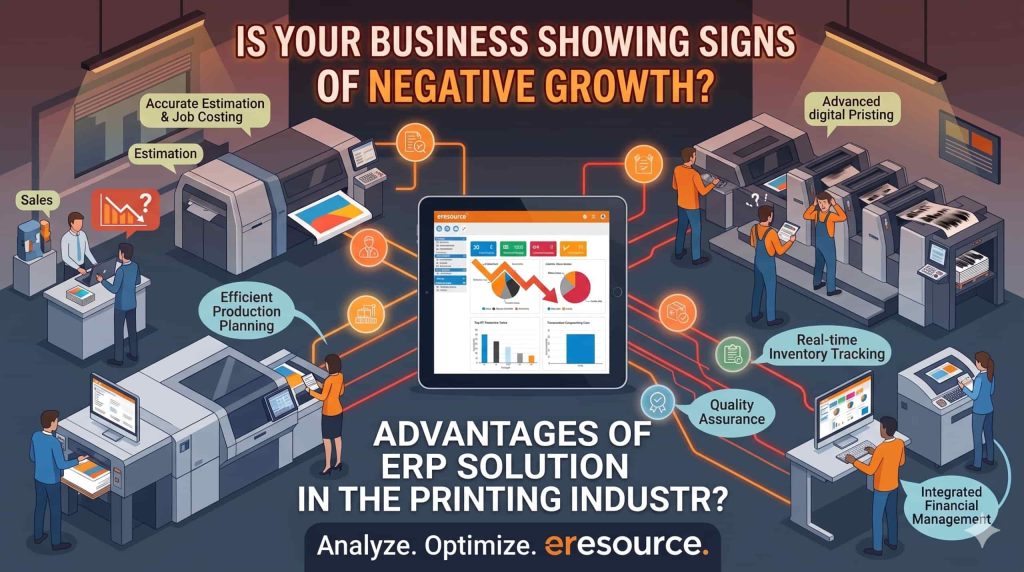
Most businesses don’t fail overnight. Instead, they often slow down gradually. Orders take longer to process, reports contradict each other, and teams spend more time chasing information than acting on it. If revenue has plateaued or dipped while your workload keeps rising, the problem usually isn’t your people. In many cases, disconnected systems are making everyday operations more difficult.
Here are nine warning signs that it may be time to move to an integrated ERP system – and what each one could be costing your business.
1. Your Teams Run on Disconnected Software
Accounts may use one application, while sales and the warehouse rely on different systems. Unfortunately, these applications may not communicate with each other. As a result, every handover between departments can require data to be entered again.
Every additional data entry creates an opportunity for errors, duplication, and delays. An ERP system brings these processes together through a shared database. Therefore, information entered once can be made available to authorized users across the business.
This connected approach can help teams reduce manual work and maintain more consistent information across departments.
2. Spreadsheets Have Become Your Reporting System
If month-end means merging Excel files from several departments, your numbers may already be outdated before anyone reviews them. Consequently, management decisions based on stale information can become difficult to validate.
ERP dashboards can provide a more centralized view of sales, cash flow, production, and inventory. Instead of waiting for employees to compile separate reports, management can access information from connected business processes.
Spreadsheets can still be useful for specific analysis. However, relying on them as the primary reporting system can become increasingly difficult as the business grows.
3. You’ve Lost Track of Your Inventory
Stock-outs on fast-moving items, dead stock gathering dust, and physical counts that never match the books are common symptoms of disconnected inventory management.
In addition, poor inventory visibility can result in unnecessary purchases and excess stock. It may also tie up working capital in products that are not moving as expected.
An ERP system can track inventory movements in real time across relevant transactions and locations. It can also support reorder levels, stock transfers, purchasing, and inventory reporting. As a result, teams can gain better visibility into available, committed, and required stock.
4. Sales Forecasting Is Guesswork
When historical sales, current orders, inventory, and production capacity are stored in separate systems, accurate forecasting becomes more difficult.
As a result, a business may produce too much and carry additional inventory costs. Alternatively, it may produce too little and struggle to fulfil customer orders on time.
An ERP connects important business data within a single environment. Therefore, sales information can be considered alongside inventory, purchasing, production, and existing orders.
With this broader view, management can make planning decisions using more complete and up-to-date information.
5. Customer Complaints Are Rising
Late deliveries, incorrect shipments, and repeated “let me check and call you back” responses can occur when employees cannot see an order’s complete status.
With an integrated ERP system, authorized employees can access relevant information about an order from a centralized system. For example, they may be able to view order details, stock availability, dispatch information, and invoicing status.
Consequently, customer service teams can respond to questions with less dependency on multiple departments. More importantly, different teams can work from the same information instead of relying on separate spreadsheets or manual updates.
6. Compliance and Audits Are a Scramble
GST filings, e-invoicing, statutory reports, and audit trails assembled manually from multiple systems can consume significant time.
Moreover, manual processes can increase the possibility of inconsistent data, missing information, and last-minute corrections. Finance teams may then spend valuable time collecting and reconciling records.
A modern ERP can maintain transaction information in a structured environment and support compliance-related processes. Depending on the system and its configuration, businesses can also streamline activities such as invoicing, financial records, tax-related processes, and audit trails.
As a result, finance teams can spend less time searching for information and more time reviewing business performance.
7. Month-End Closing Takes Weeks
If finance spends the first two weeks of every month reconciling the previous month, the accounting process may have become a bottleneck.
In a disconnected environment, finance teams often need to collect information from sales, purchasing, inventory, production, and other departments before completing their reconciliation.
An integrated ERP can connect operational transactions with financial records. Consequently, finance teams can work with information from a common system instead of reconstructing data from multiple sources.
As a result, month-end closing can become more focused on reviewing transactions and identifying exceptions rather than manually gathering information.
8. Your Systems Can’t Keep Pace With Growth
A new branch, product line, warehouse, or market can quickly expose limitations in an existing software setup.
Suddenly, the business may need additional workarounds, spreadsheets, add-ons, or manual processes just to maintain normal operations. Over time, these temporary solutions can become increasingly difficult to manage.
A scalable ERP system can provide a common platform for users, locations, departments, and business processes. Furthermore, organisations can add relevant users, locations, and modules as their requirements change, depending on the ERP solution.
Therefore, technology can support business growth without requiring every new process to be managed separately.
9. IT Costs Keep Rising, but Efficiency Doesn’t
Maintaining licences, servers, integrations, custom patches, and support arrangements for several standalone applications can become expensive.
At the same time, these systems may still fail to integrate effectively. Employees then have to compensate for technology gaps through spreadsheets, emails, manual data entry, and other workarounds.
Consolidating relevant business functions on a web-based ERP can simplify the technology environment. It can also reduce the number of separate systems employees need to use while creating a more connected flow of business information.
However, the actual cost benefit depends on the organisation, existing software, implementation requirements, and ERP configuration.
How Many Signs Did You Recognize?
If you recognized one or two signs, you may still have time to plan a structured ERP evaluation before the problems become more difficult to manage.
On the other hand, if you identified several of these signs, it may be worth examining where your business is losing time, increasing costs, or creating unnecessary manual work.
The goal is not to implement ERP software simply because the business is growing. Instead, the decision should be based on whether an integrated system can address specific operational, financial, inventory, production, reporting, or compliance challenges.
A structured evaluation can help you understand which processes need improvement and whether ERP software is the right solution for your organisation.
How eresource ERP Helps
eresource offers industry-specific, AI-powered web-based ERP solutions built for Indian and Middle East businesses.
eresource Xcel — for manufacturing companies, from production planning to dispatch.
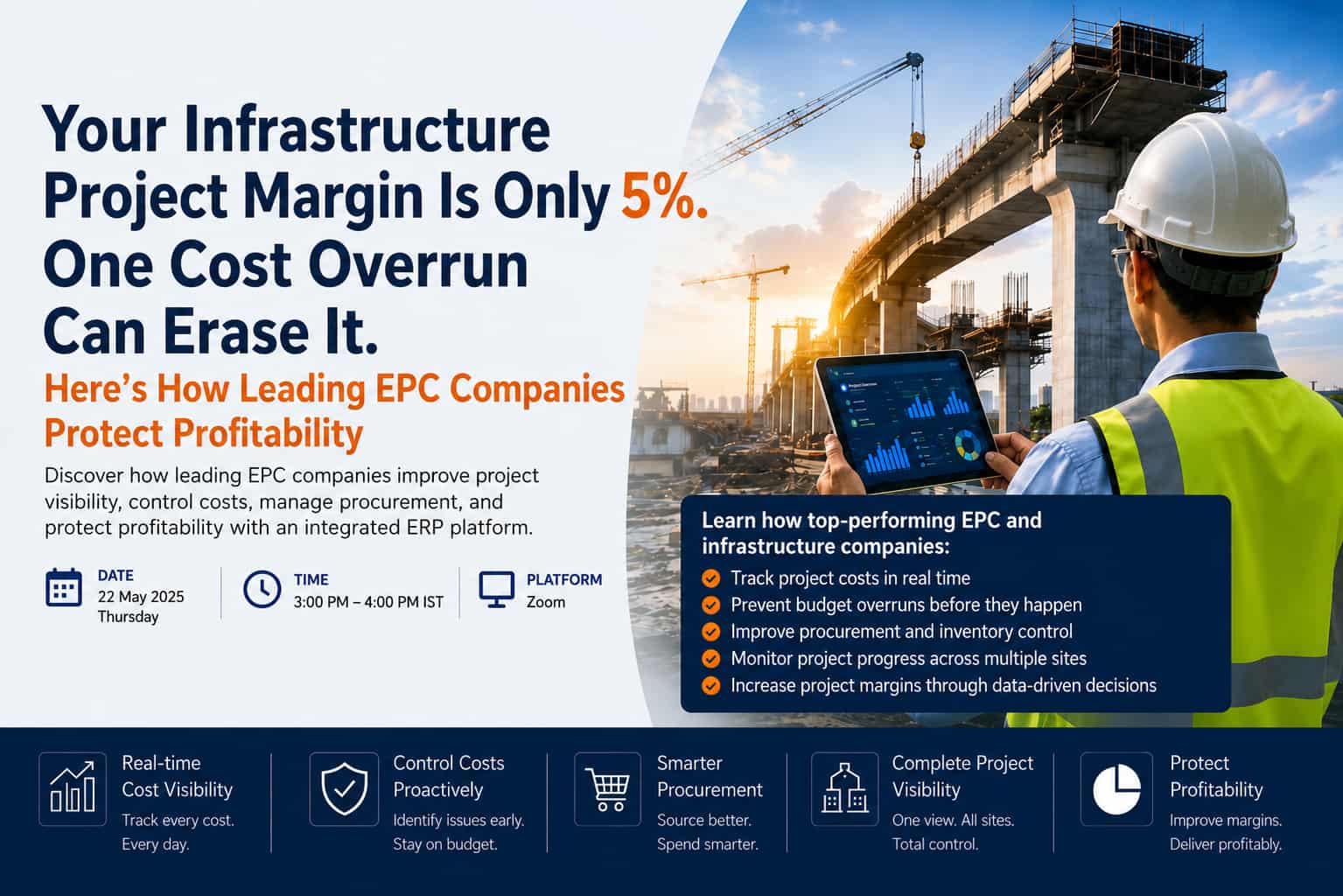
eresource Nfra — for construction, contracting, and infrastructure businesses.
eresource Bpro – for process and trading industries.
In addition, each solution is implemented on a guaranteed on-time, fixed-cost model with dedicated local support.
Frequently Asked Questions
Common questions about moving to an ERP system
What size of business needs an ERP system?
Any business where more than one department handles the same data. Small and mid-sized companies often benefit most, because manual coordination consumes a larger share of their staff time.
How long does ERP implementation take?
With eresource's ready-to-use, industry-specific approach, most implementations go live within a few months — far faster than traditional ERP projects.
Is ERP worth it if we already use accounting software?
Accounting software records what already happened. ERP manages what's happening now — inventory, production, sales, procurement, and finance together. Most companies keep growing past accounting software within a few years.
Can ERP be accessed remotely?
Yes. eresource ERP is fully web-based, so your team can work from any location or device with a browser.