Table of Contents
Introduction
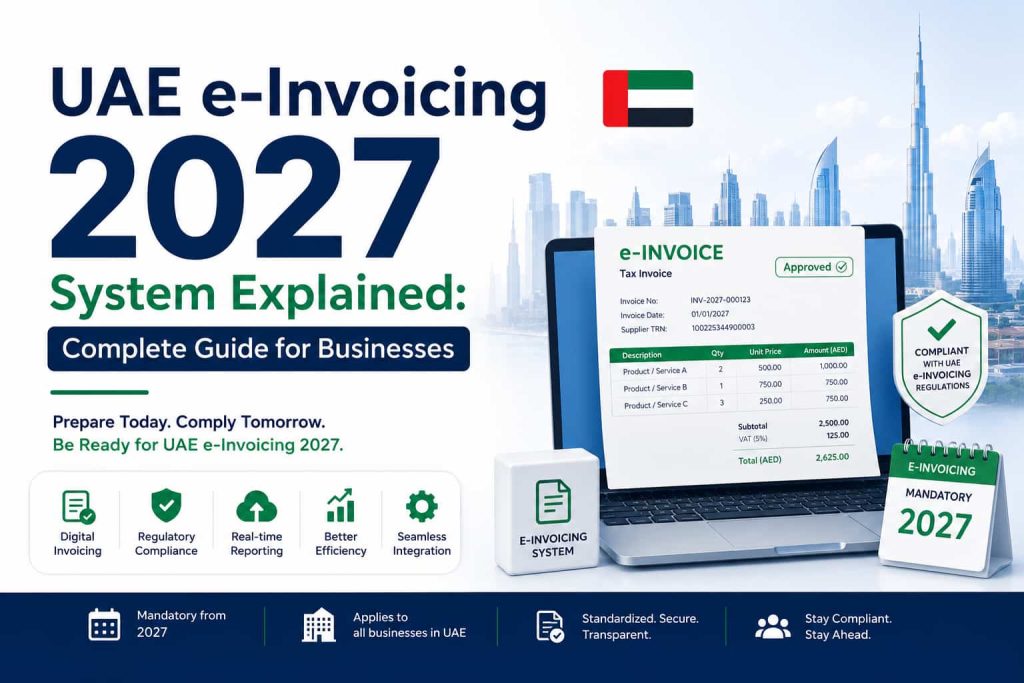
The UAE e-invoicing system is a digital invoicing framework introduced to streamline tax compliance, improve transparency, and reduce manual invoicing errors for businesses operating in the UAE.
In simple terms, e-invoicing allows businesses to generate, validate, exchange, and store invoices electronically in a standardized format that complies with UAE tax regulations.
As the UAE continues strengthening its digital economy and tax ecosystem, businesses are increasingly adopting ERP software to automate invoicing, VAT compliance, financial reporting, and audit readiness.
For businesses preparing for the UAE e-invoicing rollout, ERP solutions like eresource ERP help automate invoicing workflows, reduce compliance risks, and improve operational efficiency.
What is UAE e-Invoicing?
UAE e-invoicing refers to the electronic generation and exchange of tax invoices in a structured digital format instead of traditional paper or PDF invoices.
The system is designed to:
- Improve VAT compliance
- Reduce invoice fraud
- Enable real-time tax reporting
- Automate invoice validation
- Increase financial transparency
Unlike manually created invoices, e-invoices are generated through integrated accounting or ERP systems and can be validated automatically.
Why UAE Businesses Need to Prepare for e-Invoicing
The UAE government is moving toward digital tax transformation to improve business efficiency and compliance standards.
Key Challenges Businesses Face
1. Manual Invoice Errors
Traditional invoicing increases the risk of calculation mistakes and missing VAT information.
2. VAT Compliance Complexity
Businesses must ensure invoices comply with UAE VAT requirements.
3. Delayed Financial Reporting
Manual invoice processing slows down reporting and reconciliation.
4. Audit Readiness
Poor invoice tracking can create issues during audits.
5. High Administrative Workload
Finance teams spend significant time managing invoices manually.
ERP-driven e-invoicing systems help solve these problems through automation and centralized financial management.
Also Read: Best ERP software UAE
How UAE e-Invoicing Works
A typical UAE e-invoicing workflow includes:
- Invoice generated through ERP software
- VAT details automatically validated
- Invoice converted into structured digital format
- Invoice shared electronically with customers
- Records securely stored for compliance and audits
- Financial reports updated automatically
This process reduces manual intervention and improves accuracy.
Key Features Businesses Need in UAE e-Invoicing ERP Software
1. Automated Invoice Generation
ERP software automatically creates invoices with VAT-compliant fields.
Benefits:
- Reduced manual work
- Faster billing cycles
2. VAT Compliance Management
Ensures invoices follow UAE VAT regulations.
Benefits:
- Reduced compliance risk
- Accurate tax calculations
3. Real-Time Financial Reporting
Provides instant visibility into invoice and payment status.
Benefits:
- Better financial control
- Faster decision-making
4. Integration with Accounting and Inventory
Connects invoicing with inventory, procurement, and finance modules.
Benefits:
- Unified operations
- Improved data accuracy
5. Secure Digital Record Keeping
Stores invoices securely for audits and legal compliance.
Benefits:
- Easier audits
- Centralized document management
Benefits of UAE e-Invoicing for Businesses
1. Faster Invoice Processing
Automation reduces delays and improves payment cycles.
2. Improved Accuracy
Minimizes human errors in tax calculations and invoice formatting.
3. Better Compliance
Helps businesses stay aligned with UAE tax regulations.
4. Reduced Operational Costs
Cuts paperwork, printing, and manual processing expenses.
5. Enhanced Transparency
Provides better tracking and audit visibility.
6. Real-Time Business Insights
ERP dashboards provide financial and operational visibility instantly.
Industries That Will Benefit Most from UAE e-Invoicing
The UAE e-invoicing system is beneficial for:
- Manufacturing businesses
- Retail companies
- Trading and distribution companies
- Healthcare organizations
- Construction businesses
- Logistics and supply chain companies
- Professional service firms
Common Mistakes Businesses Make While Preparing for e-Invoicing
- Using disconnected accounting systems
- Delaying ERP implementation
- Relying heavily on manual invoicing
- Poor VAT documentation
- Lack of invoice standardization
Businesses that modernize early will face fewer compliance challenges later.
How to Choose the Best ERP Software for UAE e-Invoicing
1. UAE VAT Compliance Capability
ERP should support UAE tax rules and invoice formats.
2. Automation Features
Look for automated invoicing and reporting.
3. Scalability
The ERP should support future business growth.
4. Integration Support
Must integrate with finance, inventory, CRM, and procurement.
5. Cloud Accessibility
Cloud ERP improves flexibility and remote access.
Why eresource ERP is a Strong Choice for UAE e-Invoicing
For businesses preparing for UAE e-invoicing compliance, eresource ERP provides an integrated platform to automate invoicing, VAT compliance, finance, inventory, and reporting.
Key Strengths:
- UAE VAT-ready ERP system
- Automated invoice generation
- Real-time financial visibility
- Integrated accounting and inventory
- Cloud and on-premise deployment
- Scalable for SMEs and enterprises
- Centralized document management
eresource ERP helps businesses reduce compliance risks while improving operational efficiency.
Also Read: Construction ERP software UAE
UAE e-Invoicing Trends in 2026
1. Increased ERP Adoption
Businesses are shifting toward integrated ERP systems.
2. Cloud-Based Financial Operations
Cloud ERP adoption continues growing across UAE.
3. AI-Based Invoice Validation
Automation and AI improve invoice accuracy.
4. Real-Time Tax Reporting
Governments are encouraging digital tax ecosystems.
Frequently Asked Questions(FAQs)
UAE e-invoicing is a digital invoicing system where invoices are generated and exchanged electronically in a structured format.
The UAE is gradually implementing e-invoicing regulations to improve tax compliance and digital reporting.
ERP software automates invoice generation, VAT calculation, reporting, and record management.
Manufacturing, retail, logistics, healthcare, and trading businesses benefit significantly.
Yes, cloud ERP systems support automated invoicing and remote accessibility.
Yes, eresource ERP helps businesses manage VAT-compliant invoicing and financial reporting.
Automation improves accuracy, reduces manual work, and enhances compliance.
Yes, scalable ERP systems are suitable for both SMEs and large enterprises.