Table of Contents
Introduction
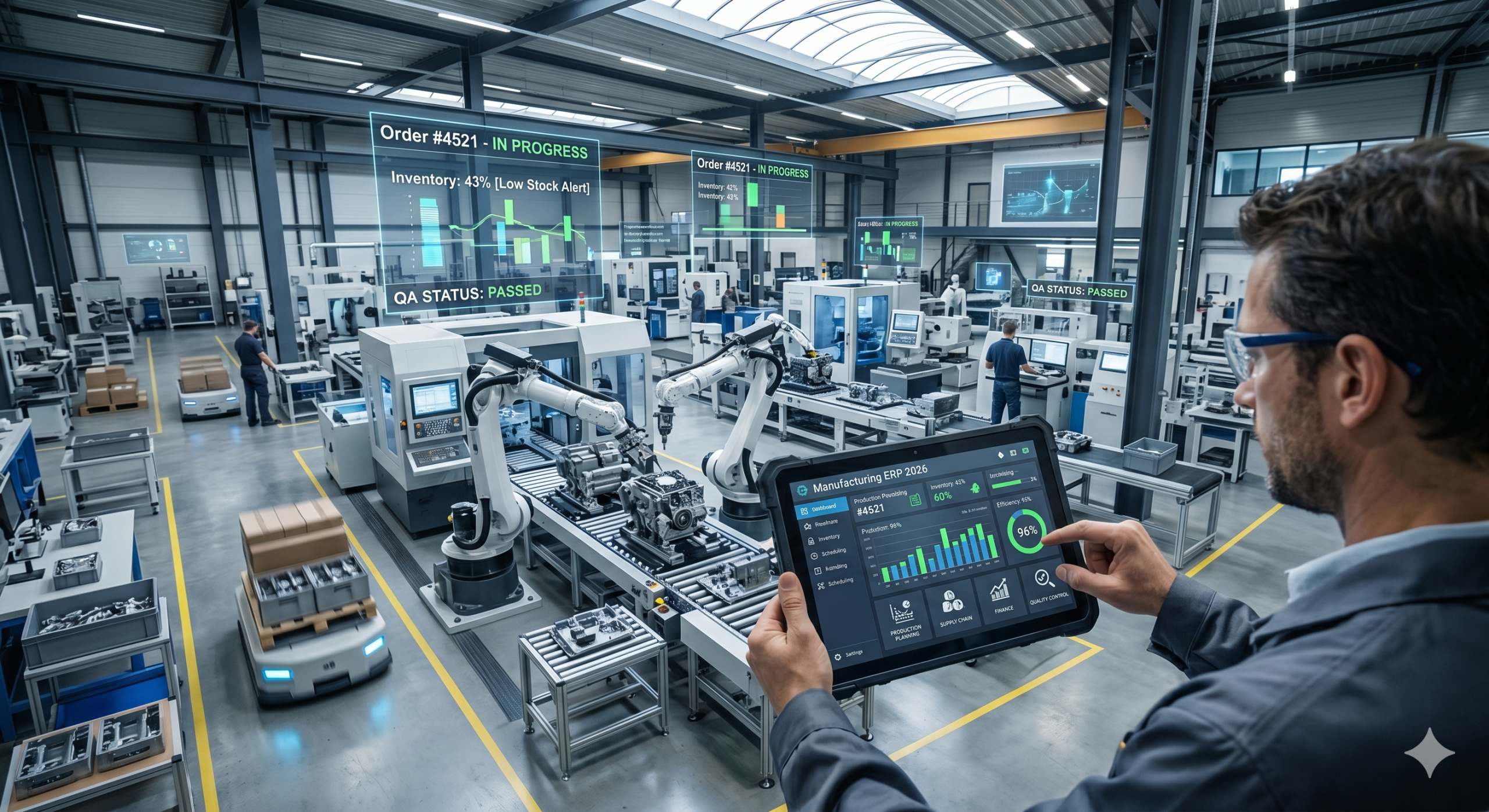
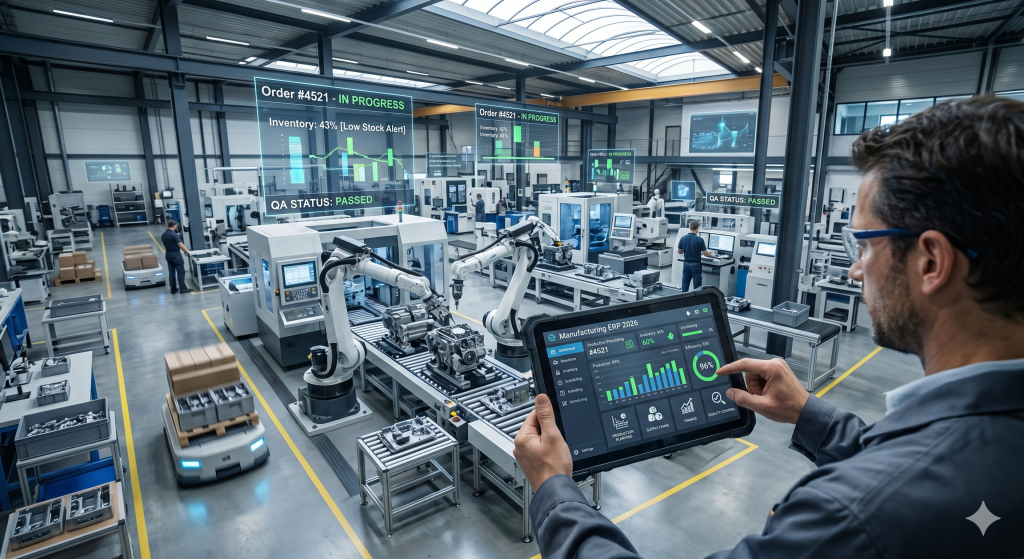
ERP for manufacturing company is a specialized software system designed to manage production, inventory, supply chain, finance, and operations in one integrated platform.
In simple terms, it helps manufacturers plan production, track raw materials, control costs, manage orders, and improve efficiency, all while providing real-time visibility across the business.
As manufacturing becomes more competitive and data-driven, ERP systems are no longer optional. They are essential for companies aiming to scale, reduce waste, and improve profitability.
Why Manufacturing Companies Need ERP
Manufacturing businesses operate with multiple moving parts. Without a centralized system, inefficiencies can quickly arise.
Key Challenges:
1. Production Planning Issues
Manual planning leads to delays and inefficiencies.
2. Inventory Mismanagement
Overstocking or stockouts affect operations.
3. Lack of Real-Time Data
Decisions are delayed due to outdated information.
4. Cost Control Problems
Difficult to track production costs accurately.
5. Supply Chain Complexity
Managing suppliers and logistics is challenging.
An ERP for manufacturing company solves these problems by integrating all operations into one system.
How ERP Works in Manufacturing (Real Workflow)
Let’s understand how ERP transforms operations:
Example:
- Customer places an order
- ERP generates production plan
- Raw materials are allocated
- Production process begins
- Inventory updates automatically
- Finished goods are recorded
- Invoice is generated
- Financial reports are updated
Also Read: Batch manufacturing software
Core Features of ERP for Manufacturing Company (In Depth)
1. Production Planning & Scheduling
ERP helps manufacturers plan production based on demand, capacity, and resources.
Benefits:
- Reduced delays
- Optimized resource utilization
- Better workflow management
2. Bill of Materials (BOM) Management
Defines raw materials required for production.
Benefits:
- Accurate material planning
- Reduced wastage
- Cost control
3. Inventory & Warehouse Management
Tracks raw materials, work-in-progress (WIP), and finished goods.
Benefits:
- Real-time stock visibility
- Reduced stockouts
- Efficient warehouse operations
4. Procurement & Supplier Management
Manages purchase orders and vendor relationships.
Benefits:
- Better supplier coordination
- Cost optimization
- Timely procurement
5. Quality Control Management
Ensures products meet quality standards.
Benefits:
- Reduced defects
- Improved customer satisfaction
- Compliance with standards
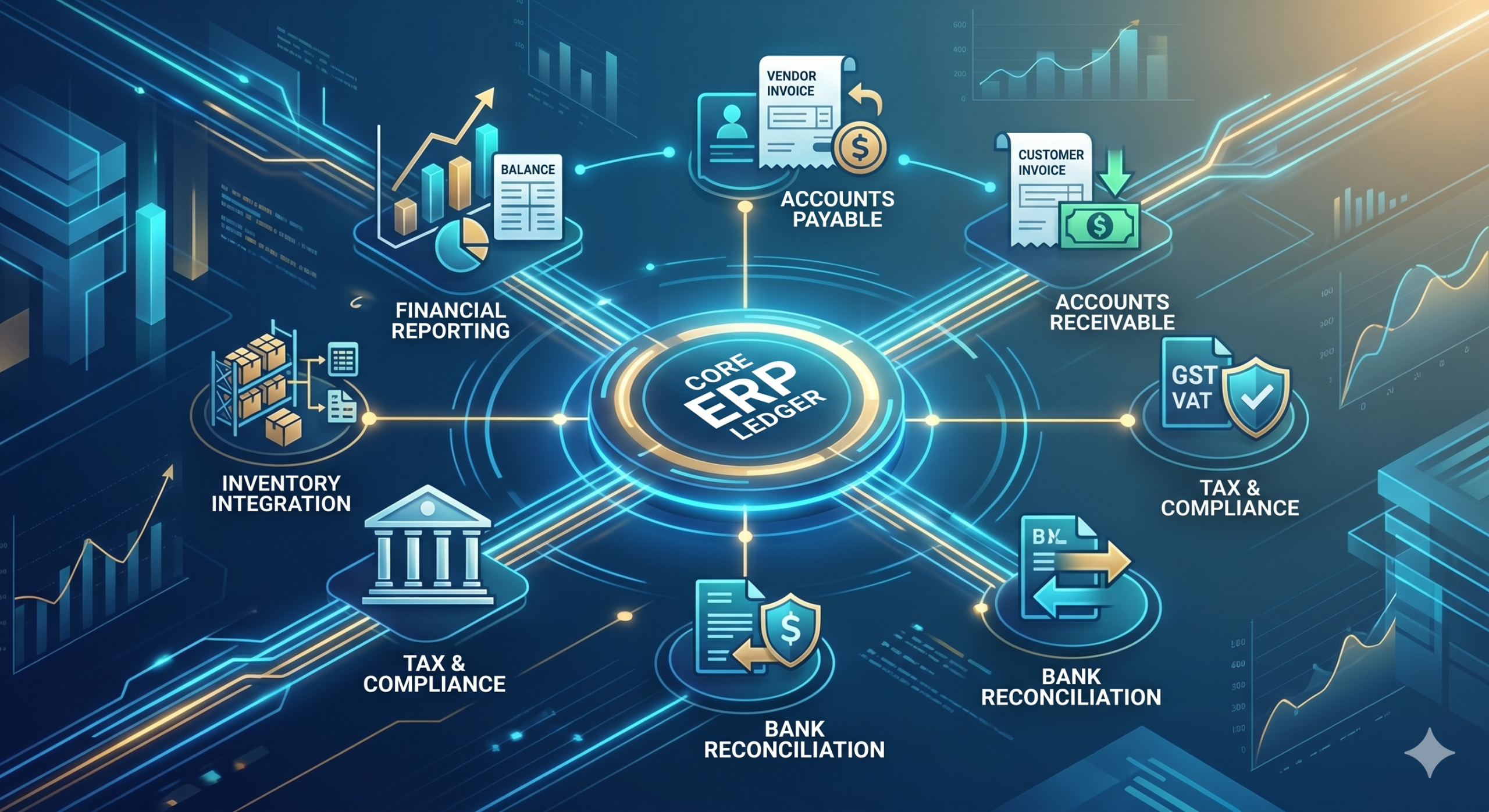
6. Financial Management
Tracks all financial transactions related to manufacturing.
Benefits:
- Accurate cost tracking
- Profitability analysis
- Real-time financial insights
7. Shop Floor Control
Monitors production activities in real time.
Benefits:
- Increased efficiency
- Better production tracking
- Reduced downtime
8. Reporting & Analytics
Provides dashboards and reports for decision-making.
Benefits:
- Data-driven decisions
- Performance tracking
- Business insights
Benefits of ERP for Manufacturing Company (Detailed)
1. Increased Production Efficiency
Automation reduces manual errors and speeds up processes.
2. Better Cost Control
Tracks material, labor, and overhead costs accurately.
3. Real-Time Visibility
Provides instant access to production and financial data.
4. Improved Inventory Management
Reduces excess stock and shortages.
5. Enhanced Quality Control
Maintains consistent product quality.
6. Scalability
Supports business growth without system changes.
7. Improved Decision-Making
Provides accurate data for strategic decisions.
Types of Manufacturing ERP Systems
Discrete Manufacturing ERP
Used for products like machinery, electronics, and automobiles.
Process Manufacturing ERP
Used in industries like food, chemicals, and pharmaceuticals.
Batch Manufacturing ERP
Used where products are produced in batches.
Real-Life Use Cases
1. Automotive Manufacturer
ERP tracks parts, manages production lines, and controls inventory.
2. Food Processing Company
ERP manages batch production and expiry tracking.
3. Chemical Industry
ERP handles formulations and compliance.
4. Textile Manufacturer
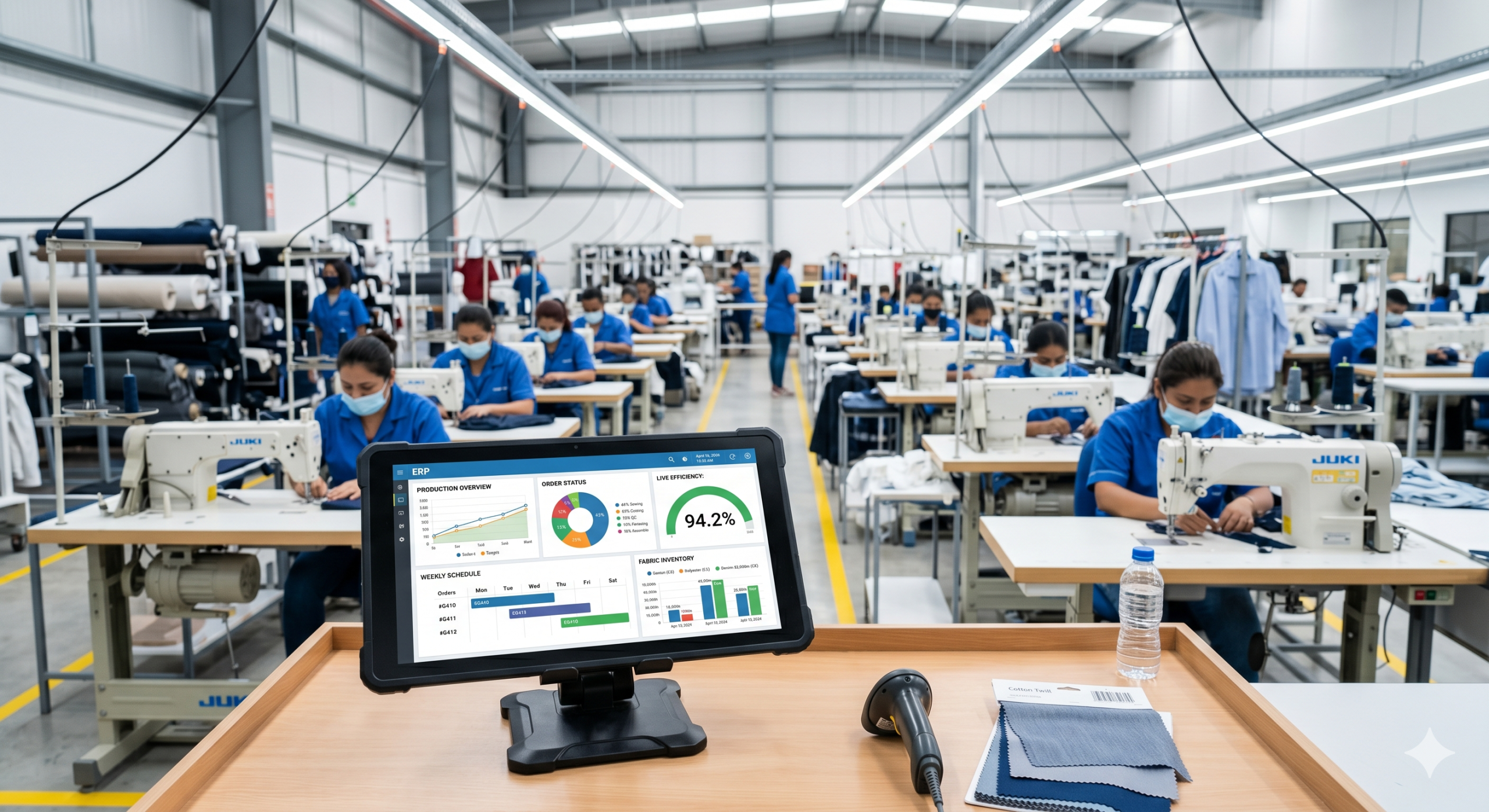
ERP manages raw materials, production, and sales.
Common Mistakes While Implementing ERP
- Choosing ERP based only on cost
- Ignoring industry-specific needs
- Poor implementation planning
- Lack of employee training
- Not focusing on scalability
How to Choose the Best ERP for Manufacturing Company
1. Industry-Specific Features
Ensure it supports manufacturing workflows.
2. Scalability
Choose ERP that grows with your business.
3. Integration Capability
Must connect with existing systems.
4. Ease of Use
User-friendly interface improves adoption.
5. Vendor Support
Strong support ensures smooth implementation.
Why eresource ERP is a Strong Choice
For businesses looking for reliable ERP for manufacturing company, eresource ERP offers:
Key Strengths:
- Manufacturing-focused modules
- Integrated inventory and production management
- Flexible deployment (cloud and on-premise)
- Customizable workflows
- Scalable for SMEs and enterprises
It focuses on delivering practical and efficient solutions tailored to real manufacturing challenges.
Also Read: Best cloud Manufacturing ERP for MSME
ERP Trends in Manufacturing (2026)
1. Smart Manufacturing
Integration with IoT and automation.
2. AI-Based Forecasting
Improving demand planning.
3. Cloud ERP Adoption
Increasing flexibility and scalability.
4. Real-Time Data Analytics
Better decision-making.
Frequently Asked Questions(FAQs)
ERP for manufacturing company is a system that helps manage production, inventory, and operations in one platform.
ERP improves efficiency, reduces costs, and provides real-time visibility.
It should include production planning, inventory management, and financial tracking.
Yes, ERP optimizes resource usage and reduces waste.
Yes, ERP systems are scalable and suitable for SMEs.
ERP automates scheduling and resource allocation.
Yes, modern ERP systems can integrate with IoT devices.
Automotive, food, chemical, textile, and electronics industries.