Lean Manufacturing ERP: How ERP Supports Lean Operations
Many manufacturers ask whether an ERP system can support lean manufacturing. Some companies worry that ERP software may add complexity to lean operations.
However, a well-designed ERP system can support lean processes. eresource Xcel ERP provides flexible features for manufacturing organizations of different sizes. It helps manufacturers manage production, materials, inventory, and delivery within an integrated system.
What Is Lean Manufacturing?
Lean manufacturing focuses on reducing waste and improving business processes. The goal is simple. Manufacturers want to create better products while using fewer resources.
Lean operations require clear processes and accurate information. Teams need to know what to produce, when to produce it, and which resources they need.
An integrated ERP system can support these requirements. It connects business data and helps teams manage processes from order to delivery.
How ERP Supports Lean Manufacturing
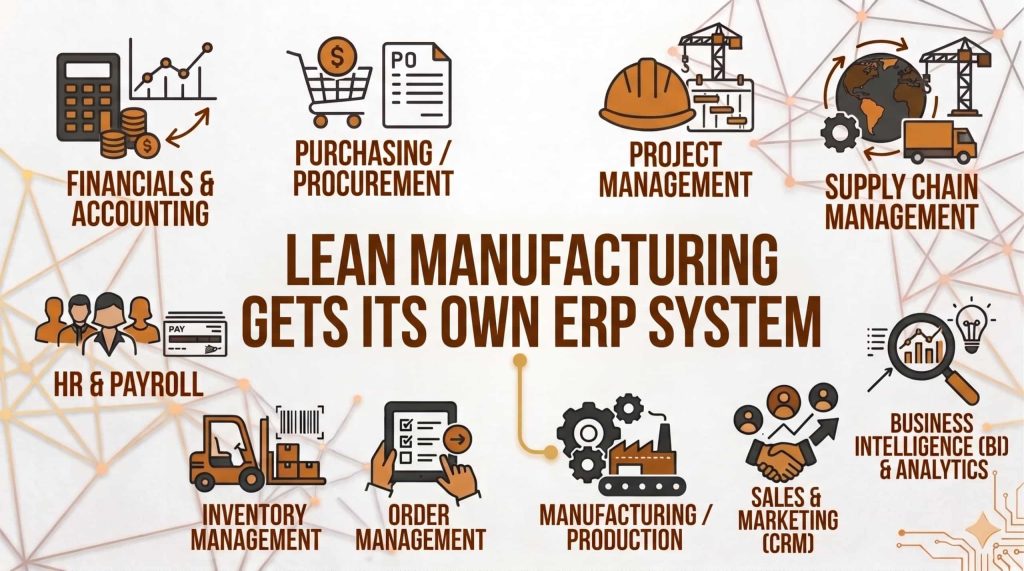
eresource Xcel ERP supports lean manufacturing by connecting important business activities. It can help manufacturers manage materials, production, inventory, sales, and other operations.
Once teams enter accurate data into the ERP system, they can use that information across different processes. As a result, employees can work with consistent and timely business information.
The system can also help manufacturers monitor processes from raw materials to finished products. Therefore, teams can identify delays and improve production workflows.
ERP for Lean Manufacturing Operations
Lean manufacturing requires detailed control over each production process. Manufacturers need to understand how every activity contributes to the final product.
eresource Xcel ERP for Manufacturing Industry can support these requirements. It helps connect production activities and business information.
Better visibility can help manufacturers improve process control. In addition, accurate data can support faster decisions and better resource planning.
ERP and Lean Production Planning
Materials planning and production scheduling can create challenges for lean manufacturers.
Traditional ERP planning often uses sales forecasts to support material requirements. In contrast, lean manufacturing follows a pull-based approach. It keeps inventory low and replenishes materials when production needs them.
These approaches can work together with the right ERP configuration. eresource Xcel helps manufacturers coordinate planning and production activities while supporting lean operating methods.
Therefore, manufacturers can use ERP data without losing the principles of lean production.
Define Value Before ERP Implementation
ERP implementation plays an important role in lean manufacturing success. Before implementation, companies should define the value they want to provide to customers.
eresource Xcel ERP supports an implementation approach based on business needs. The implementation team can review customer requirements, current processes, and product or service goals.
This analysis helps companies identify gaps between current operations and business expectations. It also helps them select ERP features that match their actual requirements.
A clear value proposition keeps the ERP project focused. Moreover, it reduces the risk of spending time on processes that do not create meaningful business value.
Review Business Processes Before Implementation
Companies should review their existing processes before they implement the ERP system.
The review should cover activities that support business objectives. Teams should also document important production and operational steps.
For example, manufacturers can document:
Production activities
Shop-floor routings
Material movement
Waiting times
Queue times
Quality activities
Inventory movement
Customer requirements
This information helps teams identify value-producing activities. It also highlights activities that create delays or unnecessary costs.
eresource Xcel can support these processes through integrated manufacturing and business management functions.
Reduce Waste with Lean Manufacturing ERP
Lean manufacturing aims to reduce waste across the production process. ERP software can help teams monitor operations and improve resource usage.
Manufacturers should focus on common sources of waste. These include:
Overproduction
Unnecessary motion
Excess inventory
Production defects
Waiting time
Unnecessary transportation
Overprocessing
By monitoring these activities, companies can identify areas for improvement. ERP data can also help managers understand where delays and resource waste occur.
As a result, manufacturers can take corrective action and improve operational efficiency.
Improve Production Visibility
Production visibility is important for lean manufacturing. Managers need accurate information about production status, materials, inventory, and orders.
An integrated ERP system provides a central source of business information. Consequently, teams can monitor production activities and respond to issues more quickly.
Better visibility also supports communication between departments. Sales, purchasing, inventory, production, and finance teams can work with connected information.
Support Continuous Improvement
Lean manufacturing depends on continuous improvement. Companies must regularly review processes and remove activities that do not add value.
ERP software can provide useful operational information for this process. Managers can review production data, inventory levels, process activities, and resource usage.
Furthermore, teams can use this information to identify improvement opportunities. They can then adjust processes and monitor the results.
Why Choose eresource Xcel for Lean Manufacturing?
eresource Xcel ERP provides an integrated platform for manufacturing operations. It supports production, materials, inventory, and other business functions.
The system can help lean manufacturers improve process visibility and resource management. It can also support better coordination between business departments.
For companies planning a lean manufacturing ERP implementation, the right system should match their processes and business goals. A structured implementation approach can help teams achieve better results.
Conclusion
Lean manufacturing and ERP software can work together when companies configure the system around their business needs.
eresource Xcel ERP helps manufacturers connect production, materials, inventory, and business processes. It also supports better visibility and process control.
By reducing waste, improving planning, and monitoring operations, manufacturers can strengthen lean manufacturing practices. A well-planned ERP implementation can provide the information and control needed for continuous improvement.
For more information about eresource Xcel ERP system for lean manufacturing and a LIVE DEMO, please write to us or call us today.