Why Demand for ERP Solutions Keeps Growing
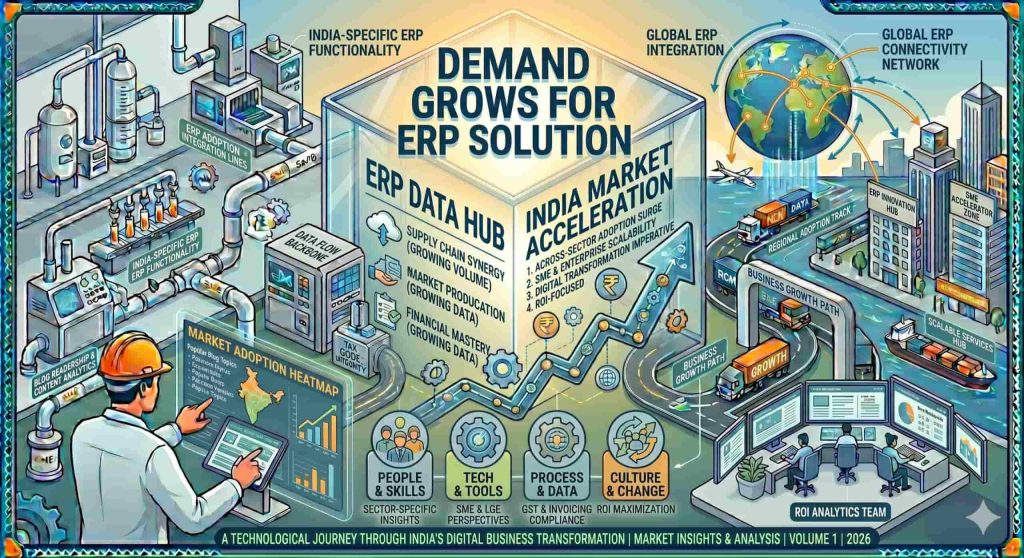
There is no doubt that Enterprise Resource Planning (ERP) systems are in great demand today, and industry analysts expect that demand to keep rising. What sits behind it? Studies of senior management respondents point to one answer above all: corporate growth is the most compelling driver for ERP adoption. This article breaks down the business drivers, the five factors behind ERP’s popularity, and what the trend means for companies that have not adopted yet.
The Business Drivers Behind ERP Demand
Growth tops the list, but it does not stand alone. Top management teams implement ERP for three further business imperatives:
- Improved customer service — faster, more accurate responses to every enquiry
- An efficient distribution system — stock, dispatch, and delivery on one platform
- Reduced operating expenses — less manual work, fewer errors, lower coordination cost
Moreover, the view at the top is remarkably consistent. Most CEOs and senior managers agree that ERP is an essential tool for achieving competitive advantage.
Five Factors That Make ERP So Popular
Beyond the boardroom drivers, five practical factors explain the explosive demand:
- Cycle time reduction — ERP shortens the time between order and delivery. Consequently, business agility rises, inventory falls, and order fulfilment improves.
- Support for business growth — new products, new product lines, and new customers, including global requirements such as multiple languages and currencies
- Real-time decision support — flexible, integrated information that improves responsiveness across the organization
- Freedom from legacy systems — ERP removes fragmented data and processes, inflexibility to change, and unsupportable old technologies
- Mid-market reach — modern ERP delivers rich functionality at a cost medium-sized organizations can afford
Competition Among ERP Providers Benefits Buyers
Demand attracts supply. As more companies enter the market, ERP solution providers face a competitive environment — and that competition brings out the best in them. For buyers, this is good news. Products improve faster, implementation models tighten, and pricing stays honest.
Affordable ERP Opened the SME Floodgates
Initially, the huge cost of ERP implementation kept many medium-scale industries away. However, affordable solutions like eresource ERP changed that. Built to serve small and big players alike, eresource brought real benefits to Indian SMEs — and SME adoption, in turn, became a major force behind the growth of the Indian ERP market.
What Growing Demand Means for Your Business
Rising ERP demand carries a simple signal: integrated operations are becoming the norm, not the exception. Companies that adopt early capture the cost, service, and agility advantages first. Waiting does not make adoption cheaper — it only extends the years spent competing with disconnected tools against integrated rivals.
Also Read – ERP System for Construction Industry
Frequently Asked Questions
Common questions about the growing demand for ERP
Why is demand for ERP solutions growing?
Corporate growth is the most compelling driver, followed by improved customer service, efficient distribution, and reduced operating expenses. Affordable web-based ERP has also opened adoption to medium-sized companies.
What makes ERP popular with management teams?
Most CEOs and senior managers see ERP as an essential tool for competitive advantage — it reduces cycle times, supports growth, provides real-time decision support, and replaces fragmented legacy systems.
Why are mid-sized companies adopting ERP now?
Earlier, high implementation costs kept them away. Affordable solutions like eresource ERP now deliver rich functionality at a cost medium-sized organizations can afford.
Does growing ERP demand benefit buyers?
Yes. As more providers compete for the market, products improve faster, implementation models tighten, and pricing stays competitive — all of which work in the buyer's favour.