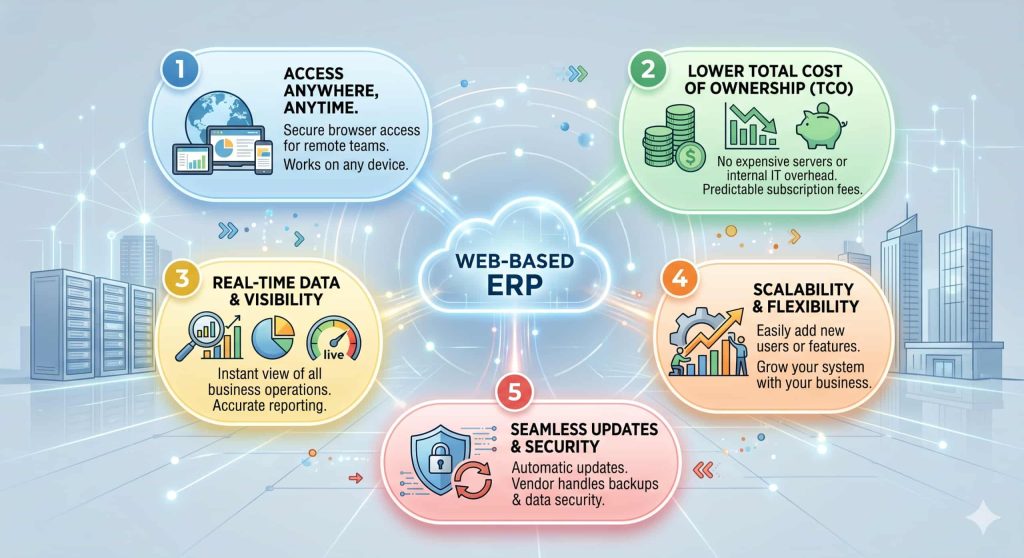
Web-Based ERP Software: Advantages, Benefits and Features
Web-based ERP software helps businesses manage their daily operations online. Users can open the ERP system through a web browser. They do not need to install the software on every computer.
The system runs on a web server. A reliable server keeps the application available for users. It also helps businesses manage their ERP system with less IT infrastructure.
Companies can access their ERP system from different locations. Employees only need a device, a web browser, and an internet connection.
What Is Web-Based ERP Software?
Web-based ERP software connects business operations through an online platform. Users can access the system through a standard web browser.
The ERP system stores business information in a central database. Different departments can use the same information.
A web-based ERP system usually follows a three-tier architecture.
Presentation Layer
The presentation layer manages the user interface. It includes web pages, forms, menus, and other user elements.
Employees use this layer to enter and view business information.
Business Layer
The business layer manages the main business rules. It controls the processes used by different ERP modules.
This layer connects user activities with business processes.
Data Layer
The data layer manages the database. It stores important business information.
The database can contain sales, purchase, finance, inventory, HR, and customer records.
Advantages of Web-Based ERP Software
Web-based ERP software offers several benefits to modern businesses. It can simplify business management and improve collaboration.
1. Access ERP From Anywhere
Users can access the ERP system from different locations. They only need an internet connection and authorized access.
Sales employees can enter orders while visiting customers. Managers can check business information while working remotely.
This flexibility helps companies support remote teams and multiple locations.
2. Lower IT Infrastructure Requirements
Traditional ERP systems may require software installation on many computers. They can also require additional infrastructure and maintenance.
Web-based ERP reduces these requirements. Users can access the system through a web browser.
This approach can help businesses reduce their IT workload.
3. Easy Software Access
Employees can open the ERP system through a browser. They do not need to install the application on every computer.
The IT team can manage the main system from a central location. This setup can simplify software administration.
4. Easier Employee Training
Web-based ERP software can make employee training easier. Trainers can demonstrate the system through a web browser.
Employees can join training sessions from different locations. They can also use familiar devices during training.
This method can save time and simplify the training process.
5. Real-Time Business Information
ERP software gives employees access to current business information. Different departments can work with shared data.
Managers can review sales, inventory, finance, and purchase information. They can use this information to make better decisions.
Real-time data also improves communication between departments.
6. Better Collaboration
A central ERP system connects different business departments. Finance, sales, HR, inventory, and purchase teams can share information.
Employees can access the information they need. This process reduces duplicate data entry.
Better information flow can also improve teamwork.
Web-Based ERP for SMEs
Small and medium-sized businesses often work with limited IT resources. Web-based ERP can help these businesses manage their operations.
An online ERP system can connect different business functions. It can also reduce the need for extensive IT infrastructure.
SMEs can start with the modules they need. They can add more modules as their business grows.
This flexibility makes web-based ERP a practical option for growing companies.
Key Benefits of Web-Based ERP
A web-based ERP solution can improve several areas of business management.
Accessibility
Employees can access the ERP system from different locations. This feature supports remote work and flexible operations.
Scalability
Businesses can expand their ERP usage as they grow. Companies can add users, modules, and processes based on their needs.
Integration
ERP software connects different departments through one system. It helps teams share information and coordinate their work.
Real-Time Data
Employees can access updated business information. Managers can use current data for business decisions.
Customization
Businesses often have different processes and requirements. A customizable ERP system can support specific business needs.
Automation
ERP software can automate many repetitive tasks. Automation reduces manual work and can lower the risk of data-entry errors.
Transparency
A central ERP system gives teams better visibility into business transactions. Managers can track important activities across departments.
Efficiency
ERP software brings multiple processes together. This approach can help businesses save time and improve operational efficiency.
Web-Based ERP Modules
A web-based ERP system can include several business modules. Companies can select modules according to their requirements.
Common ERP modules include:
-
Finance and Accounting
-
Human Resources
-
Inventory Management
-
Sales Management
-
Purchase Management
-
Customer Relationship Management
-
Supply Chain Management
These modules can work together through one ERP platform. This integration helps businesses manage their operations more effectively.
Why Choose eresource ERP?
eresource ERP is a web-based ERP solution for business management. The software helps companies connect different business functions.
The platform offers modules for finance, HR, supply chain, CRM, sales, and purchase management.
Businesses can use these modules to manage their daily operations. The system can also help teams improve information flow.
Companies can select the modules that match their business requirements.
How Web-Based ERP Improves Business Efficiency
Web-based ERP software brings important business processes into one system. Employees can manage information through a central platform.
The system can reduce repetitive manual tasks. It can also reduce duplicate data entry.
Managers can view information from different departments. This visibility helps them understand business performance.
Employees can spend less time searching for information. They can focus more on important business activities.
Web-Based ERP and Global Business
Businesses often work with employees, customers, and partners in different locations. Web-based ERP can support these distributed operations.
Employees can access the system from different locations. Teams can share business information through the same platform.
This capability can help companies manage growing operations. It can also support business expansion into new markets.
Frequently Asked Questions
What is web-based ERP software?
Web-based ERP software is an ERP system that users access through a web browser. The system runs on a web server and manages business information online.
What are the advantages of web-based ERP?
Web-based ERP offers many benefits. These include remote access, lower IT requirements, real-time data, integration, scalability, and better collaboration.
Is web-based ERP suitable for SMEs?
Yes. Web-based ERP can help SMEs manage business operations with fewer infrastructure requirements.
Can employees access ERP remotely?
Yes. Authorized users can access the ERP system from different locations. They need a suitable device and internet connection.
Which modules does web-based ERP include?
Common modules include finance, HR, inventory, sales, purchase, CRM, and supply chain management.
Conclusion
Web-based ERP software gives businesses a flexible way to manage operations. Employees can access the system through a web browser.
The software connects different departments through one platform. It can also provide current business information.
Businesses can reduce manual work and improve information sharing. SMEs can use web-based ERP to support business growth.
A suitable ERP solution can improve efficiency and simplify daily business management.
Request a Free eresource ERP Software Demo
Would you like to learn more about eresource ERP?
Contact the eresource team at info@eresourceinfotech.com to request a free ERP software demo.