Table of Contents
Introduction
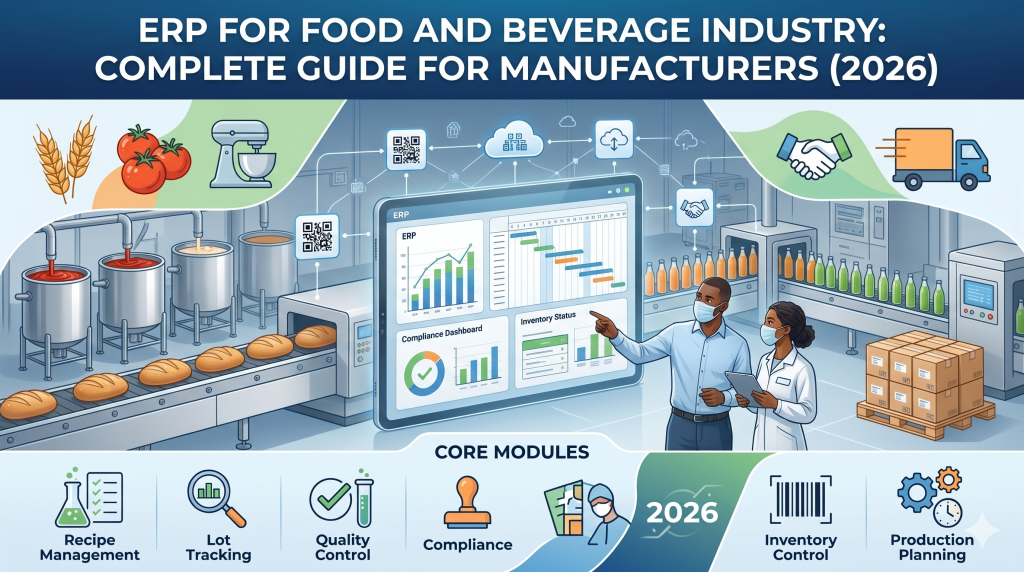
ERP for food and beverage industry is a specialized software system that helps manufacturers manage production, inventory, quality, compliance, and distribution in one centralized platform.
In simple terms, it allows food and beverage businesses to track ingredients, manage batches, ensure food safety, and control operations efficiently, while reducing waste and improving profitability.
With strict regulations, short shelf life products, and increasing consumer demand, implementing the right ERP system is essential for modern food and beverage companies.
What is ERP for Food and Beverage Industry?
An ERP system for food and beverage industry is designed to handle the unique requirements of food production, including:
- Recipe and formulation management
- Batch and lot tracking
- Inventory and warehouse management
- Quality control and compliance
- Supply chain and distribution
- Financial and reporting systems
Unlike generic ERP systems, it focuses on traceability, shelf life management, and regulatory compliance, which are critical in this industry.
Why Food and Beverage Businesses Need ERP
The food and beverage sector operates under strict quality and safety standards. Managing operations manually can lead to errors, wastage, and compliance risks.
Key Challenges:
- Managing perishable inventory
- Maintaining food safety standards
- Tracking batches and expiry dates
- Reducing wastage and spoilage
- Handling regulatory compliance
- Managing complex supply chains
An ERP for food and beverage industry helps solve these challenges by providing real-time visibility and control.
Also Read: Benefits of ERP Software In Food Industry
Key Features of ERP for Food and Beverage Industry
Choosing the right ERP requires understanding industry-specific features.
1. Recipe & Formula Management
Manage ingredients, quantities, and production variations.
2. Batch & Lot Tracking
Track products from raw materials to final delivery.
3. Inventory & Shelf Life Management
Monitor stock levels and expiry dates.
4. Quality Control
Ensure food safety with inspections and testing.
5. Compliance Management
Maintain regulatory standards and certifications.
6. Production Planning
Optimize manufacturing schedules and reduce delays.
7. Supply Chain Management
Manage suppliers, logistics, and distribution.
8. Reporting & Analytics
Gain insights into production, sales, and profitability.
Benefits of ERP in Food and Beverage Industry
Implementing an ERP for food and beverage industry provides multiple advantages:
- Improved food safety and traceability
- Reduced wastage and spoilage
- Better inventory control
- Faster production cycles
- Regulatory compliance
- Real-time decision making
- Increased operational efficiency
How ERP Improves Traceability and Food Safety
Traceability is one of the most critical aspects of the food industry.
Without ERP:
- Difficulty tracking product origins
- Slow response to recalls
- Risk of non-compliance
With ERP:
- Full batch traceability
- Quick identification of affected products
- Better compliance with food safety regulations
How to Choose the Best ERP for Food and Beverage Industry
Selecting the right ERP is essential for long-term success.
1. Industry-Specific Features
Ensure it supports food safety and traceability.
2. Scalability
Choose a system that grows with your business.
3. Integration
Check compatibility with existing systems.
4. Deployment
Cloud ERP offers flexibility and lower costs.
5. Vendor Support
Reliable support ensures smooth implementation.
Why eresource ERP is a Strong Choice for Food and Beverage Industry
For businesses searching for a reliable ERP for food and beverage industry, eresource ERP offers a practical and scalable solution.
Key Strengths:
- Supports manufacturing and process-based industries
- Handles inventory, production, and financial workflows
- Flexible deployment (cloud and on-premise)
- Customizable modules for business-specific needs
- Scalable for growing operations
Rather than offering unnecessary complexity, it focuses on delivering functional, adaptable solutions aligned with real business challenges.
ERP Trends in Food and Beverage Industry (2026)
The industry is evolving with technology-driven innovations.
1. Cloud-Based ERP
Improving accessibility and reducing costs.
2. Automation in Production
Reducing manual errors and increasing efficiency.
3. Data-Driven Insights
Helping businesses make smarter decisions.
4. Integration with Supply Chain Systems
Enhancing visibility and coordination.
Also Read: Best ERP Manufacturing Software
Frequently Asked Questions(FAQs)
ERP for food and beverage industry is a specialized system that helps manage production, inventory, quality, and compliance in food businesses.
ERP ensures food safety, traceability, reduces wastage, and improves production efficiency.
It should include batch tracking, inventory management, recipe control, quality checks, and compliance management.
Yes, ERP helps track inventory and expiry dates, reducing spoilage and waste.
Yes, many ERP solutions are scalable and suitable for small and medium-sized businesses.
ERP systems maintain records, ensure traceability, and help meet regulatory standards.