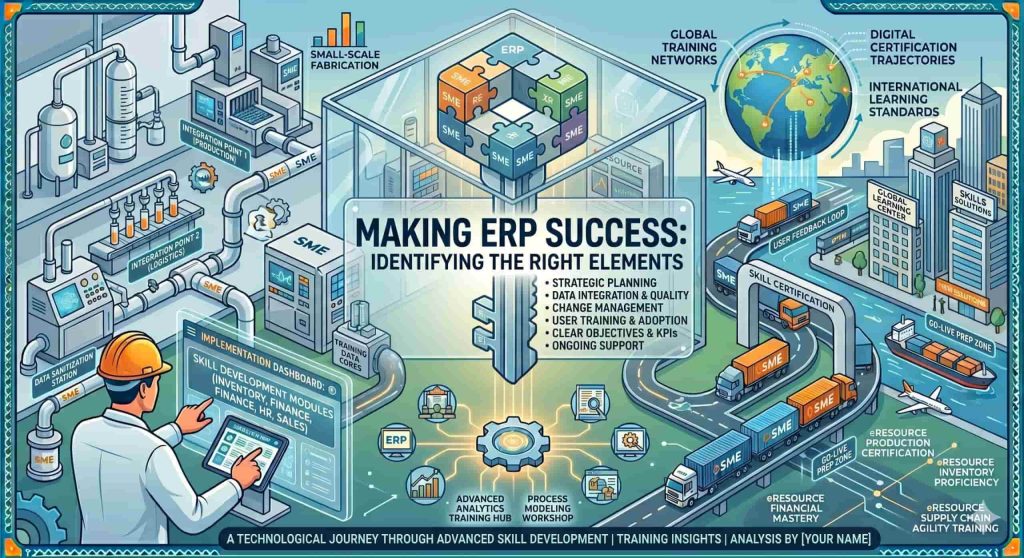
ERP Success: 5 Key Elements for Successful ERP Implementation
Ways to Ensure ERP Success
Implementing an ERP solution does not automatically make a business successful. Businesses also need the right strategy, processes, people, and management approach. Therefore, companies should plan their ERP implementation around clear business goals.
In our previous article, we discussed the qualities that help a business grow. Those qualities also play an important role in ERP success. A successful ERP implementation connects technology with business needs.
The organization should first understand its key business drivers. Then, it can build an ERP implementation strategy around those requirements.
There are five important elements of ERP success. This article focuses on the first and most important element: the client.
1. The Client: The First and Foremost Element
The client plays a central role in ERP success. The organization must clearly define its main business goals before starting ERP implementation.
ERP implementation is more than an IT project. It supports the overall business strategy. Therefore, management should identify the key business drivers for the industry and the company.
The company should also review its existing business processes. This review helps teams identify gaps, unnecessary steps, and areas for improvement.
Align ERP With Business Processes
A successful ERP implementation should support well-defined business processes. The organization may need to redesign some traditional processes before ERP implementation.
Customer interaction also matters. The term customer includes both external customers and internal users. Therefore, every department should understand how its activities affect other teams.
For example, sales decisions can affect production planning. Production decisions can affect purchasing. Similarly, purchasing decisions can affect inventory and finance.
A connected process helps teams work toward common business goals.
Avoid Traditional Departmental Silos
Many companies continue to operate through traditional departmental structures even after implementing ERP software. This approach can limit the value of ERP.
Different departments may focus only on their own targets. As a result, teams can lose sight of overall business performance.
For example, marketing may change customer requirements without informing production and purchasing. Production may then face planning problems. Purchasing may also struggle to manage material requirements.
This situation creates unnecessary conflicts between departments.
An integrated ERP strategy should encourage departments to share information and work toward common objectives.
Improve Cross-Department Coordination
ERP works best when employees understand the connection between their activities.
For example, a sudden change in the marketing plan can affect production and purchasing. Therefore, teams should communicate before making major changes.
Similarly, purchasing targets should align with production and maintenance requirements. When departments follow separate objectives, the organization may waste resources.
A successful ERP system should support collaboration instead of reinforcing departmental barriers.
ERP can connect business information across departments. However, employees must also follow coordinated processes. Technology alone cannot solve communication and management problems.
2. Create a Customer-Driven Business Strategy
The organization should understand customer requirements before defining ERP processes.
Customer-driven planning helps businesses connect sales, production, purchasing, inventory, and finance. Moreover, it gives employees a common direction.
The company should define clear responsibilities for each process. It should also identify the supplier, customer, and activities involved in important transactions.
This approach creates better process visibility. As a result, employees can understand how their decisions affect the wider business.
3. Use S&OP to Improve ERP Performance
Some organizations may find it difficult to move away from traditional make-to-stock practices. In such cases, S&OP (Sales and Operations Planning) can support better coordination.
S&OP brings different business functions together. Teams can review demand, supply, production capacity, inventory, and business priorities.
Regular S&OP meetings help departments develop practical plans for different planning periods.
The process also encourages teams to share information. Therefore, employees can identify problems earlier and make more coordinated decisions.
A few organizations already use S&OP. However, companies across different industries can use the same approach to improve business coordination and ERP performance.
4. Build Collaboration Into ERP Operations
ERP success depends on collaboration between employees and departments.
Regular meetings can help teams review business performance. They can also discuss planning issues, resource requirements, and operational changes.
Furthermore, collaboration improves employee understanding of the ERP system. When users understand why processes matter, they can follow them more consistently.
Management should encourage employees to participate actively in ERP-related discussions. This approach can improve user involvement and support long-term ERP adoption.
5. Connect ERP With Overall Business Goals
The final goal of ERP implementation should go beyond software deployment.
A successful ERP strategy should improve business processes, information flow, coordination, and decision-making.
The organization should regularly review whether the ERP system supports its business objectives. It should also track process improvements and identify areas that need further attention.
ERP software can provide a strong technology foundation. However, business leadership and employee participation remain essential for long-term ERP success.
Key Factors for ERP Success
Businesses should focus on these factors when planning ERP implementation:
Define clear business objectives.
Understand customer and market requirements.
Review existing business processes.
Improve coordination between departments.
Reduce departmental silos.
Involve employees in ERP planning.
Use S&OP where appropriate.
Provide proper ERP training.
Monitor ERP performance after implementation.
Align ERP processes with long-term business goals.
Conclusion
ERP success depends on more than selecting the right software. Businesses need clear goals, strong processes, employee involvement, and effective collaboration.
The client plays an important role because the organization defines the business requirements and implementation direction. Therefore, management should align ERP with customer needs and business strategy.
At the same time, departments must work together. S&OP can also improve coordination where businesses need better sales and operations planning.
With the right approach, ERP can become a practical business management system rather than just an IT investment.
Related Resources
Also Read – Eresource plays big role in global ERP market
Also Read – Major benefits of ERP in production planning