Table of Contents
Introduction
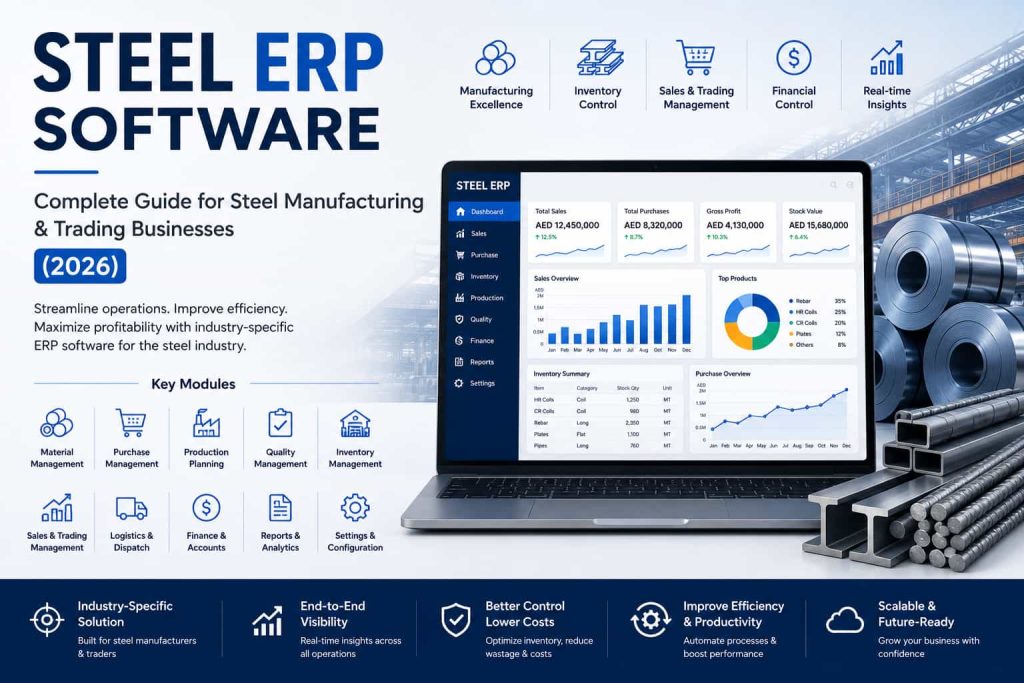
Steel ERP software is a specialized enterprise resource planning system designed to manage operations in steel manufacturing, processing, and trading businesses, including inventory, production, procurement, sales, and financial management.
In simple terms, it helps steel companies track raw materials like coils and billets, manage production processes, handle weight-based inventory, optimize supply chains, and improve operational efficiency, all within one integrated system.
Given the complexity of steel operations. Including batch production, variable weights, and multi-stage processing. ERP software is essential for maintaining accuracy, reducing wastage, and improving profitability.
What is Steel ERP Software?
Steel ERP software is tailored to meet the specific needs of the steel industry. Unlike generic ERP systems, it handles unique challenges such as:
- Weight-based inventory management
- Heat and batch tracking
- Multi-stage production processes
- Scrap and wastage tracking
- Quality control and compliance
It integrates:
- Production planning
- Inventory management
- Procurement
- Sales and order management
- Financial accounting
- Logistics and distribution
This ensures complete visibility across the steel supply chain.
Why Steel Businesses Need ERP Software
Steel manufacturing and trading involve complex processes and large-scale operations.
Key Challenges:
1. Weight-Based Inventory Management
Steel is measured in weight, not units, making tracking complex.
2. Multi-Stage Production
Processes like melting, rolling, cutting, and finishing require coordination.
3. Scrap & Wastage Tracking
Material loss directly impacts profitability.
4. Supply Chain Complexity
Managing raw materials and deliveries is challenging.
5. Price Fluctuations
Steel prices change frequently, affecting margins.
Steel ERP software helps address these challenges through automation and real-time data.
Also Read: ERP for HVAC industry
How Steel ERP Software Works
Example Scenario:
- Purchase order for raw material is created
- Inventory is updated based on weight
- Production process begins (melting, rolling, etc.)
- Batch and heat numbers are tracked
- Finished goods are recorded
- Scrap is tracked and managed
- Sales order is processed
- Invoice and financial records are updated
👉 This ensures accurate tracking and seamless operations.
Core Features of Steel ERP Software
1. Weight-Based Inventory Management
Tracks materials in kilograms, tons, or other units.
Benefits:
- Accurate stock tracking
- Reduced discrepancies
2. Heat & Batch Tracking
Tracks production batches and heat numbers.
Benefits:
- Quality control
- Traceability
3. Production Planning & Scheduling
Manages complex production workflows.
Benefits:
- Improved efficiency
- Reduced downtime
4. Scrap & Wastage Management
Tracks material loss during production.
Benefits:
- Cost control
- Reduced wastage
5. Procurement & Supplier Management
Handles raw material sourcing.
Benefits:
- Better supplier coordination
- Cost optimization
6. Sales & Order Management
Manages customer orders and pricing.
Benefits:
- Faster order processing
- Improved customer satisfaction
7. Financial Management
Tracks costs, revenue, and profitability.
Benefits:
- Real-time financial insights
- Better decision-making
8. Logistics & Dispatch Management
Manages transportation and delivery.
Benefits:
- Efficient dispatch
- Reduced delays
Benefits of Steel ERP Software
1. Improved Operational Efficiency
Automation reduces manual work.
2. Better Inventory Accuracy
Tracks weight-based inventory precisely.
3. Cost Control
Monitors production costs and wastage.
4. Real-Time Visibility
Provides instant access to data.
5. Enhanced Quality Control
Tracks batches and ensures compliance.
6. Scalability
Supports business growth.
7. Better Decision-Making
Provides data-driven insights.
Industries That Use Steel ERP Software
- Steel manufacturing plants
- Rolling mills
- Metal processing units
- Steel trading companies
- Fabrication businesses
Real-Life Use Cases
1. Steel Manufacturer
Tracks raw materials, production, and finished goods.
2. Rolling Mill
Manages batch production and quality control.
3. Steel Trader
Handles inventory and pricing efficiently.
4. Fabrication Unit
Tracks materials and project costs.
Common Mistakes Businesses Make
- Using generic ERP instead of industry-specific
- Poor inventory tracking
- Ignoring scrap management
- Lack of production planning
- Not tracking costs accurately
How to Choose the Best Steel ERP Software
1. Industry-Specific Features
Must support weight and batch tracking.
2. Scalability
Should grow with your business.
3. Integration
Must integrate with existing systems.
4. Ease of Use
User-friendly interface is important.
5. Vendor Support
Strong support ensures smooth implementation.
Why eresource ERP is a Strong Choice
For businesses searching for reliable steel ERP software, eresource ERP offers:
Key Strengths:
- Steel industry-specific modules
- Weight-based inventory management
- Production and batch tracking
- Real-time financial insights
- Flexible deployment (cloud and on-premise)
- Scalable for SMEs and enterprises
It focuses on delivering practical, industry-focused ERP solutions tailored to steel businesses.
Steel ERP Trends in 2026
1. Smart Manufacturing
Integration with IoT and automation.
2. AI-Based Demand Forecasting
Improves planning accuracy.
3. Cloud ERP Adoption
Enhances flexibility and scalability.
4. Real-Time Data Analytics
Improves decision-making.
Frequently Asked Questions(FAQs)
Steel ERP software is a system that manages production, inventory, and operations in steel businesses.
ERP improves efficiency, reduces wastage, and provides real-time data.
It should include weight-based inventory, batch tracking, and production management.
Yes, ERP systems support weight-based tracking.
Yes, ERP is suitable for both manufacturing and trading.
Yes, ERP tracks scrap and optimizes material usage.
Yes, it tracks heat and batch numbers.
Steel manufacturing, trading, and fabrication industries.