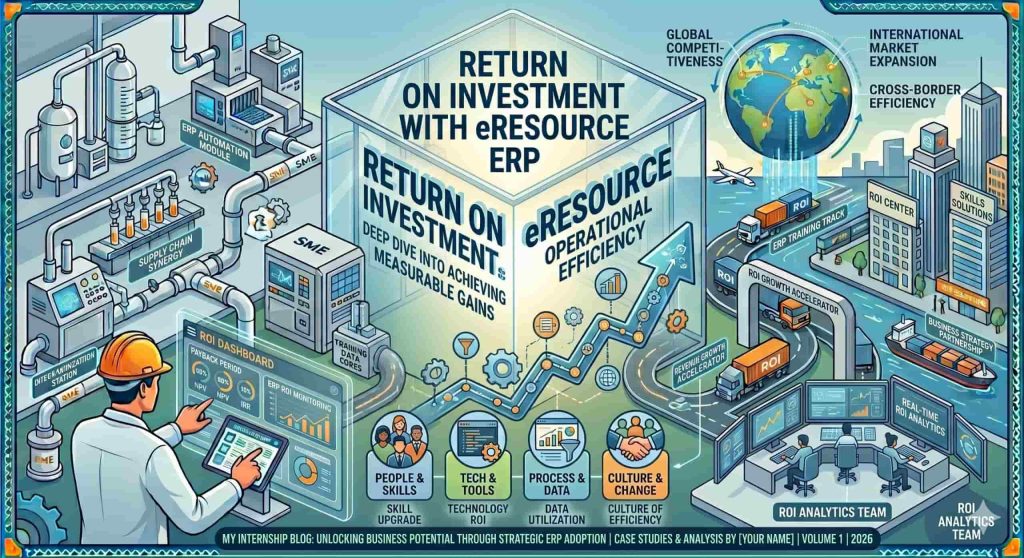
ERP Return on Investment: How eresource ERP Improves ROI
Deliver Better Return on Investment With ERP Software
Businesses need to control costs and improve productivity. Therefore, they need technology that can support better business decisions.
A flexible ERP system can help companies manage these goals. It can connect business functions, improve information flow, and reduce manual work.
For this reason, ERP return on investment has become an important consideration for small and medium-sized businesses.
eresource ERP helps businesses manage their daily operations through an integrated ERP platform. Moreover, its web-based approach supports access to business information across different locations.
Why ERP ROI Matters for Businesses
Economic pressure can make business growth difficult. At the same time, competition continues to increase.
Therefore, companies need to use their resources carefully. They must improve productivity while controlling operating costs.
A good ERP system can support this goal. It connects processes such as purchasing, inventory, sales, production, finance, and customer management.
As a result, businesses can reduce process gaps and improve operational control.
How eresource ERP Supports Better ROI
Businesses invest in ERP software to improve their operations. However, the investment should also deliver measurable business value.
eresource ERP can help organizations improve business processes through better coordination and real-time information.
For example, the system can help teams monitor operations and respond to business requirements faster.
In addition, integrated data reduces the need to maintain separate information across departments.
This approach can help businesses save time and improve resource utilization.
Flexible and Affordable ERP for SMEs
Small and medium-sized businesses often need to manage technology costs carefully.
An affordable ERP can help such businesses adopt integrated management software without creating unnecessary complexity.
Moreover, a flexible ERP system can support changing business requirements.
As the business grows, management can use ERP data to improve planning and decision-making.
Therefore, ERP can become a long-term business investment instead of a short-term software purchase.
eresource ERP and Business Growth
A business needs more than software to achieve growth. It needs better processes and timely information.
eresource ERP helps businesses connect different operational activities. Consequently, employees can work with more consistent information.
For example, management can review business data while teams handle daily operations.
In addition, integrated processes can improve coordination between departments.
These improvements can support better productivity and stronger business performance.
Web-Based ERP for Better Accessibility
Modern businesses often operate across multiple locations. Therefore, employees need access to business information when they need it.
A WEB-BASED ERP system can support this requirement.
Employees can access relevant business information through a web-based environment. As a result, teams can work with greater flexibility.
Furthermore, web-based ERP can support businesses with distributed teams and locations.
How eresource ERP Can Improve ROI
eresource ERP can contribute to better ROI in several ways.
1. Streamline the Supply Chain
First, ERP can connect purchasing, inventory, production, and sales information.
As a result, businesses can improve material planning and reduce unnecessary delays.
Better supply chain visibility can also help teams respond to changing requirements.
2. Improve Customer Relationships
Second, ERP can provide better access to customer and transaction information.
Therefore, employees can respond to customer requirements with more accurate information.
Better coordination can also improve service quality and customer satisfaction.
3. Reduce Operational Costs
Third, ERP can reduce repetitive manual work.
For example, integrated processes can reduce duplicate data entry and improve information sharing.
Consequently, employees can spend more time on productive activities.
Better process control can also help management identify unnecessary costs.
4. Provide Real-Time Information
Fourth, ERP can provide faster access to business information.
Management can review operational data and make decisions with better visibility.
Moreover, real-time information can help teams identify issues before they become larger problems.
This can improve response time and support better business control.
5. Create a Foundation for Growth
Finally, ERP can provide a structured platform for business growth.
As operations expand, companies need better coordination between departments.
An integrated ERP system can support this coordination.
Therefore, businesses can manage growth with better process visibility and resource control.
Measure ERP Return on Investment
ERP ROI should not depend only on financial savings.
Businesses should also track operational improvements.
Useful ERP ROI indicators include:
Lower operating costs
Faster order processing
Better inventory control
Improved production planning
Reduced manual work
Better customer service
Faster access to information
Improved employee productivity
Better resource utilization
By tracking these indicators, management can understand the actual value of ERP.
Why Choose eresource ERP?
eresource ERP focuses on integrated business management. It can support different business functions through a connected ERP environment.
The system can help businesses improve processes, access information, and coordinate departments.
Furthermore, a web-based ERP approach can support flexible business operations.
Therefore, organizations can use ERP as a foundation for operational improvement and long-term growth.
Conclusion
ERP should deliver more than software functionality. It should help businesses improve efficiency, control costs, and make better decisions.
With the right implementation, ERP return on investment can come from several areas. These include supply chain management, customer relationships, cost reduction, real-time information, and business growth.
eresource ERP can help businesses connect these functions through an integrated ERP solution.
As a result, companies can build stronger processes and create better value from their ERP investment.
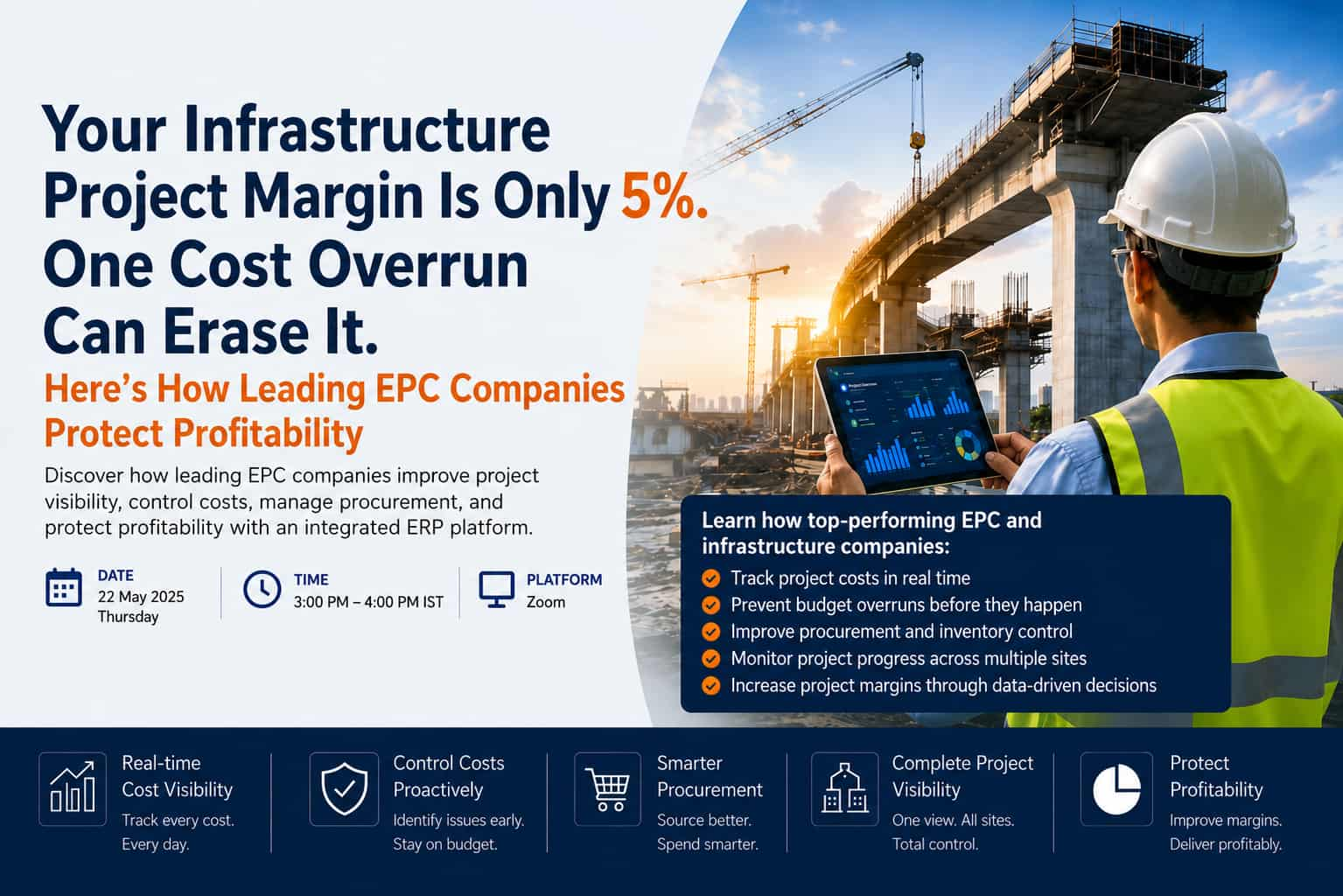
Also Read – ERP Software for Infrastructure Industry
Frequently Asked Questions
Common questions about ERP return on investment
What is a good ROI for an ERP system?
Successful implementations typically achieve 100–500% ROI over one to five years, with annual returns of 20–30% considered healthy. Payback within two to three years is a strong result.
How do you calculate the payback period for ERP?
Add up yearly benefits until the cumulative total equals your total cost — that point in time is the payback period. For most well-run SME implementations, it falls between 18 months and 3 years.
What costs should be included in ERP ROI calculation?
The full 5-year Total Cost of Ownership: software licence or subscription, implementation, data migration, training, infrastructure, and annual support — not just the licence price.
How does flat-licence pricing affect ERP ROI?
With per-user pricing, costs grow every time you add staff, which erodes ROI as you scale. A flat licence with unlimited users, like eresource ERP's model, keeps TCO stable — so growth improves ROI instead of taxing it.