Skip to content


Manufacturing ERP Software: Improve Production, Reduce Costs and Manage Growth
Manufacturing companies need to manage production, materials, inventory, procurement, quality, sales, finance, and other business operations efficiently. When these activities are managed through disconnected systems or manual processes, businesses can face data errors, production delays, excess inventory, rising costs, and limited visibility into operations.
Manufacturing ERP software brings these critical processes together on a single platform. It gives manufacturers a centralised view of business operations and helps teams access accurate information when they need it.
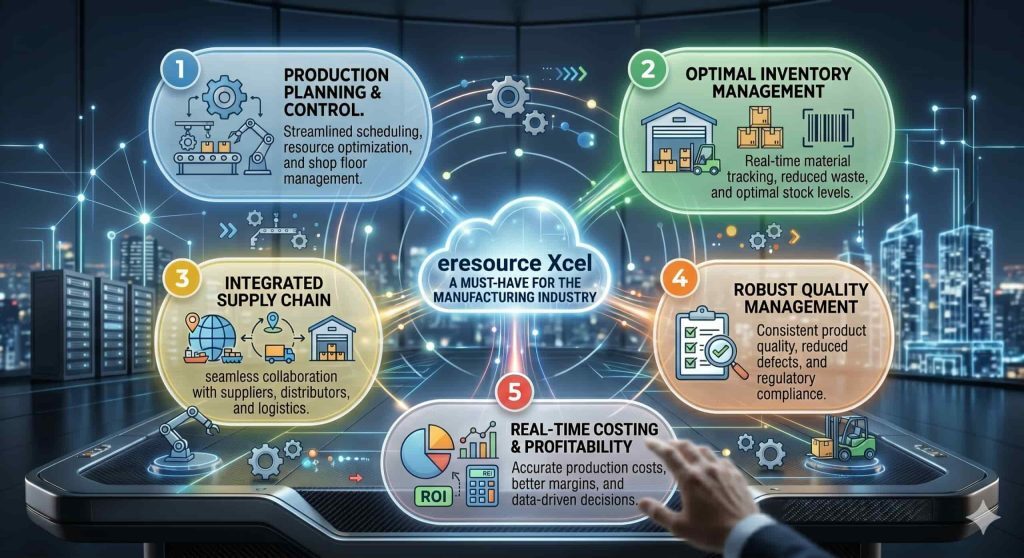
eresource Xcel is a specialised ERP software for manufacturing designed to support the operational requirements of manufacturing businesses. It connects important functions such as materials, inventory, production, sales, accounting, and finance through a centralised system.
What Is Manufacturing ERP Software?
Manufacturing ERP software is an enterprise resource planning system designed specifically for manufacturing businesses.
Unlike a generic business management system, a manufacturing ERP needs to support production-related processes such as material planning, inventory management, production operations, quality control, and product-related data.
With the right ERP system, manufacturers can connect information across departments instead of maintaining separate systems for different business functions.
Why Do Manufacturers Need ERP Software?
Manufacturing operations involve multiple activities that depend on each other.
For example, production depends on material availability. Material requirements depend on production plans. Purchasing depends on material requirements, while sales and delivery depend on production schedules.
When these processes are not connected, even a small delay or data error can affect other departments.
A manufacturing ERP system helps connect these processes and gives management better visibility into day-to-day operations.
It can help manufacturers:
-
Improve production planning and coordination
-
Manage materials and inventory more effectively
-
Reduce unnecessary operational delays
-
Monitor production activities
-
Improve information flow between departments
-
Control operating costs
-
Support quality management
-
Make decisions using centralised business data
Key Features of Manufacturing ERP Software
A manufacturing ERP should cover the core processes that keep a manufacturing business running.
1. Production Management
Manufacturers need visibility into production activities, job progress, and operational requirements.
ERP software can help businesses organise production-related information and monitor the progress of manufacturing activities.
This gives managers better visibility into production operations and helps them identify delays that require attention.
2. Material and Inventory Management
Material availability directly affects production.
A manufacturing ERP can connect material requirements with inventory and purchasing activities. This helps businesses monitor stock levels and identify material requirements more efficiently.
Better inventory visibility can also help reduce unnecessary stock accumulation and avoid production interruptions caused by material shortages.
3. Production Planning
Effective production planning requires accurate information about materials, orders, production requirements, and available resources.
With centralised ERP data, manufacturers can coordinate production activities more effectively and respond to changing business requirements.
4. Quality Management
Product quality is critical for manufacturing companies.
Manufacturing ERP software can help organisations record and monitor quality-related information, identify defects, and take corrective action.
Better visibility into quality issues can help manufacturers improve processes and maintain consistent product standards.
5. Sales and Order Management
Manufacturing operations are closely connected with customer orders.
An integrated ERP system can connect sales information with other business functions, helping teams maintain better visibility from order requirements through operational execution.
6. Accounting and Finance
Financial information should not remain isolated from operational data.
An integrated manufacturing ERP connects operational activities with accounting and finance, giving management a more complete view of business performance and costs.
How Manufacturing ERP Software Can Reduce Operating Costs
Cost reduction is one of the important reasons manufacturers invest in ERP software.
However, the benefit does not come simply from installing ERP. Cost savings depend on how effectively the system is implemented and used across the organisation.
A manufacturing ERP can support cost control by improving visibility into areas such as:
-
Material consumption
-
Inventory levels
-
Production activities
-
Procurement
-
Operational delays
-
Product quality
-
Business expenses
When managers have access to accurate and timely information, they can identify areas that require attention and take corrective action sooner.
Improve Resource Efficiency
Manufacturers need to use people, materials, machines, time, and financial resources efficiently.
Without integrated systems, it can be difficult to understand where resources are being consumed or where operational bottlenecks are developing.
A manufacturing ERP provides centralised information that can help management monitor business activities and identify areas where resources may be used inefficiently.
This can support better planning and more informed operational decisions.
Improve Production Visibility
Production managers need to know what is happening across manufacturing operations.
An ERP system can provide information about production activities, material requirements, inventory, orders, and other related processes from a centralised platform.
Better visibility allows management teams to identify issues earlier instead of waiting for problems to affect delivery schedules or customer commitments.
Improve Product Quality
Quality problems can increase manufacturing costs through rework, rejected products, delays, and customer complaints.
A manufacturing ERP with quality management capabilities can help businesses record quality-related information and monitor issues across operations.
By identifying recurring problems and taking corrective action, manufacturers can work towards more consistent production quality.
Support Business Growth
Manufacturing businesses often become more complex as they grow.
New locations, additional products, increased production volumes, more suppliers, and larger customer bases can make business management more difficult when processes depend heavily on disconnected systems.
An ERP system provides a centralised platform that can support business processes as the organisation expands.
For growing manufacturers, this can help create a more structured approach to managing business operations.
Why Choose eresource Xcel for Manufacturing?
eresource Xcel is a specialised ERP solution designed for manufacturing businesses.
The system connects important business functions including:
-
Materials
-
Inventory
-
Production
-
Operations
-
Sales
-
Accounting
-
Finance
By bringing these functions together, eresource Xcel can provide manufacturers with a centralised source of business information.
The system is available for Cloud and on-premise deployment, allowing businesses to choose an approach that aligns with their operational and technology requirements.
When Should a Manufacturing Company Consider ERP?
There is no single point at which every manufacturer should implement ERP software.
However, ERP may become increasingly valuable when a company experiences challenges such as:
-
Increasing production volume
-
Difficulty controlling inventory
-
Limited visibility across departments
-
Growing numbers of orders and suppliers
-
Manual or duplicated data entry
-
Difficulty tracking production activities
-
Expansion into multiple locations
-
Increasing operational complexity
The objective should not simply be to replace existing software. The objective should be to create better-connected and more manageable business processes.
Final Thoughts
Manufacturing ERP software can help businesses connect production and business operations through a centralised system.
From production and materials to inventory, quality, sales, accounting, and finance, an integrated ERP platform can give management better visibility and help teams work with more consistent information.
For manufacturers evaluating an ERP solution, the important step is to understand their operational requirements first and then select a system that can support their processes and future growth.
eresource Xcel is designed specifically for manufacturing businesses looking to integrate their core operations through a specialised ERP platform.
Want to See How Manufacturing ERP Can Work for Your Business?
Explore how eresource Xcel can support your manufacturing operations.
Book a Free Demo and discuss your manufacturing ERP requirements with our team.