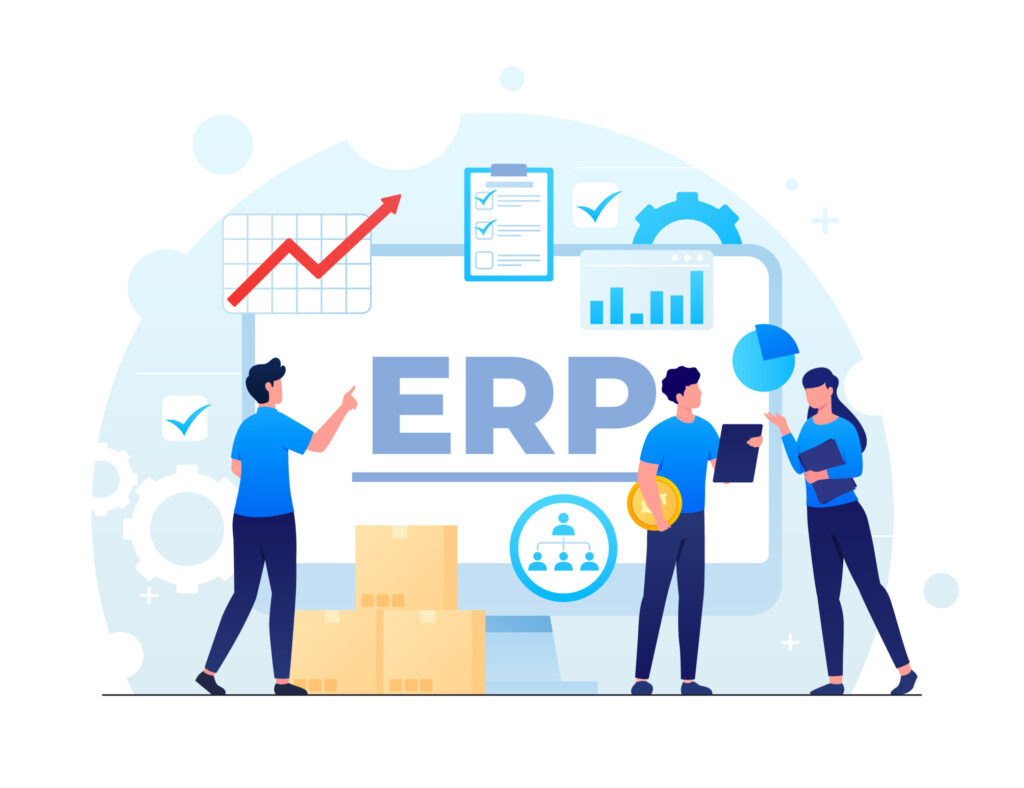
One ERP. Every Industry. Global Presence. Powered by Azaalea AI
22272e9fb58a47b7d605950c6cdff7b550d0b71e
One ERP. Every Industry. Global Presence. Powered by Azaalea AI
Final white Azaalea Ai Middle East FZ LLC logo (1)

Quick implementation, quick business and quick RoI

7016016 Quick ERP Implementation, Quick Business and Quick ROI ERP software like the eresource can bring all the difference to a business organization with the integration of internal and external management information. The award winning leading Web-based eresource ERP solution that has been developed in Indian soil allows you to maximize efficiency across departments and identify key areas for improvement producing real cost savings. Not only just choosing the right ERP but also the effective implementation contributes to the successful functioning of the ERP. What also to be considered is the time taken to implement. Everyone knows time is precious. An ERP implementation must be completed within stipulated time. Apart from the timely implementation, employee training is also essential for the successful functioning of any ERP software. Without proper training of employees the organizations won’t succeed in enjoying the full advantage of the new systems and may even feel uncomfortable using them. Make it sure that your employees are trained thoroughly during and after implementation as well as a periodical training method must be adopted to ensure everyone is getting used to the system without facing hardship. eresource ERP once implemented, brings greater efficiency in all the business operations. Having said that what is to be remembered is that, there may be a certain amount of data migration and conversion will inevitably be involved. This may cause a slight disruption of business operations including data migration and employee training, during the implementation of the ERP system. As eresource ERP implementation is efficient and adopting the time saving exercise, the disruption time is going to be negligible. To get the most out of eresource ERP software, it has been integrated with all the modules that are required for every verticals in a systematic way. Any additional facilities required by companies could be integrated as per the requirement. Web-based ERP system is scalable. Companies that have implement only limited modules could be upgraded with our full fledged ERP system in a quick session. Over the years many companies that have evaluated many ERP tools to run their business been finally settled with eresource ERP after finding that it only gives them value for money but also brings a substantial ROI soon. A quick ERP implementation that makes a quick business with a quick ROI, that’s eresource.   Also Read – ERP for packaging industry

Making ERP success: Identifying the right elements

7016016 Ways to ensure ERP success: In our last article we have discussed what makes a business grow. It was explained in details the basic qualities, applications and dedicated efforts are necessary to succeed in a business field. What we would like emphasis in coming series of articles are that just implementing ERP solution won’t make your business grow. To make ERP implementation sensible, we have to consider some other elements along with its focusing styles and then formulate the overall plan of actions. There are five important elements that have been identified and these are analyzed in details in the following articles. The Client: The first and foremost element The client is, who suggests focusing on the organization’s main line of business. As ERP implementation is more of business strategy than IT strategy, one has to analyze the key business driver’s specific to the industry and also for the company. It is customary to redefine the business processes with proper synchronization of these drivers along with improved customer interactions. The term ‘customer ‘ includes internal as well as external. The organization must plan for leaving traditional functional set-ups and re-configuring its resources across pull type process set-ups where every transaction has specified supplier, customer, and the activities known in all aspects. What is happening in most of the Indian companies is that even after adopting ERP, the organization continues with traditional functional style of departmentalization. This is mainly because of the absence of customer driven strategic plan or its incomplete ERP implementation. In such set-ups or typically in make-to-stock environment, we find the traditional atmosphere of rivalry between various functional departments. For example, Marketing is the main ‘culprit’ for the production planning inefficiencies because of the dynamic, non-standard requirements which do not make sense. Also Read – Eresource plays big role in global ERP market Similarly, production planning department is regarded as the ‘worst’ ever planner by the purchase department. The accounts department is the common enemy of all. Such culture is the outgrowth of the multi-hierarchy organization structure in which cohesive and common language for business performance is missing. The organization is operating with fragmented departmental optimum results and no orientation is observed for the integrated business strategies. ERP completely fails to address such environment the underlying reason being misunderstanding and lack of coordination between different departments. ERP cannot ‘fulfill’ the requirements of these users. For example, a sudden change in released marketing plan without consent of planning and purchase will create complete nervousness in the organization. Also, the targets given to purchase will conflict with production and maintenance targets. Such local optimum objectives lead to overall fragmentation and under utilization of organizational resources. ERP never supports these practices and the corresponding deviation between the Sucessfull ERP software concept and the organization practice will make ERP a costlier affair for the organization. If the client is not able to switch over to lean products and still wishes to eliminate these problems, then S&OP (Sales and Operations Planning) must be followed sincerely. It is the only way out for the Indian companies to improve their existing ERP performance. A few organizations already started this, but it should become a general feature across all sectors. The main idea of SOP is to collaborate internally and find out workable and naturally optimistic plans for particular planning horizons. Participating regularly in such meetings will boost the morale of participants for driving ERP towards success. An important point to be noted here is that this recommendation is applicable to each and every industrial sector including manufacturing and service.   Also Read – Major benefits of ERP in production planning

What makes your business grow?

7016016 Indian currency this is the one question many businessmen ask themselves. What makes the business grow? We have the answer. It is the Planning. Planning makes a business grow and yield good profit. You may think it is simple. But is it? No. Do you want to find out why it is not simple? For a good planning in business you need to get proper guidance. Are you getting proper guidance or you being misguided? Let us begin from the beginning. It is said that, well begun is half done. This punch line best suited as far as a business enterprise is concerned. In today’s hyper competitive markets, small and midsize companies are faced with ever-growing challenges and they could overcome these challenges if only they are fully prepared. Business enterprises must be occupied with the infrastructure, whether it is in the form of man power strength or the software system, which could streamline and handle the workload successfully and help deliver the result in a desired manner. Success of a business lies in the faith their customers keep with them. To gain the customers’ faith, organizations must fulfill their commitment. Is your organization able to keep the commitment? If not, why? You must have searched for the reasons many a time without getting an answer. Also Read – Manufacturing ERP Software In spite of having dedicated personnel who are ready to carry out orders successfully and enough man power strength to bring out required product from the factory, most of the time you have failed to achieve the desired result. You have failed to deliver goods to your customers as per the commitment made. What went wrong when everything seems going right? We can say nothing went wrong. But you failed in your planning or things weren’t turned out as you and your personnel anticipated. Production department need the raw material to produce the product. You need to provide the raw material. Have you made sure your production department had enough stock in their hand? Have you made arrangement of these materials with your delivery sources? No. Isn’t? And because of the some human error you failed to deliver the goods and you could not keep the promise made to your customers. Will these customers approach you again for their requirements? Can your business survive if the customers don’t come back? But you could have avoided this entire scenario if you had implemented eresource ERP in your organization. eresource ERP identifies the requirement of production in advance, from the raw material requirement, stock available, stock to be ordered, delivery time, production details, man power required, time required for production and all that need to bring out the product on time on a required manner and also it intimates the concerned departments though email alerts. It is just a small example of how eresource ERP could contribute to your business function. eresource ERP, a reliable and affordable ERP solution from eresource Infotech, identifies and supports every function of an organization including its branches, departments and its sub-sections. What is more exciting about eresource ERP is, it not only addresses all your day to day business challenges, you will also get a healthy return on your investment quickly and faster than you probably thought.   Also Read – ERP Software for Project Industry

ERP implementation is a ‘User Driven’ project

7016016 User-driven ERP Implementation: User driven project every organization has its own cultural or organizational structure. In this situation, it is natural for them to be sceptical about ERP, since it is felt that their businesses are unique, organizations varying and cultures different. However, there is no need of such concern as an ERP package has been designed and is being continually upgraded to incorporate the best industry practices to suit most industry segments. With thorough and dedicated BRP study and adapting those changes in the business process well before implementing the ERP shall help make things smoother. It is therefore recommended that this methodology is followed; otherwise there is chance that most of the time users are left frustrated. This leads to poor participation and costly delays. It is important to understand that an ERP package not necessarily fit in completely with the existing business practices of most organizations and hence, the onus is on the users to appreciate this fact and to work with the implementation consultants in trying to adapt to the package. In doing so, they don’t have to feel that they are compromising on their business effectiveness; rather, by accepting the package, they are adopting the best of breed business practices and ensuring the successful implementation of new system. The other important factor is that the users do not expect a reduction in their workload immediately after the implementation of ERP Software and should not look for a miracle to happen. An ERP package is only an enabling tool and improves the flow of information and formalizes all the business processes and workflow that exists in an organization. It helps users to do their jobs better, which may call for additional efforts. If one has to have more information in a system, it entails more work for more users, but the benefit is that this information is properly stored and can be fruitfully uses by other users in making better decisions. As the flow of information throughout the organization improves, the company starts performing better and this in turn benefits the users who have collectively improved their way of working. The package design and the architecture facilitate the availability of information to all authorized users in a useful way. Also Read – ERP Software for Furniture Industry Another important factor is the role of the consultant. The consultants by virtue of their industry experience and package expertise can help set the expectations of users at various levels keeping in mind the overall business objectives of the client. But it is also important to remember that a consultant is an external agent and all the business process of the organization is more akin to the management team and the users than the consultant. The consultant however, can work closely with key users, understanding their needs, analyzing the business realities and designing solutions that meet the basic objectives of the company. They, then, have to impress upon the users that individual needs can be met by keeping the organization’s needs in mind. It is the responsibility of the consultants and management team from the organization to guide them in this task and facilitate the overall implementation process. In essence, ERP implementation is predominantly a ‘User Driven’ project.   Also Read – ERP Software Company In India

ERP drives enterprises forward

7016016 ERP drives enterprises forward: Business in this century is complex, fluid and customer-centric. It requires stringent, yet flexible processes and communications systems that extend globally and respond instantaneously. The processes and systems must be integrated. No part of the enterprise can escape the pressure to deliver measurable results. However, the traditional ERP systems failed to complete the task they ultimately set out to accomplish: to unify the enterprise and turn it into one smoothly running machine. eresource’s web-based ERP system promises to bridge this gap. Our ERP system links departmental communications, work processes, customer data and supplier capabilities into a centrally functioning system – all focused on driving the enterprise forward. Enterprises have already started to benefit from extending their ERP installations to more of their organizations. eresource’s web-based ERP was a giant step forward when first introduced. The market then saw new buzz terms such as lean manufacturing, arise that did not bring new functionality, but promised greater efficiency, when , in fact all it did was deliver what ERP as supposed to do in the manufacturing space. eresource ERP gave businesses a vehicle to manage information and use it to their advantage. It organized customer data in ways that helped individual departments operate more efficiently, and it created streamlined processes that helped manufacturing operations cut costs and move products along more quickly. eresource ERP in contrast, does offer advancements in functionality. It delivers on the original concept of ERP being for the entire enterprise, so that the whole organization can operate more efficiently. No longer does corporate information sit isolated in departmental silos, but is houses with all corporate customers, etc. This information enabling creates a new level of cohesion and eliminates most of the departmental and organizational information barriers facilitating smooth and seamless flow of information. The integration of ERP, the enabling technologies like CRM, SCM, the analysis and business intelligence tools with Internet enable the organization to do business in the Internet way at astonishing speeds and high efficiency.   Also Read – ERP for Trading company

Open lines of communication with partners, suppliers and customers

7016016 ERP for Business Growth: Business in this world is complex, fluid and customer-centric. It requires stringent, yet flexible processes and communications systems that extend globally and respond instantaneously. The process and systems must be integrated. No part of the enterprise can escape the pressure to deliver measurable results. To compete on a functional level today, businesses must adopt an enterprise-wide approach to ERP that utilizes the Internet and connects to every facet of the value chain. They must change their own internal processes and procedures to foster collaboration efforts both inside and outside the organization, and they must integrate technologies that allow their collaboration efforts to take full flight. Changing internal process is not always easy. Organizations must abandon old methods that strived to preserve and protect data in individual fiefdoms. They need to allow data to be shared with an organization a rule and roles based system. They must overhaul reporting structures that limit decision-making to a select few. They must open lines of communication and collaboration with the organization and to outside partners, suppliers and customers. Without open processes the extension of EPP throughout an enterprise will fail. eresource ERP gives businesses a vehicle to manage information and use it to their advantage. Its organized customer data in ways that help individual departments operate more efficiently; and it creates streamlined processes that help manufacturing operations cut costs and move products along more quickly. Web-enabled ERP links departmental communications, work processes, customer data and supplier capabilities into a centrally functioning system – all focused on driving the enterprise forward. Enterprises are already starting to benefit from their eresource ERP installations to more of their organizations. Web-based ERP was a giant step forward when first came into scene. However, over time, most products on the market offer similar functionality, eresouece ERP has its greater efficiencies and effectiveness, which our customers are really satisfied with. eresource ERP does offer advancements in functionality. It delivers on the original concept of ERP being for the entire enterprise, so that the whole organization can operate more efficiently. No longer does corporate information sit isolated in departmental silos, but it houses with all corporate information, used to benefit the entire organization namely, its business partners, supplies, customers, etc. This information enabling creates a new level of cohesion and eliminates most of the departmental and organizational information barriers facilitating smooth and seamless flow information. The integration of ERP, the enabling technologies like CRM, SCM, the analysis and business intelligence tools and web-enabled ERP, the organizations to do business in the Internet way at astonishing speeds and high efficiencies.   Also read – Call +91 77389 72222 or Email us at info@eresourceinfotech.com for Free ERP online demo!

Planning ERP implementation? Here are some few tips

7016016 ERP Implementation Planning  The time is an important factor as far as an ERP implementation is concerned. Companies should also be equipped with abilities to face whatever shortcomings they may encounter with. Implementation methodologies must not only satisfy the customer, but also must boost the confidence of the users. There is also a confusion prevailing among the top decision makers that whether ERP implementation be carried out module wise or all the modules at one go? Before taking a concrete decision on this regarding the management must make a thorough study of the prevailing situation in their organization. This is because the ground situation varies and depends on each organization. Mostly decision on this depends on the readiness audit result, available strength of consulting human power – both internal and external – relevance of ERP at various sites, time frame, and the budget. But it is highly recommended that the organization should go for the implementation of all the modules at one time at one site, and then go for roll out strategy for all sites. There is also a wrong concept about the BPR and ERP system. The main doubt persist in the mind of many decision makers is whether the organization should first carry out BPR and then implement ERP, or vice versa. Actually, one has to understand that the physical form of the BPR concept is the ERP system. In some organizations where BPR is carried out first then ERP was implemented. In all these places, the BPR document was thrown into dustbin and new ‘to be document’ was prepared suitable to ERP. Such cases clearly show that BPR benefits as such don’t exist without ERP reference, and ERP just cannot be carried out without proper BPR. What we assume is that the BPR must be the outgrowth of ERP implementation and, therefore, it should be carried out during implementation only. But the major element of BPR is the change in the mindset, which can be initiated before ERP adoption, may be during the preliminary analysis by way of user training. The best thing to do in these situations is to carry ‘noiseless BRP’ which triggers the implementation smoothly. Tight integration between modules is the key to an efficient ERP packages; therefore all of the core business modules are related. For instance, in eresource ERP, manufacturing operations are integrated with customer service, logistics and delivery. A new customer order automatically initiates an appropriate warehouse action and product shipments trigger billing processes. Sales, production and purchasing groups work seamlessly together to fulfill critical customer orders and adapt production levels to changes in market demand. Organizations also must understand that development of ERP is not like other software development projects, which are normally carried out focusing on automation. We find such serious mistakes being committed by some big and small companies in India. Today, when quality ERP product like eresource ERP is well within the reach of most of the companies, one should not opt for costly in-house development. This kind of in-house developed ERP is not at all an ERP system except the integration. Organizations that are looking forward to business growth should remember that the decreasing costs of hardware, infrastructure technology and ERP applications put a modern version of these business-management packages within reach of any company.   Also Read – ERP for Manufacturing Company

Consider ERP implementation as investment

7016016 Consider ERP implementation as investment When an organization deploys ERP solution expectations are bound to run high as all the manual processes are automated, production scheduling is more efficiently managed and inventory is more accurately assessed. We have time and again emphasized the objectives of eresource ERP. Our prime objective is to give the Midmarket organizations an effective ERP solution which after implementation can measure the business performance more holistic fashion than ever before. Our system gives executives real-time visibility into all business processes, enabling them to make better strategic decisions. In short, with eresource ERP system, a midmarket company can compete more aggressively in global markets. Implementation of eresource ERP can reduce costs in three primary categories such as inventory costs, manufacturing operating costs and administrative costs. Our system has its fingers in all aspects of running a business; its benefits are myriad and go beyond tangible cost reductions. It can improve an organization’s customer service and response time when solving issues. It can solve issues of interoperability among multiple manufacturing locations. It can standardize and accelerate manufacturing processes in all of a company’s manufacturing sites. It can streamline a manufacturer’s order-fulfillment processes. It can facilitate connecting with partners’ and suppliers’ enterprise systems. The biggest advantage of eresource ERP is that it is fully web-enabled ERP solution eresource allows software capabilities to be easily connected and reused, making it quicker and cheaper to assemble, deploy and sustain enterprise-grade technology. With eresource, organizations can more quickly adapt to changing business processes. Several midmarket enterprises have already implemented eresource ERP started enjoying the benefits out of it. The latest and greatest thing to hit midmarket ERP is on-demand delivery of ERP applications. eresource ERP also offer on-demand in addition to filtered ERP options. Filtered ERP or subscription-based pricing of eresource ERP solution will be particularly appealing to midmarket organizations with minimal IT budgets and on-site resources. They can also help organizations react more quickly and with less disruption to structural changes within the company and changes in the market. What is to be cautious about the selection of an ERP system is, before you commit to any ERP system, you should first evaluate the system such as what your organization needs and wants to accomplish with its ERP strategy. The outcome of this evaluation will help you determine which applications and what kind of functionality your organization requires as well as go a long way toward easing the implementation   Also Read – Manufacturing ERP Software

Timely delivery of quality ERP is highlight of eresource

7016016 Timely delivery of quality ERP If the success of ERP projects in India for last five years to be measured, you could witness a significant role played by eresource in this field. With the domination of Internet in almost all the business process methods, and with the phenomenal rise of software industry, eresource made its stamp in the ERP field with successful delivery of numerous mega projects using its most effective web-based application. Conceived and developed by our young techies and a steady implementation in all major industries eresource ERP has brought revolutionary changes in this business application during the last couple of years. Flawless performance of eresource ERP in its all implementations has prompted organizations to select eresource as their foremost and first choice when a decision of ERP is taken. The selection of affordable and efficient web-based eresource ERP has benefited by bringing satisfactory return on investment (ROI) to all the companies who have implemented it. Not only did eresource ERP nurture a favourable business environment with affordable cost and substantial ROI, it also meets customer expectations in terms of timely deliveries and quality standards. Though the market seems to be very encouraging for ERP implementation, the time-frame for deployment may be an issue. However, eresource ERP with its guaranteed timely implementation process has helped to put off any such fear from the mind of the investors. The prompt implementation and maintenance method of eresource has helped a long way in building confidence between us and our investors. Looking at the ERP graph is also very encouraging. From the graph it has been observed that many industry categories, such as Manufacturing, Pharmaceuticals, Automotive, Steel, Consumer Durables, Engineering, and Construction have shown a very high ERP penetration in recent times. This means obviously these categories represent the greatest potential markets in coming years and other industries will also follow. Most of the industries in India already have realized the need for ERP solutions, and finding the industry-related ERP solution has become more and more easy with presence of eresource ERP. To match with their competitors in their field, organizations started looking for a business application that will suit their business process as well as budget. eresource once again remind all its aspirants of ERP project that they must speed up their projects and get the suitable solution from eresource within your limited budget on a guaranteed timely implementation method.   Also Read – ERP Software for Manufacturing Industry

eresource ERP Offers Free Customization and Implementation

7016016 Free Customization and Implementation of ERP Although ERP customization seems to be a costly affair and caused problems with each upgrade, with the introduction of eresource’s powerful ERP system, lessons have been learned and customization and implementation of ERP system has become an easy method. eresource could customize your ERP system without compromising your strategic business processes. Our efficient implementation team can effectively manage any customization with appropriate project management, that too free of cost during the current financial year. When an ERP system is selected the heavy implementation cost is always a concern for worry for most of the organizations. To enable all type of companies to escape from these concern eresource has come out without a novel idea to carry out all implementations free of cost for the next one year. Some companies that still using a legacy system that is no longer supported or their existing system has outgrown its usefulness because of more complexity and volume of transactions. In this scenario the IT department must able to convince management that a new ERP system is needed to stay competitive or will generate significant ROI. The reason why some organizations still managing with their outdated legacy system is that they are reluctant to spend the money on new ERP systems due to cash crunch and when there seems to be more pressing needs. Organizations are also fearful of a failed implementation. However, eresource ERP eliminates all these concerns. Because neither eresource ERP expensive nor has any implementation hassles. These elements are the one of the main highlight of our web-based ERP that has been widely accepted by in Indian ERP market. Some companies do not like to change their existing ERP system, and reluctantly live with the inefficiency and ineffectiveness of their old system. These systems could be upgraded to meet the current requirements. eresource ERP system is capable to help and customize these systems provided there are recommendations from the existing users. It will be a big setback for the companies if they do not extend the useful life of an upgrade ERP system from eresource that can improve business process, third party solution, customization, integration workflow and business intelligence and reporting tools. Once again we wanted to remind you that with eresource, you will be able to extend the useful life of your ERP system. And implementing a whole new eresource ERP system is the best opportunity for business process improvement. This is the right time to improve business process and implement our new ERP system. So if you have confidence in the future, now would be a good time to retool your processes and systems. And the plus point is eresource offers an absolutely free erp implementation during this current financial year. So don’t wait any more. Call us now. We will be at your service, always.   Also Read – ERP for Construction Industry

ERP implementation: Decision-makers must take the right decision

7016016 ERP implementation: Decision-makers must take the right decision Even in today’s Internet era, there are companies that work on paper based management systems like books and registers or spreadsheets applications such as Excel and in some cases using customized stand alone software developed internally or installed by an outsider. If your business is a newly established one, the above facilities will help you up to an extent till some expansion happens in the business process. The real challenged faced by business houses today is the management of huge and tremendously growing information data, whether it is financial transactions data, inventory data, production information, vendor data, employee database or even emails. Inappropriate management of this information data can have serious business implications; like incorrect invoices leads to delayed payments from customers or taxation issues; wrong inventory levels lead to hassles at production bays; overstock locks up much needed working capital; inappropriate production schedules lead to wasted man-hours, delayed productions and deliveries degrade customer satisfaction levels etc. This all will eventually affect the growth of business process in an organization. Indecision among the decision makers is the one of the most common problems found during the ERP implementation. In some cases people at the management level users at the other employee level can’t take a right decision about an ERP implementation. Improper training also leads to incorrect usage or no usage of an ERP project. Finding a suitable ERP and its training methods are very important for a success of an ERP project. eresource ERP with its successful implementation method as well as excellent training session to the users had made its stamp the field. When an organization decided to go for web-based ERP solution, it is turning to path of a successful business solution. It is also fact that in normal course the ERP being a magic mantra, some companies have different experiences with it. The reasons can be manifold. What everyone should realise about ERP system is that and there are no conclusive reasons which can be singled out for the success/failure of an ERP deployment. There may be numerous reasons for the failure of an ERP implementation. Therefore there companies must do proper revaluation of an ERP system that is being planned. We are sure if you have done the evaluation in a proper manner there will be hardly any reason that could make your ERP implementation a failure. Number of case studies conducted on eresource customers have revealed that all have been benefited financially by improving efficiencies. eresource ERP System enabled automation expedited tasks like preparation of customer quotations, multi-tax invoices, accounts reconciliation etc. Our ERP solution permit organizational standardization across different locations. As a result, those locations with substandard processes can be brought in line with other more efficient processes. Moreover, the firm can show a single image to the outside world. Rather than receiving different documents when a firm deals with different branches or plants, a single common view can be presented to the world; one that puts forth the best image.   Also Read – ERP for Plastic Industry

Implement eresource ERP in 90 days

7016016 Implement ERP in 90 days Over the years the SMEs in India have witnessed a drastic change in their style of functioning. This was due to the emergence of powerful ERP tool like resource. eresource ERP system has emerged as the core of successful information management and the enterprise backbone of organizations. Though difficulties of ERP implementations have been widely cited in some write ups appeared periodically, eresource has found its own way to implement the system successfully within a limited time period. With our on-time guaranteed implementation program, eresource carry out most of its implementation successfully in SME segment within 90 days. This is a commendable service appreciated by all our customers who are fully satisfied with our system. When it comes to ERP implementation, what is to be remembered is there are certain factors that were found to be critical to ERP implementation success. These are ERP teamwork and composition; change management program and culture; top management support; business plan and vision; business process re-engineering with minimum customization; project management; monitoring and evaluation of performance; effective communication; software development, testing and troubleshooting; project champion; appropriate business and IT legacy systems. Customer satisfaction is our prime concern. Satisfaction could be attributed by fulfillment of one simple expectation that the company is using only one ERP system for all the transactions happening day in and day out. This system must typically include proper planning of salaries of employees, taxes, cash purchases, maintenance of machines, annual maintenance contract along with complete manufacturing planning, sales planning, engineering and design planning, and so on, Apart from the special care taken during the implementation process, our methodological training also holds key to the success of eresource ERP system in whole. Our training session includes information sharing in power point presentation about the brand details, its flexibilities, strength and successful installation apart from the core practical session which is a user-based special training method. What is not to be forgotten is that many ERP brands are not providing adequate training to the user which ultimately results in improper functioning of the system. We have realized that training is equally important as the system implementation itself and full attention is given to training of the users of the ERP system. For the successful functioning of an ERP system, the users need to have the skill for using the functionality relevant to their roles. They should understand the basic concepts of ERP and also how to perform the day-to-day activities in the ERP system. Not only the users but others who are directly or indirectly connected to the functioning of an organization also need to know what is an ERP is and its functionalities. This includes managers, who should have at least an appreciation of what the system does. Ideally, the project manager should have a good understanding o fall aspects of the system so that he can be effective in dealing with any issues raised. eresource ERP training session provides a good foundation for all these requirements. What must be realize is for a successful running of an ERP system a select number of people will require more specific technical training which is covered at our training program. We also train the system administrators how to setup the system and maintain it. They will require knowledge about how to handle system security and deal with technical problems. They will need to develop a level of understanding of the functionality so that, at some stage after implementation when the project team is disbanded, they are able to manage the system smoothly. eresource is here to make your business success. We always go an extra mile to ensure that you get the full benefit our system. When you sign an agreement with us for implementing an ERP system in your organization, we make it sure that success on your way. We don’t just implement an ERP system in your organization in 90 days but we make it sure that your staff is well trained to handle the system effectively and successfully.   Also Read – ERP for Manufacturing Company

Implement ERP and make your business technology-oriented

7016016 Successful ERP Implementation and Operations of an ERP Solution We are living in the technological era. To be successful in this era, every organization need to be a technology-driven one. ERP Software or Enterprise Resource Planning being an essential business application, ignoring or down-sizing the usage of this marvelous technological advancement can backfire the growth of a business organization. eresource ERP, one of the leading ERP software solution providers in India today, excelled its technology in almost all the industrial verticals. You name it and we have it. From manufacturing to trading industry there are numerous industries that have benefited from eresource ERP during the last decade. With our recent addition of ERP solution for Car Rental Services, we have widened our operational areas and there are many more are in the pipeline. Over the last decade we have successfully implemented our ERP software in many different industrial segments. Although some of these were new to usage of ERP software system, some of them were using a MRP solution in place before embarking into eresource ERP solution. These companies, however, noticed that their MRP system formed islands of data that inhibited information flow. It was inadequate for the needs of these companies whose businesses were large and complex. For a successful ERP implementation and operations of an ERP solution, an organization must do some pre-planning and a systematic re-engineering. Re-engineering of operations must be carried out with the future course of growth into consideration. It is also important carry out thorough analysis of the ability of applications to meet core business process needs and identifying gaps between core needs and existing application’s features and functionality should b e documented well with alternatives, including estimates of all resources and schedule impacts. It is a common belief that ERP system is a complex application especially when when it comes to handling multiple functions and some of the ERP packages that were implemented years ago prone to serving only individual functions. The scenario has changed massively and today Web-based ERP solution such as eresource ERP handle any complex and multiple operations easily and quickly. eresource ERP software could not only integrate different functions from different departments but also different function from different industries. In the earlier days ERP solutions were used as an exclusive internal solution of an organization and even all employees of in the organization were not aware of the existence of a technology under their nose or they have lacked the information about functioning. With the advent of Web-based eresource ERP everyone in this organization started realizing the functionalities of an ERP solution also its benefits. Though there was awareness that ERP system was a web friendly application the advantage has not been fully explored, until eresource made its entry. However other ERP solutions had its own reservations in using internet abundantly. eresource ERP worked on them and hence became totally a web friendly application. There is also misconception that an ERP system is only for the large organizations. However, that is not correct. We can say with confidence that the Small and medium-sized businesses are the major beneficiaries of ERP system and they are the main force that pushed the ERP growth in India.   Also Read – Best ERP Software for Manufacturing in India

Success factors of an ERP Implementation

7016016 Organizations must understand and study key success factors of an ERP Software before Implementation, as it is a major investment and commitment for any organizations. The size and complexity of ERP projects are the major factors that impact the cost of ERP implementations. Different companies may implement the same ERP software in total different approaches and the same company may integrate different ERP software applications by following the same procedures. However, there are factors common to the success or failure of ERP implementation regardless of the ERP systems they implement and the methodologies they use.   KEY SUCCESS FACTORS OF AN ERP IMPLEMENTATION 1. Project Planning ERP implementation starts with project planning – setting project goals, identifying high-level business requirements, establishing project teams and estimating the project costs. Project planning offers the opportunity to re-evaluate the project in great details. If the ERP project is not justified at the planning phase, organization should not hesitate to cancel the project. For every successful ERP project there are projects that are cancelled before implementation. 2. Align the organization on the true destination You should make sure that everyone in the organization has the same vision about the original motivations for implementation ERP-enabled processes: what the targeted capabilities were, as well as the targeted benefits. Only then can an organization really know how close its ERP program is to being complete. This alignment needs special focus on people: communicating, expectations, education, and top management support. 3. Architectural Design While high-level architectural decision is made in the process of ERP vendor selection, it remains a crucial successful factor in integrating ERP with other eBusiness applications, e-commerce applications or legacy systems. Choice of middleware interface software or programming languages drastically impact the implementation cost and release date.   Also Read – How does ERP software deliver better ROI for your business?   4. Transition project roles to a way of life Information technology people, ERP expert, process expert, site leaders, the project manager and the steering committee – going live can involve hundreds of people, in dozens of roles. But at go-live, once the program is operational, the way roles change and the way such change is orchestrated can be an even larger undertaking. Companies successful in the post-implementation phase are simply better at mobilizing and guiding such efforts. They are also better at preparing people for the critical shift, moving from being team members to champions. 5. Data Requirements Unlike in-house e-Business applications, much of the packaged ERP implementation involves the integration of ERP systems with existing eBusiness software (CRM, SCM and SFA) and legacy information systems. Appropriate level of data requirements is critical for an ERP to interact with other applications. Data requirements usually reflect details of business requirements. It costs ten times to correct a mistake at later phase of ERP implementation than the effort to correctly define requirements at analysis and design phase. 6. Apply planning and program management practices throughout the program life cycle If there is one thing that companies should master by the time they go-live, it is program management and planning. Companies that will succeed are those that accept the fact that if they are to achieve their benefits, the operation and maintenance phase demands at least as much planning as the implementation phase did. 7. Achieve balanced people, progress and technology chances across all areas Companies undertaking the ERP journey must make changes and take action in all areas of the modern enterprise. They need the best-of-breed technology tools, the most effective work processes using world-class practices and people who are trained and motivated. They will also need strategies that fully leverage these new organizational abilities. Far from being a one-dimensional project, the ERP journey must keep change in play and in balance, in all these areas – a fact that successful companies never forget. 8. ERP must be driven by business case In other words, the work must be directed toward improving specific business metrics: improved cash flow, faster hiring, reduced costs and accelerated shipments. Both line and IT managers must identify the processes that need improvement. Focusing on business process improvement is the only way to know whether you have got your money’s worth. 9. Active executive direction Executive direction in this case means more than just oversight or support. People do not adapt to doing work in new ways without some inspiration from the top. ERP systems are huge, influencing thousands of people, processes, practices and policies. There are thousands of decisions to be made – both large and small. Someone at the top of the organization has to make the call.   Also Read – How does ERP help in the plastic manufacturing industry?   10. Focus on capabilities and benefits, not just going live The ERP implementation was initiated because of its benefits. So it will not matter much if a schedule is missed by a few days or even weeks. However, if you miss out on an expected feature or benefit, then it is going to hurt. So make sure that all the features that were planned are implemented. 11. Make ERP-related decisions quickly How about a rule that all decisions must be made within three days? This may seem arbitrary, but setting a fast and deliberate implementation pace is critical. Experience has shown that when an ERP project stretches more than 10-12 months, it is at risk – mostly because key team members move on. 12. Put the very best people on the implementation team The natural tendency is to staff projects with people who are the most available. But these people may not have the skills or process knowledge required to get the job done. This is complex stuff. An ERP project will require the best talent that you have. And if you assign only part-time talent, then work gets prolonged and the project is at risk. ERP work is not just a project. It is the beginning of a continuous improvement process. There are at least five years of benefits to get out of any ERP implementation.   Also Read

Failure factors in ERP implementation

7016016 Having discussed about the success factors in the previous articles it is time to analyze on failure factors in ERP implementation.   FAILURE FACTORS IN ERP  IMPLEMENTATION : ERP implementation is, at its core, a people project : The biggest challenge before and after implementation is not the technology; the biggest issues are related to people. At every stage, companies must work harder to manage change, secure buy-in, communicate with and educate their employees. Top human resources issues are related to changing management, training and internal staff adequacy. Employee Resistance : If the employees are not educated and informed about the benefits of the ERP system and assured about the security of their jobs by the top management, they will start believing in the rumors that float around and will either resist or sabotage the ERP implementation.  Lack of top management commitment : The top management should pledge and demonstrate that the ERP implementation has its full support. They should assure the employees about their jobs, clear any doubts and explain why the ERP system is a necessity for the organization. The CEO or some senior level manager should sponsor the ERP project in order to demonstrate the management commitment.  Inadequate training and education : All users of the ERP system should be trained properly in using the system to its fullest. Different groups of people in the company will have different training needs. Managers need more focus on the decision-making and analysis features of the system, while the clerical staff need more focus on how to perform their jobs. But all the users must be trained in the ERP basics, overview of the system and its working, how an action by an employee triggers a host of events through the organization, how automation will help, what processes are changed and so on.When the employees do not understand what the new system is and what it is supposed to do and how to operate it, they will not use it or use it incorrectly. This can lead to failure of the system. Train process owners (department managers) in how to use the system. Have them train the users.   Also Read – ERP Software in the paper industry    Inadequate requirements definition : If the requirements of the new system or what is expected from a new system are not adequately defined, then the implementation team will find it very difficult to plan the project. Only if the requirements are specified correctly, the ERP package that is best suited can be selected.  Inadequate resources : ERP implementation is a complex, costly and lengthy project. The initial budgets are very often exceeded and there are still many hidden costs in an ERP implementation. So, while preparing the budget and allocating resources for the ERP implementation care should be taken to consider all the factors that could affect the costs, manpower requirements, infrastructure needs and then reserve a reasonable amount of buffer of buffer for any contingencies that might occur during implementation. A poor fit between the software and users procedures : If the selected package is a poor fit then either the organization has to change its business processes or the package has to be customized to follow the organization’s processes. If the company’s processes are efficient and cannot be changed the only option is to customize. This is a time-consuming, costly and error-prone process. So while selecting the ERP package care should be taken to select a package that offers the best fit with the company processes.  Unrealistic expectations of the benefits and the ROI : ERP systems are capable of producing dramatic productivity improvements if successfully implemented and properly operated. But expecting ERP to perform miracles will be asking for trouble. The management and employees should be made aware of the benefit so that there are no over expectations. If ERP is touted as a panacea, then there will be dissatisfaction and disappointment about it, which can lead to failure of the system.   Also Read – Which ERP solution is best for EPC contractors?    Poor ERP package selection : If the right package – the one that is best suited for the company – is not selected, it will create a lot of problems for the implementations and customization teams as well as the end-users and will result in failure. Choosing an ERP package that is not suited for the company or one that will require huge amounts of customization is one of the major factors that contribute to the failure of the ERP project. So the package selected should be one that addresses the basic business functions of the organization.  Extensive customization : Be prepared for people to argue that they need to customize a report or tell you that your new software does not accommodate the way your company pays invoices. However, you should always challenge those arguments aggressively. Most companies can live with standard business processes. When you over-customize an ERP installation, you not only add time and costs, you also make installing the next release of the ERP software increasingly difficult and costly. Change management : Long and expensive customization efforts often result in the lapse of the release deadline and budget overrun. Customizations make the software more fragile and harder to maintain when it finally goes to production. Major changes may be required in the later stage of the implementation as a result of incomplete requirements and power struggles within organizations.  Failure of accommodating evolution of business processes : Business process fall into three levels – strategic planning, management control and operational control. Organizations continuously re-align their business processes at all levels in response to the ever-changing market environment. Many ERP systems are not flexible enough to accommodate evolution of business processes. An ERP system that worked well last year may need major overhaul.   Also Read – Best ERP software for the oil and gas industry
Search

Request Demo Access
Fill in your details