Table of Contents
Introduction
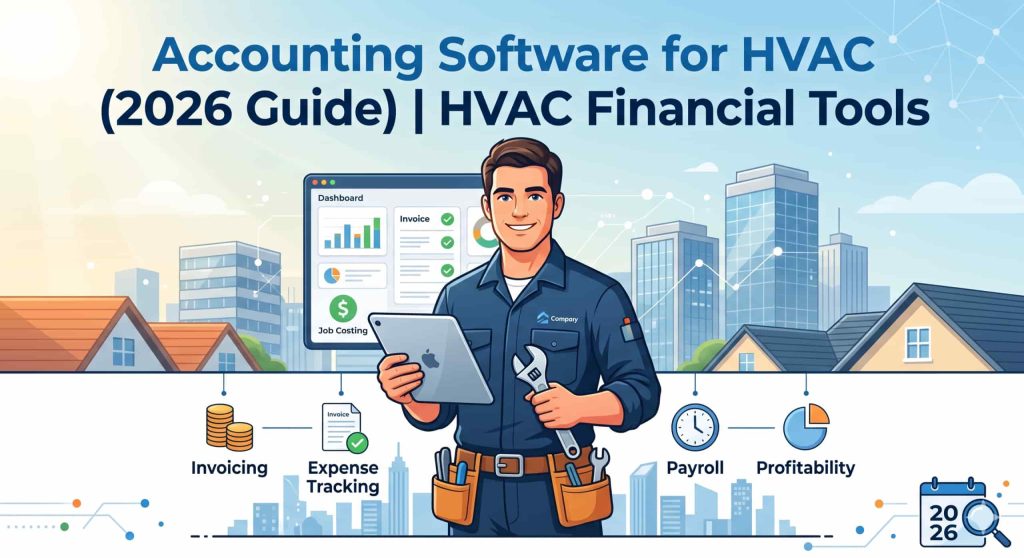
Accounting software for HVAC is a specialized financial management system designed to help HVAC contractors and service businesses manage invoicing, expenses, payroll, job costing, and financial reporting in one integrated platform.
In simple terms, it allows HVAC businesses to track job costs, manage service invoices, monitor cash flow, handle taxes, and improve financial accuracy, all while reducing manual work.
As HVAC businesses grow and handle multiple service jobs, technicians, and projects, using dedicated accounting software becomes essential for maintaining profitability and operational control.
What is Accounting Software for HVAC?
Accounting software for HVAC is more than basic bookkeeping. It is tailored to meet the unique needs of HVAC contractors, service providers, and maintenance companies.
It integrates:
- Job costing and project accounting
- Service invoicing and billing
- Expense tracking
- Payroll management
- Tax compliance
- Financial reporting
Unlike general accounting software, HVAC-focused systems are designed to handle field service operations, technician workflows, and service-based billing structures.
Why HVAC Businesses Need Specialized Accounting Software
HVAC businesses operate differently from traditional businesses. They deal with field service operations, project-based billing, and variable costs.
Key Challenges:
1. Job Cost Tracking
Tracking labor, materials, and overhead for each job is complex.
2. Multiple Service Invoices
Managing invoices across multiple jobs can lead to errors.
3. Cash Flow Management
Delayed payments affect business operations.
4. Payroll for Technicians
Managing wages, overtime, and field staff is challenging.
5. Tax Compliance
Handling GST or VAT accurately is essential.
Accounting software for HVAC helps solve these issues by automating financial processes and improving visibility.
Also Read: ERP for HVAC industry
How HVAC Accounting Software Works (Real Workflow)
Example Scenario:
- Customer books HVAC service
- Job is assigned to a technician
- Materials and labor are recorded
- Invoice is generated automatically
- Payment is tracked
- Expenses are recorded
- Financial reports update in real time
Core Features of Accounting Software for HVAC
1. Job Costing & Project Accounting
Tracks costs for each service job.
Includes:
- Labor costs
- Material costs
- Overhead expenses
Benefits:
- Accurate profitability analysis
- Better pricing decisions
2. Service Invoicing & Billing
Generates invoices for completed jobs.
Benefits:
- Faster billing
- Reduced errors
- Improved cash flow
3. Expense Management
Tracks business expenses in real time.
Benefits:
- Cost control
- Better financial visibility
4. Payroll Management
Handles employee wages and technician payments.
Benefits:
- Accurate payroll
- Compliance with labor laws
5. Tax Management (GST/VAT)
Automates tax calculations and reporting.
Benefits:
- Reduced compliance risk
- Easier tax filing
6. Accounts Payable & Receivable
Tracks vendor payments and customer receipts.
Benefits:
- Better cash flow management
- Improved financial control
7. Financial Reporting & Dashboards
Provides real-time financial insights.
Reports Include:
- Profit & Loss
- Cash Flow
- Job profitability
8. Integration with Field Service Systems
Connects accounting with service operations.
Benefits:
- Real-time updates
- Seamless workflow
Benefits of Accounting Software for HVAC Businesses
1. Accurate Job Costing
Tracks costs for each project in detail.
2. Improved Cash Flow
Faster invoicing and payment tracking.
3. Reduced Manual Work
Automation saves time and reduces errors.
4. Better Financial Visibility
Real-time insights into business performance.
5. Compliance with Tax Regulations
Ensures accurate GST or VAT reporting.
6. Scalability
Supports business growth.
Industries and Businesses That Benefit
- HVAC contractors
- Maintenance service providers
- Plumbing and electrical service businesses
- Facility management companies
- Construction service providers
Real-Life Use Cases
1. HVAC Contractor
Tracks job costs and generates invoices instantly.
2. Maintenance Company
Manages recurring service contracts and billing.
3. Facility Management Firm
Tracks expenses across multiple locations.
4. Service Startup
Automates accounting and improves efficiency.
Common Mistakes Businesses Make
- Using generic accounting software
- Not tracking job costs properly
- Delayed invoicing
- Poor expense tracking
- Lack of financial reporting
How to Choose the Best Accounting Software for HVAC
1. Job Costing Capability
Must support project-based accounting.
2. Integration with Field Operations
Should connect with service management tools.
3. Ease of Use
User-friendly interface for quick adoption.
4. Scalability
Supports business growth.
5. Compliance Features
Must support GST or VAT regulations.
Why eresource ERP is a Strong Choice
For businesses looking for reliable accounting software for HVAC, eresource ERP offers:
Key Strengths:
- Integrated accounting with service operations
- Real-time job costing and financial tracking
- GST and VAT-ready system
- Customizable workflows
- Scalable for growing businesses
It focuses on delivering practical and efficient financial solutions tailored to service-based industries.
Trends in HVAC Accounting Software (2026)
1. Cloud-Based Accounting
Access financial data from anywhere.
2. Mobile Integration
Technicians update job data on-site.
3. AI-Based Financial Insights
Predictive analytics for better planning.
4. Automation of Invoicing
Faster billing and reduced delays.
Frequently Asked Questions(FAQs)
It is software designed to manage financial operations, job costing, and invoicing for HVAC businesses.
It helps track job costs, manage invoices, and improve financial accuracy.
It should include job costing, invoicing, payroll, and financial reporting.
Yes, it tracks costs and revenue for each job.
Yes, it is scalable and suitable for SMEs.
Yes, modern systems integrate with field service software.
Yes, it supports GST, VAT, and other tax requirements.
Yes, by automating invoicing and tracking payments.