One ERP. Every Industry. Global Presence. Powered by Azaalea AI
22272e9fb58a47b7d605950c6cdff7b550d0b71e
One ERP. Every Industry. Global Presence. Powered by Azaalea AI
Final white Azaalea Ai Middle East FZ LLC logo (1)

Warehouse management keeps inventory moving and shipments on schedule

7016016 Warehouse Management Module in ERP Selecting the right ERP solution with an effective warehouse management module is imperative to keep inventory moving and customer shipments on schedule. eresource ERP provides the means to ensure fast, accurate fulfillment through directed, optimized workflow. The warehouse management processes built in eresource ERP system allows the inventory in the organization to always be up to date and correctly valued. The possibility of defining the warehouse structure of the organization to the unit level (bins) facilitates the exact location of the company stock at any time. Inventory Management Module in eresource ERP provides a powerful and flexible set of features to help you manage and report your inventory information. eresource Inventory Management facilitates processes of maintaining the appropriate level of stock in a warehouse. The activities of inventory control involves in identifying inventory requirements, setting targets, providing replenishment techniques and options, monitoring item usages, reconciling the inventory balances, and reporting inventory status. Warehouse management module in eresource ERP software provides a steady stream of new supply chain workflows, from which users can pick and choose only those workflows they want. An effective WMS can reduce human errors by preventing product from being put away in the wrong location, picking the wrong product, or picking the correct product but in the wrong quantity. Additionally, such a system can increase the productivity of the warehouse by reducing traveling time, maximizing the use of available space, and suggesting moves for better space utilization. eresource Inventory Management facilitates processes of maintaining the appropriate level of stock in a warehouse. The activities of inventory control involves in identifying inventory requirements, setting targets, providing replenishment techniques and options, monitoring item usages, reconciling the inventory balances, and reporting inventory status. Also Read – ERP for Automobile Industry   Following are the operational facilities provided in the warehouse management in the eresource ERP system. Vendors and suppliers definitions Warehouses and storage bins and multiple warehouse support. Personalized product attributes in the warehouse (color, size, Grade, Pressure, quality description, etc.). Movement among warehouses. Picking strategies (according to stock, with rules of priority by location, etc.). Physical inventory, inventory planning, continuous inventory. Reports of movements, tracking, stock, arrival/departures, inventories, locations, etc. ABC Definition and Analysis XYZ Definition and Analysis Product Commodity Item Location Product Configuration Bin Card Item Party Relation Inventory History / Non Inventory Item Bin Transfer Ageing Analysis Goods Receipt Note Material Requisition Material Requisition Approval Material Issues Purchase Returns Sales Returns Inventory Valuation Ageing Analysis Stock Transfer Material Indent Personalized reports.   Also Read – Construction ERP Software

Key ERP Modules

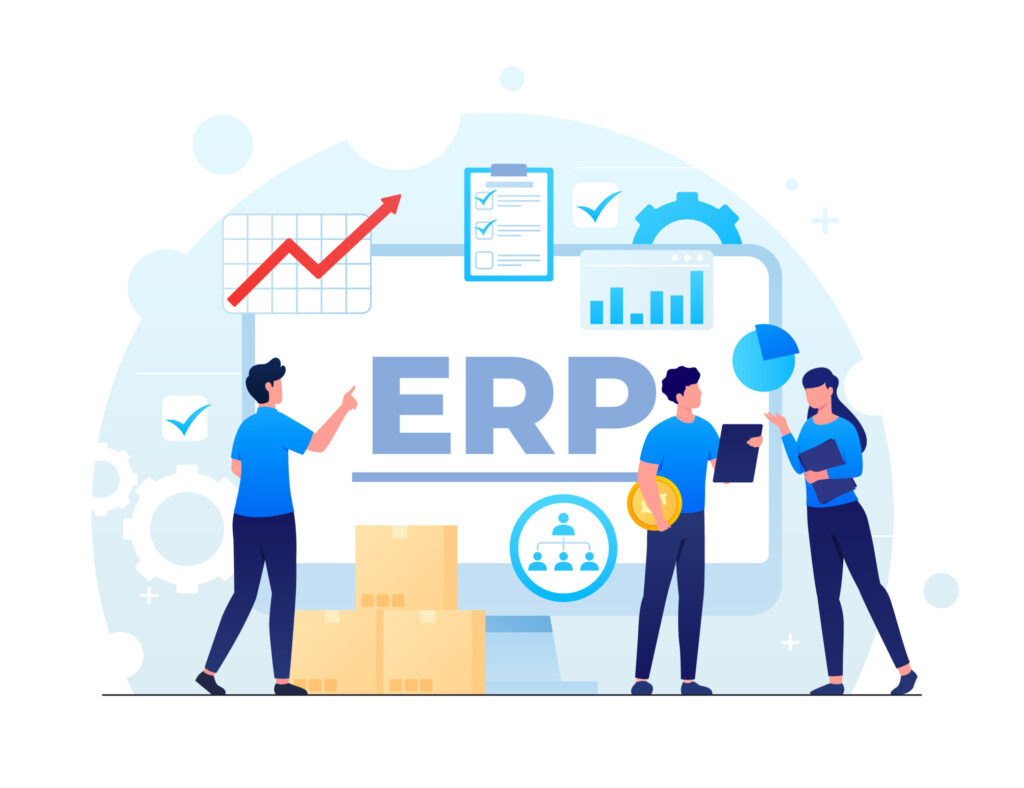
7016016 Key ERP Modules   An ERP software consists of many modules with each module is integrated with the major functional area of an organization. In normal procedure, each module is designed to interact with each other with easy accessing of information concerning a particular branch, section or department. ERP modules are tightly protected with efficient security system and the staff is trained to handle the system effectively during the training session by the consultants. The following are some important key ERP modules that being included in major ERP packages. ERP Finance Module The financial activities of an organization by the finance department are recorded using various user interfaces and these interface screens related to the finance department are grouped into a single menu option and these set of options are called the finance module. Financial module of an ERP system is used to record day to day transactions like receiving payments Customers, payments to vendors by raising cheques or through cash and journal entries. Financial module records the data during: Creating a Customer Account Creating a Vendor Account Creating a Bank Account. Creating a General Ledger Account Enhancing Chart of Accounts (when major changes to be made for preparing the financial statements) Financial application components of an ERP solution work hand-in-hand to improve the bottom-line. This is true because the financial functionality is tightly integrated across all business areas and all geographic areas. This tight integration includes all the other different modules, from materials management to human resource to logistics. The financial module of ERP also provides financial functionality and analysis support to lot of medium and large scale enterprises in Indian and abroad. Manufacturing Module in ERP This module is used to record data related to the manufacturing department of the organization. Data is recorded in this module when Bill of Materials, Work Orders and WIP receipts are to be created for work orders. In modern manufacturing operations, information starts at the top and the bottom simultaneously. Data originates at the machines, the process and the workers. It indicates what is being made, how and where, when it will be done, and why it won’t be on time. ERP allows companies to balance customer demands impacted by multiple interrelated items and multiple plant locations. ERP adds applications for financials, supply chain, and distribution and requirements planning for multiple sites. It facilitates intelligent resource planning in the face of rapidly changing constraints such as materials availability, market readiness, plant capacities, personnel certification and business costs per location. In short ERP systems will allow decision makers to champion ‘an intelligent, agile and responsive’ organization in the global marketplace of the next century. ERP Sales and marketing Module This module comprises of Contact Management and Sales Order Processing Management. It is an integrated solution comprising of marketing and sales activities. Organization can act immediately to improve sales, service and marketing effectiveness by using this module. Sales and Marketing module also help to you getting your customer order management easier day by day. Use of this also includes maintaining customer information, quickly creating a quote or migrating them to sales order. ERP Purchase Module ERP Purchasing module streamline procurement of required raw materials. It automates the processes of identifying potential suppliers, negotiating price, awarding purchase order to the supplier, and billing processes. Purchase module is tightly integrated with the inventory control and production planning modules. Purchasing module is often integrated with supply chain management software. ERP Inventory Management Module ERP Inventory Management module facilitates recording of data in the inventory department. Activities of the Inventory department such as receipt of goods, delivery of goods, maintenance of material in the stock sections, classifying all the materials, issuing of materials to the manufacturing department, rejections from the suppliers are recorded with full details. ERP Human Resource module Human Resource (HR) module in ERP streamlines the management of human resources and human capitals. It comprises of four broad sections, mainly Training, Recruitment, Payroll and Attendance. HR module routinely maintains a complete employee database including contact information, salary details, attendance, performance evaluation and promotion of all employees.   Also Read – Streamlining construction operations with ERP systems
Search

Request Demo Access
Fill in your details