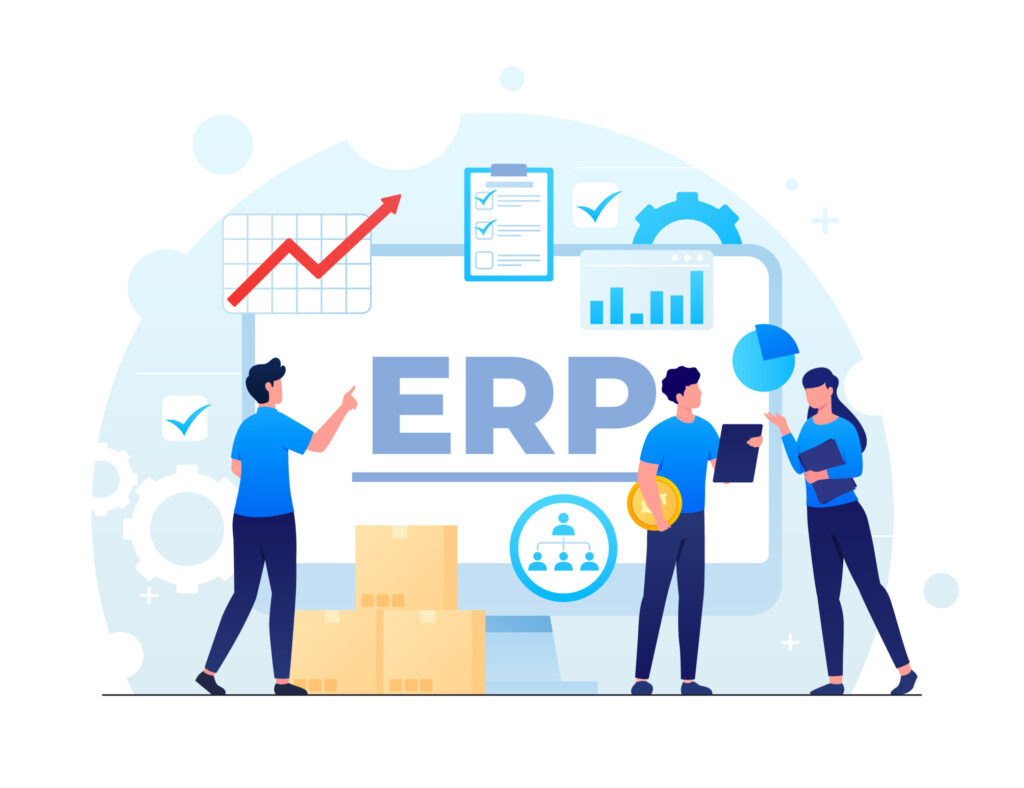
One ERP. Every Industry. Global Presence. Powered by Azaalea AI
22272e9fb58a47b7d605950c6cdff7b550d0b71e
One ERP. Every Industry. Global Presence. Powered by Azaalea AI
Final white Azaalea Ai Middle East FZ LLC logo (1)

Effective ERP solution for Midsize Organization

7016016 Effective ERP solution for Midsize Organization Over the years, eresource has become an acceptable ERP solution in Indian manufacturing sector, especially in the SMB segment. Eresource has been concentrating more on this sector because manufacturing sector goes far beyond the direct contribution to national product and employment. Manufacturing is a global business underpinning all economic activity. There is no need to emphasis the fact that the manufacturing sector is crucial for employment generation and development of an economy of a country. In coming years, India is expected to witness significant demographic growth and a disproportionate expansion in the working age population. To absorb much of this labour force, the manufacturing sector would need to play an important role, especially in technology front. Currently, the sector accounts for 12 per cent of the total employment in the country, well below its true potential. Currently, the manufacturing sector accounts for less that 20 per cent of the total employment in the country, well below its true potential. Therefore, being the lifeline of the country, it is imperative that manufacturing sector must be equipped with technologically advanced operating system that will help boost employees’ confidence and improve overall working method. In this scenario, upgrading of technology support becomes necessary in all manufacturing organization and an ERP system that can help to minimize manufacturing cost and increase of resource utilization is the need of the hour. To grow and compete in the vast manufacturing sector, small and medium-sized manufacturing units must cut down their production bottlenecks and must improve their delivery performance. To make their operation further easy, manufacturing companies must have a transparent method of operational mode between each department and branches. eresource ERP is a comprehensive enterprise resource Planning system that has been developed with best-practice support for multi-mode manufacturers in a broad range of Industries. As the competition in the manufacturing sector world-wide getting more aggressive by each passing day, the SMB segment must concentrate more on improving their overall working system, with integrating more advanced resource planning application. We have many reason to recommend eresource ERP for Indian manufacturers. eresource ERP is designed for manufacturing excellence, with visibility throughout the operation and embedded support for a wide variety of manufacturing processes – including make-to-stock, make-to-order, configure-to-order, engineer-to-order, just-in-time (JIT) manufacturing and materials control, and lean operations. Eresource ERP for manufacturing is consists of many useful modules such as Sales & Distribution Management, Purchase Management, Manufacturing, Planning & Control, Total Quality Management Inventory Management, Plant Maintenance, Excise Management, Human Resource Management, Finance Resource Management.   Mail Us at sales@eresourceinfotech.com for Live ERP Software Demo

Make your business process more efficient

7016016 Make your business process more efficient   Organizations must realize that after the implementation of an effective ERP system all of its process becomes more efficient. ERP system will help all the major decision making including retaining a client. However, the organization that plans to implement an ERP system must be well prepare to integrate the system effectively. Organizations are advised to seek the help of an external consultant to find out how suitable is the organization when it comes to working with an ERP system. The external consultants are capable of evaluating and they identify the effective needs of the moment. It is a good idea if the decision about an ERP project could be carried out by a team of professionals from both internal and external for a more adequate design. This is because the main aim is not just about purchasing software, but to order all the pieces to match with it. In most cases some internal processes need to be redesigned before implementing an ERP. In addition to this, software is often modified to fit the ERP according to the enterprise objectives and activities. The combination must be as perfect as possible. Also Read – Top ERP Software solution for food industry In spite of its benefits one of the most important factor to be remembered is that ERP is not a just another software application in your organization. The system involves every internal process and must be preceded by a reevaluation of every section together with its functions. It is also important to note that an ERP will not change the management functioning on its own. You must keep in mind that it is an important and decisive tool, but in order to obtain a correct development you will have to decide carefully who is going to command it, as well as the way in which the data will be saved and how information will flow. Just implementing an ERP solution alone won’t help the organization make any success. Though the effectiveness of an ERP system could be measured by the improvement in the ROI, the goal of measurement is not to measure; rather, it is to improve performance and processes are the point at which this can be best accomplished. A well-performed ERP system can be maintained till about 15-20 years. In the later stages the package will have old architecture. It will become very difficult to make changes in the program code without inflicting hazardous damage to the system’s stability. It is possible to give older systems a ‘facelift’ with modern tools. Though those ‘facelift’ can extend the life cycle of the package for some years, they will certainly speed up the appearance of the useless codes. If your ERP system is under-performing, it is better to go for an overhaul of the system. There are numerous efficient ERP systems available in the market. Do the right evaluation as per your requirement and implement a suitable ERP system that could take your business success to new heights. As the saying goes – “It is better late than never”.   Also Read – The best ERP system for trading distribution business

ERP benefits for the midmarket businesses

7016016 Businesses all around the world are increasing their reliance on ERP systems as a cost efficient alternative to their software applications. However, high cost involved in deployment of this marvelous technology prevents the small/mid size organizations enjoy the tremendous benefits of ERP. Since the introduction of an affordable, low-cost ERP from eresource ERP, many of the midmarket organizations also started to administer their businesses effectively using this latest technology. An ERP package should provide an organization with a solid foundation, incorporating all of the fundamental aspects of running a business. Expectations run high when an organization deploys an ERP package – if the solution is a good fit for the company, the company stands to gain tremendous cost savings and service improvements across the enterprise. Manual processes are automated, production scheduling is more efficiently managed and inventory is more accurately assessed. Also, business performance can be measured in a much more holistic fashion than ever before. This gives executives real-time visibility into all business processes, enabling them to make better strategic decisions. In short, with the right ERP package, a midmarket company can compete more aggressively in global markets. According to a survey an ERP implementation can reduce costs in three primary categories: inventory costs, manufacturing operating costs and administrative costs. The survey’s best-in-class respondents reported a 21 percent decrease in inventory costs, a 17 percent decrease in manufacturing operating costs and a 16 percent decrease in administrative costs. The average respondents’ reductions were 11 percent, 8 percent and 9 percent, respectively. Because an ERP solution has its fingers in all aspects of running a business, its benefits are myriad and go beyond tangible cost reductions. It can improve an organization’s customer service and response time when solving issues. It can solve issues of interoperability among multiple manufacturing locations. It can standardize and accelerate manufacturing processes in all of a company’s manufacturing sites. It can streamline a manufacturer’s order-fulfillment processes. It can facilitate connecting with ‘partners’ and ‘suppliers’ enterprise systems. ERP can even help an organization maintain compliance with government regulations, from hiring practices to environmental laws. Case studies done on specific ERP implementations reveal a variety of different business-specific benefits. One of the case studies revealed that by replacing legacy systems with an integrated ERP package, one travel-accessories manufacturer reduced its inventory levels by 30 percent, reduced its warehouse space requirements by 38 percent, improved its month-end close process by five days, reduced its DSO (Days Sales Outstanding) by 44 percent and increased sales by 100 percent without hiring new employees.   Also Read – Best ERP Software for Construction Industry

Small and medium-sized businesses (SMBs) and ERP software

The purpose of enterprise resource planning (ERP) software is to integrate and automate business activities throughout an organisation using a wide range of software tools. Historically, because of their high cost and complexity, ERP systems have been linked to large businesses. But as cloud-based solutions have grown in popularity and technology has advanced, ERP systems have been more widely available to small and medium-sized businesses (SMBs). We’ll look at the advantages and difficulties of SMBs implementing ERP systems in this article. ERP advantages for SMBs Operations are more efficiently run, which is one of the key advantages of an ERP system for SMBs. ERP systems can assist SMBs in reducing errors and saving time by integrating and automating corporate procedures. This may result in greater production and efficiency, which may support SMBs’ ability to compete in their individual marketplaces. Greater Visibility: ERP solutions can give SMBs greater insight into their business processes. Due to their access to real-time information about their operations, SMBs may be able to make well-informed decisions rapidly as a result. SMBs can take action before problems develop by using this to identify areas of their business that may need improvement. Better Financial Management:  ERP systems give SMBs access to accounting, budgeting, and financial reporting tools, improving financial management. These solutions give SMBs real-time access to financial data, allowing them to quickly make educated decisions, which can help them enhance their financial performance. ERP systems can also automate financial procedures, lowering the possibility of errors and guaranteeing adherence to accounting rules. Better customer connection management: In order to compete in the market, SMBs must maintain solid ties with their clients. By offering capabilities for customer relationship management, such as order management, customer support, and marketing automation, an ERP system can assist SMBs in achieving this. The solution can offer SMBs real-time visibility into customer interactions, allowing them to increase customer satisfaction and forge deeper ties with their clients. Improvements in business intelligence: Advanced business intelligence technologies, including as data analytics, reporting, and dashboards, can be made available to SMBs via ERP systems. These technologies can assist SMBs in understanding their performance and fast reaching data-driven decisions. Furthermore, real-time access into important performance metrics can be provided by ERP systems, empowering SMBs to see patterns and take preventative action. Also Read – ERP Software for Process Industry ERP’s difficulties for SMBs Cost: For SMBs, the cost of deploying an ERP system is one of the biggest obstacles. ERP systems have always been linked to expensive setup expenses, which can be a major barrier to entry for SMBs. But with the popularity of cloud-based solutions, SMBs may now subscribe to ERP systems, which lowers the up-front cost of deployment. Complexity: To satisfy the unique needs of an SMB, ERP solutions sometimes need to be highly customised. SMBs may find this difficult because they lack the resources or knowledge necessary to set up and operate an ERP system. However, ERP systems are now more accessible and simpler to adopt for SMBs thanks to cloud-based options. Implementation Time: SMBs that need to be flexible and sensitive to market developments may find it difficult to implement an ERP system because it can be a time-consuming procedure. Cloud-based solutions, on the other hand, have greatly shortened ERP system deployment timelines, allowing SMBs to adopt and implement ERP systems more quickly. Staff Resistance to Change: For an SMB, implementing an ERP system can be a substantial change that runs the risk of encountering staff resistance. The success of an ERP system depends heavily on employee buy-in, which can be difficult for SMBs. However, effective communication and training can lessen this difficulty. Conclusion ERP systems can benefit SMBs in a variety of ways, such as streamlining operations, improving visibility, improving financial management, improving customer relationship management, and improving business intelligence. Also Read – Best ERP Software for Construction in India
Search

Request Demo Access
Fill in your details