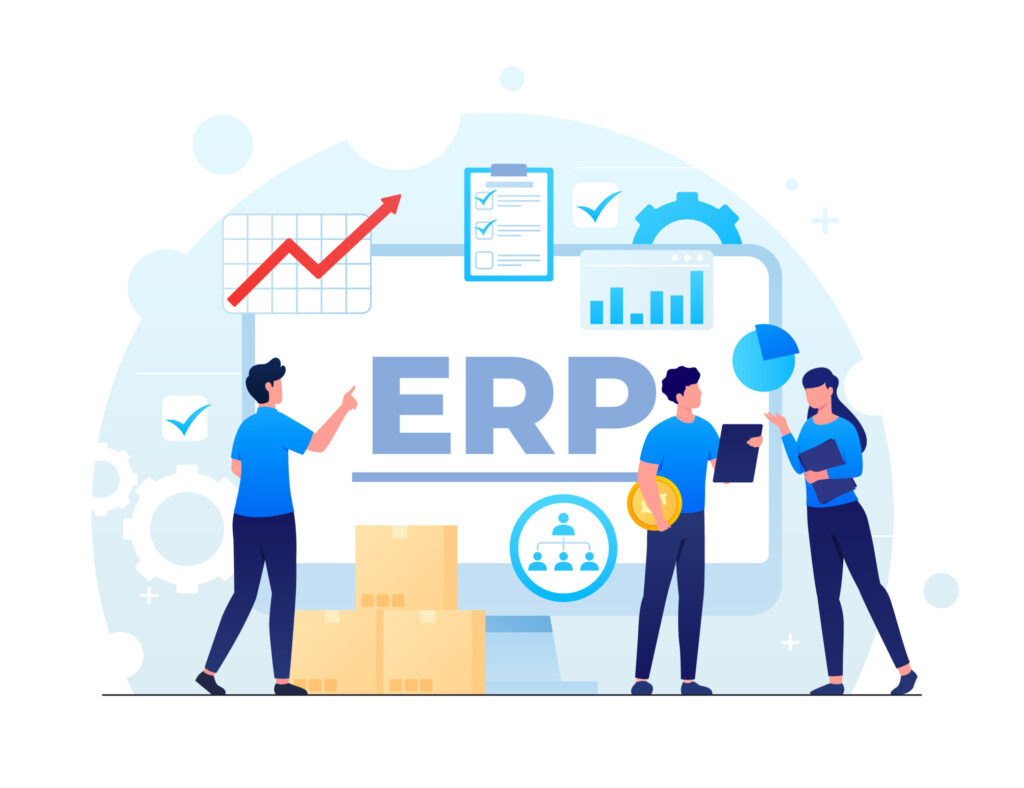
One ERP. Every Industry. Global Presence. Powered by Azaalea AI
22272e9fb58a47b7d605950c6cdff7b550d0b71e
One ERP. Every Industry. Global Presence. Powered by Azaalea AI
Final white Azaalea Ai Middle East FZ LLC logo (1)

ERP for Construction Companies | Why Construction Companies can’t do without an ERP System

7016016 People who works in the construction industry knows how difficult it is to overcome unpredictable scenarios during a project and the same can take its toll on the whole project. There is lot to be done to overcome to make the work successful and profitable. With the introduction exclusive ERP solution for construction industry, there is a big relief for this kind of scenarios as this system can help the construction companies to have a well planned working strategy with every single project. Today every construction company need to have an efficient and intelligent ERP system that satisfies most requirements while also offering the efficiency and risk mitigation. eresource nfra ERP solution for Construction and Infrastructure is a fully integrated construction ERP software solution that can take care of every need of a construction company. eresource nfra ERP system has been specifically designed to deal with the complexities of resource management, job costing, analyzing and billing for project-based civil engineering and construction projects. When it comes to Construction and Infrastructure project, management of equipment and labour management are two major areas that is extremely difficult to manage. It becomes easy for the Construction companies to manage labour and equipment when these companies are implemented with a efficient ERP system such as eresource nfra. Not only labour and equipment construction companies will not able to make desired profit from each project if they are not backed with a suitable accounting software. Eresource nfra ERP for Construction industry has been integrated with a powerful account module the project cost, timelines and customer management can be handled smoothly and efficiently. The system is also have a CRM (customer relationship management) modules that could take care of all your customer dealings effectively. Unless the project works are not managed by automated ERP system like eresource nfra every project would become more complex and this will ultimately affect the outcome of the project’s profit margin. Also Read – ERP for Manufacturing ERP system could help you develop your construction business and following are some of the benefits. Business Development: Convert prospects to customers and estimates to projects. Project Execution: Manage resources, milestones, budgets, and billing. Project Management: Document and workflow management for RFIs, RFPs, and drawings. Labour Management: Resource, time, and productivity management. HR and Payroll (Certified & Union Payroll): Automated time, tax and fringe processing and reporting. Service Management: Dispatch and manage service in today’s mobile environment. Analyze and Report: Prevent Margin Fade with visibility into project and company performance. Apart from the above, eresource nfra ERP system has also been integrated with modules such as material management, marketing, project planning and control and so on. The system also can be customized to meet the needs of a large construction company as per their requirements. . The system also has a module that that helps in project cost estimation, by breaking down each project into activities. Each activity is then broken down into till of materials of material, labour and equipment. Another module helps in material requirement planning on the basis of the work projection of a particular month/week. There are also many other features that are included in the exclusive ERP system for construction, which can demonstrated and any modifications can be made into the system as per the requirement of customers. For more details and a LIVE DEMO, please call us today or write to us.   Also Read – Construction erp software in uae

Suitable ERP for construction Industry and Infrastructure Companies

7016016 ERP for Construction and Infrastructure Industry: Infrastructure and construction companies are known for having a large site network. Today’s rapid business environment demands these companies to have on-line information on daily work progress. It is required for better planning and effective payment system. eresource Nfra ERP for Construction and Infrastructure industry is integrated with suitable modules that helps the management to get data from the sites on a daily basis. There is no need of expensive hardware installations. What you need at the site is only a PC and Internet connection and your work is done. eresource Nfra ERP has a number of implementations in the construction and infrastructure field in its credit. It makes us happy when he hears our customers say they were able to recover the investment that they have made in our ERP solution within a year. The first and most important benefit of eresource Nfra ERP solution is that information has now become completely transparent and seamless. There is no scope for malpractices or hoarding information. With a smooth information flow, decision-making has also become much quicker. Processes like purchasing materials have been automated and have been immense benefit from the solution. Here are some of the key benefits of eresource Nfra ERP for construction and infrastructure Industry. All offices, branches with its department and site offices are now connected on a single platform Free flow of Information between departments Effective fund management Overview of the projects and instant availability of data and reports With the implementation of eresource Nfra web-based ERP you also take your business online. Your company will link all the modules together to the central system and make the information flow in real-time. The construction and infrastructure companies are witnessing the results of enterprise management and consolidation of information. One of the many benefits of implementing eresource ERP solution has been a tight integration between all projects and site offices with the company headquarters. As a result of this improved coordination there is greater efficiency across the various business processes and function. The company will able to get a complete breakdown of its project costs in terms of material. With eresource Nfra ERP you have nothing to look beyond. Take the right decision. Implement eresource Nfra ERP and be happy with a business solution with guaranteed success.   Also Read – ERP for packaging industry

Construction industry to benefit a lot from eresource nfra ERP

7016016 Benefits of ERP for Construction Industry: One of the biggest challenges for any construction company is in estimating cost of construction, which in turn helps it in containing overheads and expenses. Since the projects are usually spread over many years, aligning the projected cost with the actual cost becomes difficult. The challenge becomes manifold given that most companies deal with large project and huge volumes. For example, one of the major construction companies in India was also facing the same challenge. For this company, at any given time there would be at least 50-60 construction projects running concurrently. The departments were maintaining the data in different files using different Excel charts. The accounts department was maintaining a separate software package but materials and purchase was not linked to these. Moreover, much of this data was lying in site offices, which was not connected to the head office. Whenever there was an enquiry, each department would have to pull out the information and consolidate it for the report. The entire process of collecting and collating information from various departments was being done manually. This not only slowed down the decision-making process but also create power centers within the company. This made it very difficult to do real-time cost estimation of different projects. eresource implemented an effective ERP system within a short period after the company approached with the demand for a suitable ERP for construction which would connect all functions and projects to a centrally maintained database system. In the first phase eresource ERP implementation several modules such as financial, material management, marketing, project planning and control and so on. The solution was customized to meet the needs of a large construction company. For instance there is a module on the bill of quality that helps in project cost estimation, by breaking down each project into activities. Each activity is then broken down into till of materials of material, labour and equipment. Another module helps in material requirement planning on the basis of the work projection of a particular month/week. The marketing module enables the company to send information to all its customers from its database whenever they launched a new project. The module also helped the company track all the pre-sale and sale activity, right from the time a customer posts a query to the closure of the sale. The module helps to take care of the company’s all marketing. It has made the planning and forecasting of demand extremely easy. It also creates ripple effects in the company where all departments like purchase, materials and stores now get aligned with the forecasts.   Also Read – ERP system for automotive industry

Industry-specific ERP system

7016016 eresource ERP solutions are tailored industry-specific standards, best practices and processes to help companies optimize business processes and adapt quickly to changing market demands. From local businesses to global industry leaders, eresource has been serving companies of all sizes and industries in India and abroad. eresource is developing best practices and delivering ERP software systems that target specific business needs. The result is a depth and breadth of industry expertise and tailored software functionality that is difficult to match. Through its industry solutions, eresource addresses the unique core processes of number of industries. eresource tightly narrows its industry focus to provide targeted support for many micro-level industries. eresource ERP system currently serves the following industry segments: 1. ERP for Manufacturing 2. ERP for Process Manufacturing 3. ERP for Fleet Management 4. ERP for Pharmaceutical 5. ERP for Chemical Industry 6. ERP for Automotive 7. ERP for Construction and Infrastructure 8. ERP for Trading   As the Small and mid-size enterprises (SMEs) are facing greater competition than ever across diverse industries, success depends on having the ability to keep pace with rapidly changing customer and industry demand and execute in a short amount of time. The agility to quickly seize new opportunities and the flexibility to achieve sustainable business growth is another success factor for the mid-sized enterprises. With pricing pressure and the increasing power of large rivals in some segments they have a critical need to optimize business processes, cut operational costs and improve customer acquisition and retention rates. It is a promising sign that the small and mid-size enterprises are recognizing integrated business management solutions like eresource ERP are essential for their growth. They are also realizing that eresource ERP system is becoming necessity for the scalability and keeping up with competitors, The most welcome aspect of this application is that it has become more affordable, easy-to-implement and adept at addressing industry-specific business processes.   Also Read – ERP for Transport Industry

Exclusive ERP for every Industry

7016016 Exclusive ERP for every Industry   The main advantage of an eresource ERP system is to provide the accurate information across different sections and departments that makes the system so valuable to to the organization. With the implementation of ERP system in companies, earlier system of manual process have been replaced by more accurate and flawless way of operations. As you know the manual process was prone to errors and delays as till the order was entered into the application of a particular department, the goods could not be manufactured or shipped. With eresource ERP system functioning of all departments made easy and error-free. With this system, a customer order is entered only once, and this information is available to all the applications across different departments. Once the order is entered, the application checks if goods are available in the inventory. If the goods are not available, it raises a purchase order which is subsequently used by the production team to manufacture goods, and by the finance team to issue an invoice. The produced goods go back into inventory, where they then become available for shipment. This single view of demand and supply enables organizations to better understand the needs and demands of the customer – and actually anticipate their requirements. This information can then be used to forecast future demands. This shortens lead time, reduces the overall cost of manufacturing, and ensures enhanced customer satisfaction. When an information is updated in the ERP system, all the people working in different departments will be able to see the same information, and update relevant information. As soon as one department finishes its part of the order, the ERP system forwards it to the next concerned department, which is defined in the workflow. To understand the status of an order, anyone in the organization can simply login to the ERP system. And being an Web-based ERP system, access can also be provided to customers who want to track down the order status. As ERP system became more popular and every organization started depending their working process on latest technology advancement, enterprise solution applications have became part of every industry. However, ERP applications being a standard business application, usage of the system for different industrial process demanded lot of customization in the application itself. For example, every industry has its own working method with different department and its sub divisions. Therefore, the ERP system that has been developed for manufacturing industry won’t fully suit for a company which is working in the Project-based industry. This is the reason why eresource has found a novel idea by separating each industry verticals as per each and everyone’s working process and developed separate ERP system that will suit them perfectly. Recently we have introduced number of ERP systems that could provides an exclusive ERP for every industry verticals. eresource Xcel ERP for Manufacturing, eresource LifeScience ERP for Process Manufacturing, eresource nfra ERP for Project-based Industry, eresource eTrade ERP for Trading, Sales and Distribution industry, eresource 3GL for Logistic and Transport Industry, ersource PMS for Preventive Maintenance System, eresource ACCT for Accounting Package and eresource HRMS for Human Resource department. eresource executives will provide live demo of these ERP system as per your requirement at your office premises, that too as per your convenient date and time. A closer look at the functioning of the system will help you to arrive at a right decision whether the system is right for your working process, and how it will help improve your business growth. Write to us if you would like to have touch and feel of the system. Rest can be decided as per your opinion.   Mail Us at sales@eresourceinfotech.com for Live ERP Software Demo Also Read – ERP Software In India

eresource nfra, much more than an ERP system for Construction industry

7016016 ERP system for Construction and Infrastructure industry. Construction and infrastructure projects are always a complex mission and therefore a software to manage these projects would naturally hold its complex nature reflecting on it. However, understanding every aspect of its nature and the determination to find a suitable and effective ERP solution is the result of eresource nfra system, an exclusive ERP system for Construction industry. Construction companies execute a wide variety of projects across diverse markets and customers. Each projects has its own merit and demerits and these projects could vary from simple to highly-complex, each having different requirements with different project budget, procuring materials, tracking project documents, managing scope changes, preparing forecasts, etc. Many a time project managers have to break their head to make projects progressing in a smooth flow and it is imperative for them to have the proper tools to manage their work more efficiently and effectively. eresource nfra ERP When we said that most of the construction and infrastructures projects are complex in nature the claim holds much water. Drawing a complete picture of a project will make it clear how these projects are getting ironed out effectively. As far as project is concerned a baseline budget is the key factor. A baseline budget for labor hours and project costs broken down via a work breakdown structure that allows a project manager to accurately track the progress of their job. When a budget is made it just cannot be made out on the basis of fixed bid jobs, but also time and material jobs. It is also to be taken into account that consistently overrunning on time and material (T&M) projects can negatively affect the ability to secure repeat work with that customer in the future. Ability to manage risk is an important factor on the part of a project manager and that contributes to their ability to complete their projects successfully. There are number of functions that could bring risk and these function must be effectively controlled. Labor Productivity, Procurement, Project Documents, Forecasting, Labor Productivity Analysis, Gross Margin Variance, Cash Position are some of the functions that must be handled carefully and effectively by a project manager for the successful completion of a project. So questions arises how could a project manager handle these areas effectively. Answer is very simple. With the help of a reliable ERP software that could cater to every need of companies that undertakes construction projects, especially the important portfolios like Project Mangers in the organization. Over the years eresource ERP has been widely accepted as the one of the most reliable and effective ERP software for Construction and Infrastructure industry. However, understanding the sophistication in working method in this industrial segments, eresource has introduced an exclusive ERP for construction industry and the system, eresource nfra ERP, has become an big hit among the construction companies and India and abroad, especially in the UAE. In places like UAE, where all constructions a fast-paced project, implementing an ERP solution like eresource nfra will be an added advantage and with this system it is easy for a project manager work quickly with different projects simultaneously as the could automate much of this workflow,   For more information and a live demo, please contact our sales division in this email ID sales@eresourceinfotech.com Also Read – ERP Software In India

Benefits of ERP software for construction industry

Enterprise Resource Planning (ERP) software is a comprehensive tool that has been widely adopted in various industries, including manufacturing, retail, and finance. However, ERP software can also provide significant benefits to the construction industry. The construction industry involves numerous processes and workflows that require effective management, and ERP software can provide an integrated solution that can improve efficiency, transparency, and profitability. This article aims to discuss the benefits of ERP software in the construction industry Streamlined project management The construction industry requires effective project management, as construction projects involve several tasks that need to be completed on time and within budget. ERP software can provide a centralized platform for managing construction projects, enabling contractors and project managers to monitor project progress, track resources, and allocate tasks effectively. With ERP software, project managers can also access real-time data on the project’s financial performance, enabling them to make informed decisions that can improve project profitability. Enhanced inventory management The construction industry requires the efficient management of inventory, including building materials, equipment, and tools. ERP software can provide real-time data on inventory levels, enabling contractors to manage their inventory more efficiently. By using ERP system, contractors can monitor their inventory levels and receive notifications when the levels fall below a certain limit, allowing them to order materials promptly. Effective inventory management can help contractors reduce waste and optimize resource utilization, improving project profitability. Also Read – Cloud based ERP Software help the construction industry Improved financial management Effective financial management is crucial in the construction industry, as construction projects involve significant costs and risks. ERP software can provide a comprehensive financial management solution, enabling contractors to manage expenses, track revenue, and monitor cash flow effectively. With ERP software, contractors can access real-time data on the financial performance of their projects, enabling them to make informed decisions that can improve profitability. ERP software can also provide robust budgeting and forecasting capabilities, enabling contractors to plan their finances effectively. Enhanced supply chain management The construction industry involves several stakeholders, including suppliers, subcontractors, and clients. ERP software can provide a centralized platform for managing the supply chain, enabling contractors to collaborate with stakeholders effectively. With ERP software, contractors can track the status of orders, monitor delivery times, and manage subcontractor invoices efficiently. Effective supply chain management can help contractors reduce costs, improve communication, and enhance project delivery. Improved document management The construction industry involves numerous documents, including project plans, blueprints, and contracts. Effective document management is crucial, as construction projects require accurate and timely documentation. ERP for construction can provide a centralized platform for managing documents, enabling contractors to access documents easily and collaborate effectively. With ERP software, contractors can also ensure that documents are up-to-date and secure, improving project transparency and reducing the risk of errors. Also Read – steps to choose the right ERP software for a construction company Enhanced resource management Effective resource management is crucial in the construction industry, as resources, including labor, equipment, and materials, represent a significant cost. ERP software can provide real-time data on resource utilization, enabling contractors to optimize resource allocation and utilization. With ERP software, contractors can track the availability of resources, monitor resource utilization, and allocate resources effectively. Effective resource management can help contractors reduce costs, improve project delivery, and enhance profitability. Improved project delivery Effective project delivery is crucial in the construction industry, as delays can result in significant costs and risks. Construction ERP software can provide a comprehensive project management solution, enabling contractors to monitor project progress, track resources, and allocate tasks effectively. With ERP software, contractors can also access real-time data on the financial performance of their projects, enabling them to make informed decisions that can improve project profitability. Effective project delivery can help contractors enhance their reputation, improve customer satisfaction, and increase revenue. Conclusion ERP software can provide significant benefits to the construction industry, improving project management, inventory management, financial management, supply chain management, document management, resource management, and project. Also Read – ERP for Process Manufacturing Industry Read Also

Overcome Construction Challenges with eresource ERP: Your Key to Success

Struggling to Manage Construction Project Activities? If you’re a construction company, managing project activities can feel like a never-ending challenge. From keeping track of materials to staying on budget and making sure everything runs smoothly, it’s easy to feel overwhelmed. Let’s talk about some of the common problems you might face and how they can affect your projects Dealing with Long and Complicated BOQs Handling a Bill of Quantities (BOQ) that’s pages long can be a real headache. With so many items to keep track of, it’s easy to make mistakes or miss important details. Without the right tools, managing this information can lead to inefficiencies and unexpected costs. Keeping Up with Changing Material Needs In construction, material needs can change quickly due to design changes or unexpected issues on-site. If you don’t have a good system to manage these changes, you could end up with delays, extra costs, or strained supplier relationships. Managing Budgets That Keep Changing Budgets in construction projects are often moving targets. Costs can change, and new expenses can pop up unexpectedly. If you don’t have a way to track these changes in real time, you risk overspending and cutting into your profits. Struggling to Get the Right Resources Making sure you have the right people and equipment when you need them is tough. If you don’t have a system to track and manage resources, you could face delays that cost time and money. Keeping Track of Materials on Site Knowing what materials are on-site and making sure they’re used properly is crucial. Without a system to track materials, you risk losing or misusing them, which can lead to delays and higher costs. Figuring Out Your Project Profits It’s important to know how much profit you’re making on a project, but without the right tools, it can be hard to figure out. Not knowing your profits can prevent you from making smart decisions on future projects. Managing Inventory for Each Project Keeping track of inventory on a project-by-project basis is important to avoid wasting materials or running out of them. Without a good system, managing this can be difficult, leading to increased costs and delays. Keeping Your Promises to Customers No one wants to break promises to customers, but it can happen if your project isn’t on track. Delays, budget issues, or resource shortages can all lead to missed deadlines and unhappy customers. Managing Subcontractors Effectively Subcontractors are a key part of many construction projects, but managing them can be tricky. Without a good system, it’s hard to ensure they meet deadlines, stay on budget, and deliver quality work. Handling Progressive Invoices In construction, invoicing is often done based on the percentage of work completed. But if there’s a disagreement about how much work is done, it can cause financial problems. Having a clear system for this is crucial. Keeping Track of Retention Payments Retention payments are common in construction, but they can be hard to track. Without proper records, you might miss out on payments or have disputes with customers. How to solve these problems ? The construction industry is complex, and you need the right tools to manage it. A generic ERP system often isn’t enough. You need a system that’s built specifically for construction to help you manage everything from BOQs to budgets and materials. When choosing an ERP system, make sure you pick a vendor who understands the construction industry and has a proven track record. With the right system in place, you can overcome these challenges and run your projects more efficiently, profitably, and with happier customers How eresource ERP can help you overcome these challenges ? If you’re facing any of these challenges, eresource ERP is here to help. Our ERP system is specifically designed for the construction industry, meaning it’s built to handle the unique demands of your projects. With eresource ERP, you get: 1. Simplified BOQ Management: Easily manage long and complex BOQs with precise tracking and updates, reducing errors and saving time. 2. Dynamic Material Management: Stay on top of changing material needs with real-time updates and efficient resource allocation. 3. Flexible Budget Control: Keep your budget in check with tools that allow you to adjust for new costs and track expenses as they happen. 4. Efficient Resource Planning: Ensure you have the right people and equipment at the right time, minimizing delays and maximizing productivity. 5. Real-Time Material Tracking: Track materials on-site to reduce waste and ensure everything is used properly. 6. Accurate Profit Tracking: Know exactly how much profit you’re making on each project, allowing you to make informed decisions and plan for future success. 7. Project-Specific Inventory Management: Manage your inventory on a project-by-project basis, reducing waste and ensuring you never run out of materials. 8. Improved Customer Commitments: Keep your promises to customers with tools that help you stay on track and meet your deadlines. 9. Effective Subcontractor Management: Easily manage subcontractors, ensuring they deliver quality work on time and within budget. 10. Streamlined Invoicing: Handle progressive invoices smoothly, with clear tracking of work completed and payments due. 11. Retention Payment Tracking: Keep accurate records of retention payments, ensuring you get paid what you’re owed without disputes. eresource ERP doesn’t just help you manage your projects—it enables you to achieve process excellence. By streamlining your operations, improving accuracy, and providing real-time insights, eresource ERP empowers you to take control of your projects and drive your business forward with confidence. With our deep understanding of the ERP for construction & contracting industry, eresource ERP is the partner you need to overcome challenges, improve efficiency, and ensure the success of every project.

Construction Project Accounting Software: A Step-by-Step Implementation Guide

A good project accounting system from eresource can make running your construction business much easier. The feature offerings of such an accounting software for construction comprise integrated accounting reports, project-wise trial balances and P&L, outstanding receivables and payables, customer and project-wise statements, a dashboard, and more. Leveraging these features, you can gain valuable insights into different construction projects and, thus, boost their profitability. However, implementing a new project accounting software is not easy. The implementation process is prone to several errors if not planned appropriately. Therefore, you should treat your project accounting system implementation as a vital business project. Following a correct approach can boost the implementation speed and accuracy while minimizing errors.  Also Read – ERP Software for Construction Read further to learn the steps in implementing a construction company’s project accounting system. 1. Implementation Planning or Project InitiationThe first step is to define the core pieces of the accounting software implementation project. These core pieces include objectives, assumptions, scope, risks, and deliverables. After defining these, consider devising a plan for the entire project. Review your construction business’ projects, processes, and requirements. Look for the areas that are doing well and the ones that need improvement. Take them into account when planning the implementation project. 2. Software Installation It’s time to install the construction industry accounting software onto your computers. Ensure your network and hardware support your new system when doing the same. In addition, see to it you have the necessary hardware setup.  3. Training the TeamAt this point, training the team is not about how to use the system. Instead, you will teach them how to participate in the software implementation process so things run smoothly. 4. System Design PlanNow that the project accounting software has been installed, your employees know how to participate in the implementation process. Before configuring the system to fit your construction business, you should create a system design plan. This plan can entail details about all functional areas, projects, transactions, processes, databases, and security.At the end of this step, your system design document will be in place. This document will demonstrate that your company’s end goal to implement the accounting system is achievable. 5. Accounting System ConfigurationYou can work with a third-party vendor or consultant to configure your Project Accounting Software to fit your construction business based on the system design document. Don’t forget to test everything to ensure the system is working.  6. Clean Up Records in the Old SystemBefore migrating your data to the new project accounting system, clean up your records in the old system implemented in your construction company. Doing the same will make the transition to the new accounting platform more seamless.  7. Data MigrationAt this stage, move all data from your old system to the new project accounting system. Having a plan in place for all the activities needed to transfer data to the new system is advisable.  8. Project Accounting System TrainingBefore starting this phase, you should have a training plan. Working with the accounting system consultant is recommended to curate training materials covering the software’s features, modules, and functions. By obtaining these training materials, you can teach your employees how to effectively use the project accounting software to run your construction business smoothly.  9. Go LiveOnce your project accounting software is correctly implemented and staff is trained, you can go live with the software. It’s time to make the full and final transition to the new platform. 10. Post-Implementation SupportYou can ask the project accounting software company to provide ongoing support through a dedicated helpline or a helpdesk. In addition, consider asking them for free resources like webinars to train your employees on new features and how to use the accounting system better.  Read also – Rental ERP Software To wrap up it all! Switching project accounting systems can make a huge difference in how your construction business operates. Up-to-date accounting systems with cutting-edge features and functionalities by eresource can speed up your construction projects’ finance processes and boost efficiency. However, it’s not possible with a correctly implemented project accounting software. Following the above-discussed steps can help you seamlessly migrate and implement the project accounting system in your construction company. A new accounting software will deliver you better reporting and timely information and drive value via vital insights into your projects. Also Read – ERP for Manufacturing Industry

With the eresource nfra ERP system, your construction project efforts will reach new heights

The complexity of the building industry is continuously increasing today. The competitiveness in the building sector also rises proportionately as a result of this explosive growth tendency, which is a common occurrence.  What is of concern, though, is whether the growth in their project workload can meet the success rate in this industry.  Like any other industry, quality is crucial for success in the construction sector. It is questionable if a construction company can maintain high standards of work when the number of projects it undertakes grows as a result of the company’s market value. Depending on how far this organization has progressed in utilizing technology advances in their project work, the response will vary.  In terms of technology, the globe is in a state of transition. Today, no company can function without the backing of modern technology. Having competent technology support is more than important, and the construction business is one of the most advanced and complex. eresource designed an innovative ERP system after carefully weighing the advantages and disadvantages of every part of the construction industry. This system has the potential to both grow their business and support all of their activities. Also Read – ERP Software for Construction Time management is crucial in the Construction industry In the field of building, time management is crucial as well. Failure to set a budget and manage time might result in failing building projects. Construction organizations must organise and arrange all necessary resources in a methodical manner in order to meet the aim without exceeding the allocated budget. But how to implement a systematic plan to meet the goal is a concern.  Would maintain and managing all documents by hand aid in the systematic planning of building companies?  Will they be able to sit somewhere else and continuously observe every action that takes place on the project?  Will the construction firms be able to accurately track the money spent on the project?  Will they be able to complete the project within the allocated budget?  There is just one way to obtain a yes to each of the questions raised above. Implement the eresource nfra ERP system, an intelligently integrated ERP solution. The eresource nfra ERP, which is specifically made for industries that depend on projects, has all the necessary features to manage the project till it is finished. Also Read – ERP Software for Manufacturing Industry A few significant modules that have been incorporated into the nfra ERP system are listed below. Project Management and Control [PMC]: The nfra solution includes robust project management capability. The project can be monitored at any time and from any location. You will have the option to set the calendar, plans, resource planning, material planning, assemble, install, etc. with the help of the system. By using PMC, you can maintain daily oversight of your scheduled tasks and have complete control over the project. Time Sheet Management: Using this functionality, the on-site engineer is able to record all work completed on a daily basis. The time sheet will be compared to the scheduled activity, allowing you to verify and contrast the progress of the project’s planned work with what is actually occurring on-site. Also Read – ERP Software for Infrastructure Industry WIP: Work in Progress is a report that provides a thorough analysis of the project’s progress. You can determine the project’s cost with the aid of this one. The project’s progress on a daily, monthly, and annual basis. The ERP system will periodically report on the state of the project, including whether it is displaying a loss or a profit as well as other factors directly affecting the financial aspects.  based on which the business can prepare for the future or make the project adjustments that are required. Variation to Contract: This module will let you know if the project’s estimations or plan-based strategy have changed. Using this functionality, the business will be able to adjust the work order values or make estimates. There are more modules that will assist project work for infrastructure and construction firms. Please write to us or give us a call right away if you’d like to learn more about them and see a eresource ERP LIVE DEMO. Also Read – ERP Software in Mumbai

Construction companies doing business without ERP may face business failures

The real estate industry has undergone a change thanks to technology and the internet. Consumers’ use of the internet to buy and sell real estate has grown significantly over time, and as a result, real estate organisations are turning to the internet as a way of supplementation to better service and draw in their clientele. For real estate service providers, the internet has become a potent instrument for marketing their services and disseminating property information to a wider clientele. Online real estate solutions are used by real estate firms as a potent marketing tool to build their brand and market their services. With the help of an ERP solution, real estate businesses may reach out to a wider clientele, including consumers, property owners, and agents dispersed throughout numerous locations. Unlimited access to information The consumer has unlimited access to information about real estate, transactions, and service providers via the internet. Online inquiries allow buyers to save time and effort. The ability to search and keep a large database of properties allows real estate agents and companies to search and maintain a large database of properties offering purchasers with easy methods to search through the online property databases. It is also easier for agents and sellers to track and answer to online general enquires available 24 hours a day, 7 days a week. Buyers can search and browse through property details using an online booking engine, choose the property they want, then book it online using a secure payment method that is built into the system. Also Read – ERP for Process Industry Some Key Benefits include: Make your general inquiry form online 1. Both for purchasers and buyers 2. A calculator for interest rates online 3. Valuing real estate Online reservation over a secure payment channel 1. Automated reservation services 2. Account Automated Transaction Virtual structures (for customer demonstration) 1. Virtual tours can be made so that potential buyers of real estate can see and feel the property. 2. Showcased properties can use multimedia presentations. Simple Report Creation Locations and areas that buyers like, allowing brokers, purchasers, and real estate corporations to research and analyse consumer behaviour and trends to better serve them. Also Read – ERP Software for Construction Best Practices in ERP is the key factor for any business ONE of the definitions of ERP is “the amalgamation of world-class (best) practices together”. It is said that, if ERP is implemented successfully, the company automatically becomes world class in terms of its practices. This statement is true for most of the ERP products. Right from the industrial revolution and even further, we can see the efforts put in to improve existing practices. Typically, the classical industrial engineering principle says: there is always a better method available than the existing. Here the ‘better’ ultimately means improved efficiency, effectiveness and economics. If we understand the motto of this principle deeply, we may find the basic motivation of the kaizen in it. In fact, this principle clearly supports the view that nothing is the best forever. In this context, let us see what is the best practice in ERP environment. ERP assumes the fundamental set-ups as “Pillars of ERP”. The best practice in ERP then can be defined as the utilization of these set-ups to the maximum possible to produce the desired performance in terms of customer focus, zero waste of all the resources, and value creation. Tangibly, it leads to increase in quality and service, and reduction of cost and response time. ERP enjoys having a strong skeleton based on these best practices. All the workflows in ERP are so thoughtfully maintained that it ensures that the user automatically follows the best practice. It won’t allow the user to bypass or modify the predetermined course of actions that may create nonvalue added activity. For detailed information on any issues relating to ERP system, please get in touch with us at info@eresourceinfotech.com Also Read – ERP for Automotive Industry

eresource nfra ERP will greatly improve the construction business

Any construction business will tell you that estimating building costs is one of their toughest concerns. Doing so will help them keep costs under control. Aligning the expected cost with the actual cost becomes challenging because projects are typically spread out over a long period of time. Given that the majority of businesses deal with massive projects and volumes, the difficulty multiplies. For instance, the identical issue was being faced by one of India’s largest construction corporations. For this company, there would always be at least 50 to 60 active construction projects at once. The departments were utilising various Excel charts to maintain the data in various files. Materials and purchases were not connected to the separate software that the accounts department was maintaining. Furthermore, a lot of this information was kept in site offices that weren’t connected to the main office. Each department was required to gather the data and compile it for the report if there was an inquiry. Information was painstakingly gathered and compiled from several departments during the entire process. This not only made decision-making slower, but also led to the establishment of power centers inside the organisation. Because of this, it was exceedingly challenging to estimate costs for various projects in real time. Also Read – Construction ERP Software in India Success story After the company approached eresource with the need for a viable ERP solution that would connect all functions and projects to a centrally maintained database system, eresource quickly deployed an effective ERP system. Several modules, including finance, material management, marketing, project planning and control, and others, were deployed in the initial phase by eresource. A significant construction company’s needs were taken into consideration when designing the solution. For instance, a module on the bill of quality provides assistance with project cost estimation by decomposing each project into its component activities. Then, each action is divided into three categories: labour, equipment, and raw resources. A different module aids in planning the material requirements based on the job prediction for a given month or week. When a new project is released, the company can send information to all of its consumers from its database thanks to the marketing module. The module also aided the business in keeping track of all pre-sale and sale activity, from the moment a consumer posts a question through the completion of the transaction. The module aids in managing all of the business’ marketing. Demand planning and forecasting have become incredibly simple as a result. Additionally, it causes cascading effects throughout the organisation, causing all departments—including purchasing, supplies, and stores—to align with the forecasts. Also Read – ERP for civil engineering

Streamlining Construction Operations with ERP Systems

In the fast-paced and complex world of construction, managing multiple projects, resources, and stakeholders efficiently is crucial for success. To tackle these challenges, the construction industry is increasingly turning to Enterprise Resource Planning (ERP) systems. An ERP System for construction industry provides a comprehensive and integrated solution that empowers companies to streamline their operations, enhance collaboration, and make informed decisions. In this article, we will explore the key benefits, features, and considerations of implementing an ERP system tailored specifically for the construction industry. 1: Understanding Construction ERP Systems Definition and purpose of ERP systemsKey components and modules of a construction ERP systemIntegration of financial, project management, procurement, and HR functionalitiesRole of ERP in aligning different departments and stakeholders 2: Benefits of Construction ERP Systems Improved project management: Streamlining scheduling, resource allocation, and progress trackingEnhanced collaboration: Facilitating real-time communication and information sharing among team members and stakeholdersBetter financial management: Automating billing, invoicing, and budgeting processes, reducing errors and improving cash flowEffective procurement and inventory management: Optimizing supply chain processes, tracking materials, and controlling costsAccurate reporting and analytics: Generating real-time insights on project performance, financials, and key metricsRegulatory compliance: Ensuring adherence to industry-specific regulations and standards Read more here! 3: Key Features of Construction ERP Systems Project management: Gantt charts, resource allocation, document management, and change order trackingEstimating and bidding: Accurate cost estimation, bid creation, and tracking the bidding processSubcontractor management: Contract management, payment processing, and performance evaluationEquipment management: Tracking equipment usage, maintenance, and repair schedulingMobile functionality: Enabling field personnel to access and update project data on-the-goDocument management: Storing and organizing project-related documents, drawings, and specifications 4: Considerations for Implementing Construction ERP Systems Defining requirements and evaluating software providersScalability and flexibility to accommodate future growth and changing needsIntegration capabilities with existing systems and softwareUser-friendliness and training requirements for employeesData security and backup measuresOngoing support and updates from the ERP vendor Conclusion As the construction industry becomes more complex and competitive, implementing an ERP system tailored for construction can provide significant advantages. By integrating various functionalities, improving collaboration, and providing real-time insights, construction ERP systems enable companies to streamline operations, reduce costs, and deliver projects on time and within budget. However, careful planning, evaluation, and implementation are necessary to ensure a successful ERP deployment that aligns with the specific needs and goals of the construction organization. Also Read – Best ERP Software for Manufacturing in India

What is the significance of construction ERP software in UAE and India?

Enterprise resource planning (ERP) cites a type of software that different companies use to manage their regular business activities, including accounting, procurement, project management, risk management, compliance, supply chain operations, and adhering to the people’s demands. ERPs for construction help for better project cost control, thereby reducing IT costs and unnecessary downtime, which is why you do not have to worry about your time and budget. With 4PS Construct, you get the advantage of the perfect solution for construction. There are numerous benefits of eresource ERP. ERP system helps from optimizing processes to managing different sectors along with benefiting the relations of the customer and the business. Here are the significance as well as benefits of utilizing ERP. Improved Procedure One of the best sides of eresource ERP software for construction is that it provides the provision to the companies to automate manual and routine functions. It helps the employees to focus on more critical work, as well as standardizes common business processes. The improved process of the organization leads to enhanced demand forecasting, lessened production issues, reduced lead times, and a responsive supply chain. Also, it contributes to business growth and the ability to stay ahead of competitors. Great Mediator ERP systems act as a mediator to connect teams, improving relations and employee productivity. With an ERP system, every employee has instant access to operational data, and lets them understand the company’s moving parts and their role. Real-time project updates and reduced errors further enhances the efficiency leading to smoother workflows and cost savings. Proper Data Management & Enhanced Reporting ERP software for construction gives the advantage of managing the data. An ERP system helps you to efficiently manage data and store it in a particular location for future use. That centralized data is always available for business and can be used by the system whenever required. It can compare functions across departments without too many spreadsheets or data sources and monitor business prospects like inventory levels daily to control capital more acutely. Data is the most important thing, and technological advances are integrating data with smart AI systems for improved analytics reporting, potentially providing insights on demand with voice commands for the system. Built-in Conformity Your business has to have regular compliance, and then it will be effective. A powerful feature of ERP systems is that it helps to figure out if you have missed something in the data. This lets the businesses to stay on top of and comply with relevant laws, guidelines, specifications, and regulations. Access to Cloud With the help of eresource ERP systems, we can get on-premise solutions; cloud ERP software has become more prevalent in recent years and is very useful. The significance of ERP software for construction is that cloud ERP includes lesser dependence on IT staff and mobility. Using a cloud-hosted system of eresource ERP solution means that the system can be accessed by the employees anywhere, anytime on mobile devices as long as there’s an internet connection as it is safe to use. It gives faster results and does not require the whole team to be present. Meeting the needs of the customers A part of the data ERP keeps the data of the customers. With centralized customer data, multiple departments of the organisation can easily access and collaborate on customer needs for faster response times and fast delivery. The sales team can make good relations with the customer and focus on improving relationships. Adjustable and convenient process The best part of it, like today’s ERP systems, is its convenience. A company can pick and choose which applications best suit its business needs without having to purchase what it doesn’t need. The construction and real estate industry operates in a complicated and disorganized ecosystem, especially in countries like India.  Moving faster than other businesses, real estate has made remarkable growth despite facing many obstacles in all aspects of its operations. From organizing, incorporating, and cost to ensuring conformity with regulations and cash flow visibility, businesses in this industry can beat the competition only if they properly manage multi-capability real estate and construction ERP software in India to automate them. Conclusion Modern scenarios have more straightforward solutions. To manage operations and tasks, ERP software for the construction industry is the best way to beat the problems. The ERP software for the construction industry in India has helped manage all the resources in the industry and its growth. Construction ERP software in India widely looks at all the operations. Eresource ERP software creates a combination of different sectors and divisions to make the exchange of information way easier. This enables the industry to get information conveniently and no longer depend on regional conditions or any other barrier. Also Read – ERP Software in Nigeria Recent Posts-

How Construction ERP Software is useful for Civil Work

Construction ERP software is a software solution that integrates all aspects of the construction business into a single, unified system. It is designed to help construction companies manage their operations more efficiently and effectively. In the field of civil work industry, Construction ERP software are critical in streamlining business processes, reducing costs, and improving overall productivity. Importance of Construction ERP Software in the Civil Work Industry One of the key benefits of using ERP for construction industry is that it can help companies manage their projects more effectively. With a centralized system for organizing project information, companies can easily track project progress, access essential project data, and ensure that projects are completed on time and within budget. The software can also help to manage the resources required for a project, including workforce, materials, and equipment. This helps to ensure that resources are used effectively and that projects are completed promptly and cost-effectively. Get improved communication and collaboration Another benefit of Construction ERP software in the civil work industry is that it can help to improve communication and collaboration among team members. The software can help ensure that all team members have access to all the information they need to complete their tasks and communicate effectively with one another. This can help reduce the time and effort required to complete projects and reduce the risk of misunderstandings or errors. Enhancing financial operations Construction Management software can also help companies to manage their financial operations more effectively. The software can help to automate the economic process, making it easier for companies to track their expenses, manage their budgets, and generate financial reports. This can help companies to make better decisions and to plan for future projects more effectively. Optimizing supply chain management The software can also help companies  manage their supply chain operations more effectively. Construction ERP software can help companies track the status of materials and equipment, ensuring they are available when needed for a project. It can also help companies to manage their inventory, reducing the risk of stockouts and ensuring that materials are available when needed. Stay in compliance with industry regulations and standards Another essential benefit of ERP for construction industry is that it can help companies to comply with industry regulations and standards. The software can help companies to manage their compliance with laws such as building codes and health and safety requirements. It can also help companies to manage their quality control processes, ensuring that projects are completed to the highest standards. Improving productivity and customer satisfaction Finally, Construction ERP software can help companies to improve their overall productivity. With a centralized system for managing all aspects of the construction business, companies can reduce the time and work required to complete tasks, freeing up their resources to focus on other important business areas. This can help companies to improve their bottom line and to grow their business over time. Enjoy real-time data and insights Into business performance Another benefit of using Construction ERP software in the civil work industry is that it provides real-time data and insights into the performance of the business. This information can help construction companies identify improvement areas and make data-driven decisions that can positively impact their business. For example, suppose a company is consistently missing project deadlines. In that case, it may use data from the ERP system to identify bottlenecks in the project management process and take steps to address these issues. Conclusion Construction ERP software can also help companies to improve customer satisfaction by providing them with a more efficient and transparent experience. With the ability to manage project information, schedules, and budgets in real-time, construction companies can keep their customers informed and up-to-date on the progress of their projects. The software can also help companies to manage customer complaints and resolve issues more efficiently, improving the overall customer experience. This can help companies to build a positive reputation and to attract new business. In conclusion, Construction ERP software is an essential tool for companies in the civil work industry. The software can help companies to manage their operations more effectively, reducing costs, improving communication and collaboration, and ensuring compliance with industry regulations and standards. With the ability to control all aspects of the construction business from a single, unified system, companies can focus on what they do best – delivering high-quality construction projects to their customers. Also Read – ERP Software in Nigeria

Why the best ERP Software is required to run construction business successfully?

An enterprise resource planning (ERP) system integrates numerous operations across an organization, including financial management, human resource management, sales, and manufacturing, to give advantages such as enhanced production and efficiency. A good enterprise resource planning (ERP) system will support and automate various functions. The process of planning, configuring, and deploying an enterprise resource planning system is called ERP implementation. No doubt, eresource Nfra construction ERP software is the best ERP software for construction industry! Concept of Construction Industry ERP system A construction or contracting company must have business software that can be utilized across all divisions. Enterprise resource planning (ERP) software will aid by integrating all business operations, enabling a seamless flow of business processes and contributing to completing the problems. It is essential to have a plan of execution that has been carefully planned. It ensures the most successful outcome of your business software. Your implementation should be broken into distinct phases, each with well-defined goals. The standard plan for implementing the construction ERP software system may be broken down into six phases, each with a unique set of goals. Because every business is unique, the phases may be carried out in various ways depending on the company, and they may also occasionally blend into one another. This is because the execution of the stages is dependent on the company. Two of the six phases that make up the ERP deployment phase’s lifetime are discovering and planning. Design, development, testing, deployment, and support comprise the process’s remaining parts. Functionality of the eresource Nfra ERP System Estimation of Cost Eresource Nfra assists in determining the precise estimation necessary for things like materials, labor, procurement, and the amount of time worked. You can also choose the amount of money, loss, and profit each project contributes to your business. Project Management It has always been difficult to monitor the progression of each project across several different work sites. The eresource Nfra ERP system can safely and efficiently handle complex projects. It can also schedule entire teams and pieces of equipment with just the press of a button, live follow the progress of your project, and regulate your costs so that you can make more money. Creating a Spending Plan and a Timetable The budgets and schedules offered by the eresource Nfra Construction ERP allow for managing requirements such as labor, material, and equipment throughout the project. Management of Stock and Supplies The sourcing, purchasing, planning, storing, and monitoring of materials are made simpler by ERP systems such as eresource Nfra. In addition, it assures the safe control of supplies and resources, the timely disposal of waste, records of inventory, and other similar things. Equipment Management This module covers all the activities and functions associated with planning, acquiring, moving, consuming, and maintaining every piece of construction machinery required or engaged in construction projects. It contributes to the reduction of equipment costs, the improvement of maintenance schedules, the growth of revenues, and the guarantee of the best possible usage rate for each piece of machinery. Accounting and Finance for the Construction Industry The finance and accounting module of eresource Nfra allows you to monitor and manage all of the monetary aspects of a project, including its project budgets, project estimates, project costing, progressive invoices, procurement, and everything else in between. The accounting system supports numerous currencies and sophisticated corporate structures that span multiple locations, allowing you to manage your company’s international operations more effectively. Advantages of ERP Budgetary control One of the criteria for determining whether or not a project was successful is whether or not it was completed within the allotted budget. In a construction project, there are several milestones and tasks, and at the beginning of the project, funding is allocated for each individual. An ERP solution will be helpful in adequately giving budgets and in documenting all expenditures for a given task or milestone, which will provide precise information regarding how much of the budget has been consumed and at what stage the project is currently running. In addition, the BOQs may be readily imported from excel to keep track of the predetermined budgets, and the workers’ timesheets can be coupled with third-party biometric equipment to make tracking more straightforward. Profitability of Projects Costs and Revenues can be captured at the project level in ERP Software. The project profitability can be determined using ERP software. This will be helpful to management in deciding whether or not each project is profitable. In addition, it can keep tabs on the number of materials used, the amount of labor that is put in, and the prices incurred by the subcontractors. In addition, management can determine whether the project was completed within the allotted budget or surpassed it. Multi Level Approvals Specific controls can be utilized in conjunction with the approval capability of an ERP system to achieve an appropriate level of control over purchases and costs. When an employee’s function dictates, certain limits can be placed on the amount of money they can spend on investments or other expenses. If those limits are exceeded, the transaction must be submitted to the subsequent level of authority for approval. This will assist in reducing the number of illegitimate purchases and costs incurred. Also Read – ERP Software for Automotive Industry Overhead Allocation When determining the profitability of a project, it is necessary to consider all of the associated costs, including the overheads, even though it is possible to allocate individual expenses connected to a specific project. Using an ERP system, it is possible to easily assign all overhead costs to personal projects if a cost basis is predefined. Management of Subcontractors and Vendors A construction business must negotiate relationships with various subcontractors and vendors. Comparing quotations, prices, and PDC management for each supplier is simpler using an ERP system. Conclusion Eresource Nfra is a powerful and effective enterprise resource planning (ERP) solution that may assist you in accomplishing your business objectives by automating and streamlining your business procedures and increasing the efficiency of your workforce. The best ERP
Search

Request Demo Access
Fill in your details