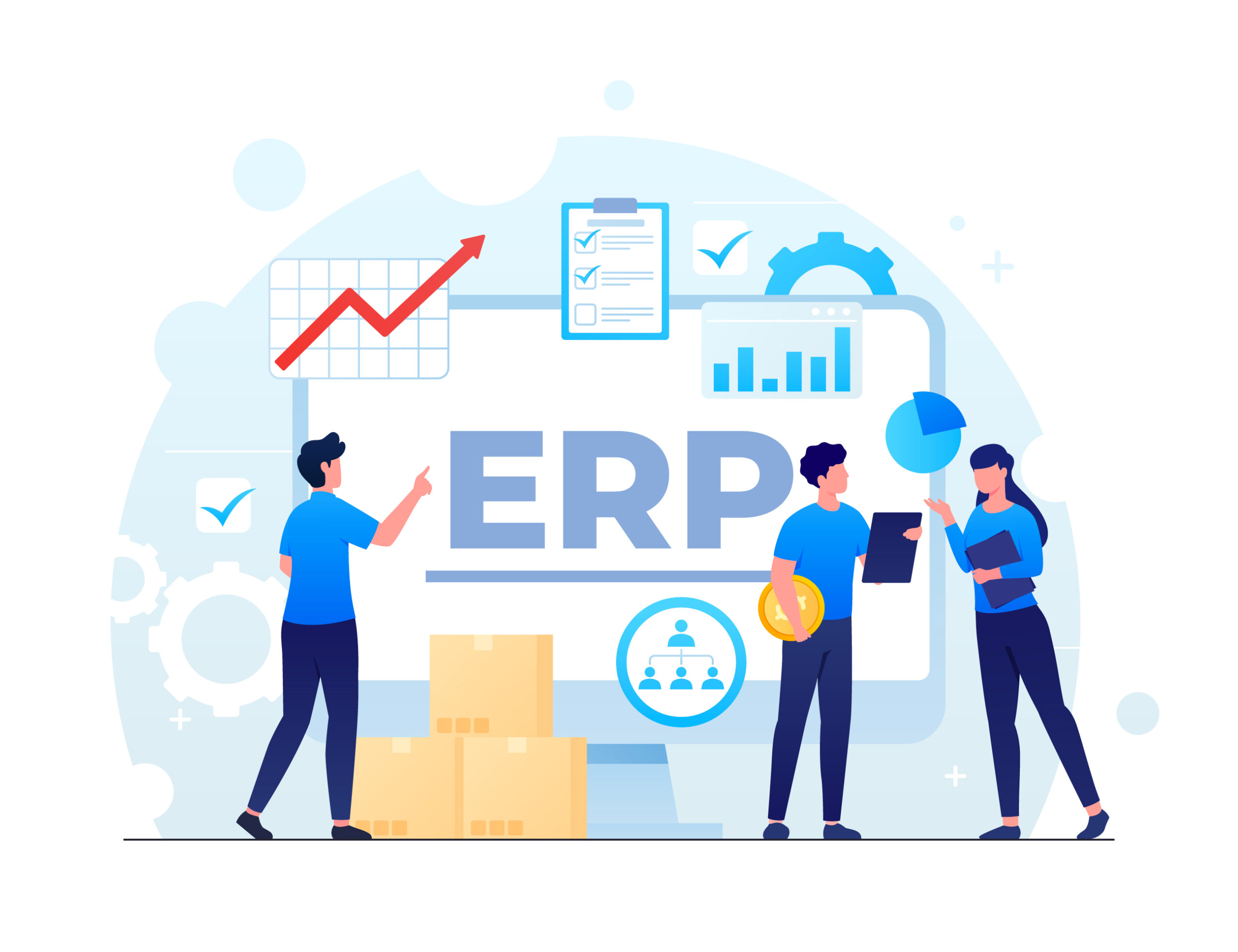
What is Enterprise Resource Planning (ERP)?
Enterprise Resource Planning (ERP) is a business management software system that enables organisations to integrate various business functions and processes, including finance, human resources, procurement, and customer relationship management, into a single, centralised system. ERP systems are designed to provide a holistic view of an organisation’s operations, enabling better decision-making and streamlining business processes.
In simple terms: ERP connects people, processes, and data across departments in real time.
Why Businesses Needed ERP in the First Place
Before ERP systems existed, companies relied on separate departmental software. Finance worked independently. Production had its own planning tool. Inventory ran on manual logs or spreadsheets.
That structure created three major problems:
-
Data duplication
-
Inconsistent reporting
-
Delayed decision-making
During the 1960s and 1970s, manufacturers used Material Requirements Planning (MRP) systems to manage production. Over time, MRP evolved into MRP II (Manufacturing Resource Planning). Eventually, vendors expanded the concept to cover all enterprise functions. That evolution led to ERP.
Today, ERP supports not just manufacturing but also construction, retail, logistics, healthcare, and service industries.
How ERP Works
An ERP system works on a centralised database. Every department uses different modules, but they all share the same data.
For example:
-
The sales team enters a customer order.
-
The inventory module checks stock.
-
The production module schedules manufacturing.
-
The procurement module triggers raw material purchase if required.
-
The finance module records revenue and costs automatically.
No one needs to re-enter the same data.
This real-time integration reduces manual effort and improves accuracy.
Also read – What is the basic structure of a good ERP Solution?
Benefits of Enterprise Resource Planning (ERP)
ERP systems offer practical business benefits. Let’s look at them logically.
1. Real-Time Visibility
Management sees updated reports without waiting for manual consolidation.
2. Better Decision-Making
ERP provides structured reports and dashboards. Leaders rely on accurate data instead of assumptions.
3. Process Standardisation
ERP enforces workflows. That reduces dependency on individuals and improves consistency.
4. Cost Control
Companies track expenses more precisely. Procurement becomes more transparent.
5. Compliance and Audit Support
ERP maintains transaction history. Auditors can trace entries easily.
6. Scalability
As the company grows, ERP scales with it. New users, modules, and locations can be added without changing the entire system.
Industries that use ERP
Enterprise Resource Planning (ERP) supports multiple industries:
-
Manufacturing
-
Construction
-
Infrastructure
-
Distribution
-
Logistics
-
Retail
-
Professional services
In manufacturing, ERP connects production planning with inventory and procurement. In construction, ERP manages projects, billing, subcontractors, and materials. In logistics, ERP tracks fleet operations and warehouse movements.
The system adapts to industry-specific workflows.
Common Myths About ERP
Let’s clear some confusion.
Myth 1: ERP is Only for Large Enterprises
Small and mid-sized businesses use ERP successfully. Cloud solutions have made ERP accessible to growing companies.
Myth 2: ERP Solves Problems Automatically
ERP improves processes, but it does not fix broken management practices. Companies must define clear workflows before implementation.
Myth 3: ERP Replaces Employees
ERP reduces repetitive tasks. It does not eliminate strategic roles. Instead, it helps employees focus on analysis and planning.
ERP Implementation: What Really Matters
An ERP project involves more than installing software.
Successful implementation requires:
-
Clear business objectives
-
Process mapping
-
Data cleansing
-
User training
-
Leadership involvement
According to research and advisory firms like McKinsey & Company, digital transformation initiatives succeed when organisations focus equally on technology and change management.
That applies strongly to ERP projects.
If users resist the system, even the best ERP will fail. If leadership supports adoption, ERP delivers measurable value.
Read also – How to make ERP software implementation successful?
ERP and Business Growth
Growing businesses face operational complexity. Manual systems collapse under scale.
Imagine handling:
-
Multiple locations
-
Hundreds of SKUs
-
Multi-level approvals
-
GST compliance
-
Project-based billing
Spreadsheets struggle. ERP manages structured growth.
It also supports:
-
Multi-company consolidation
-
Multi-currency transactions
-
Advanced reporting
-
Budget control
That makes ERP a long-term strategic investment rather than a short-term tool.
ERP in the Age of AI and Automation
Modern ERP systems integrate with analytics and automation tools. They support:
-
Predictive demand forecasting
-
Automated approval workflows
-
Real-time dashboards
-
Business intelligence
However, ERP remains the foundation. AI tools depend on structured, clean data. ERP provides that structure.
No data foundation means no reliable analytics.
Choosing the Right ERP System
When selecting an ERP solution, businesses should evaluate:
-
Industry fit
-
Scalability
-
Implementation partner experience
-
Integration capability
-
Reporting flexibility
-
Total cost of ownership
Decision-makers must align ERP selection with long-term strategy. Short-term price comparison often leads to long-term limitations.
Final Thoughts: What is Enterprise Resource Planning (ERP)?
Enterprise Resource Planning (ERP) is a unified business management system that integrates core functions into one centralised platform. It connects finance, operations, supply chain, and human resources through shared data and structured workflows.
ERP improves visibility, strengthens control, and supports growth. It does not magically solve business challenges. It creates clarity. Leadership and process discipline convert that clarity into performance.
In a competitive market, companies need accurate data, faster decisions, and controlled operations. ERP provides the structure required to achieve that.
When implemented thoughtfully, ERP becomes the operational backbone of the organisation.
And once businesses experience a single source of truth, they rarely want to return to disconnected systems.
Also read – How BPR plays a critical role in ERP Implementation?