GST ready ERP system is ready for quick implementation. With the introduction of Goods and Services Tax (GST) the way organizations doing business will see a massive change. If the surveys conducted by various agencies can be believed, there going to be a substantial increase in businesses in the country. The increase in business will definitely reflect in the use of software systems such as ERP solutions. As far as the ERP system is concerned, even a small taxation change would make a big impact in the basic structure. There need to be restructuring of whole accounting module. As the prime job of an ERP system is to generate invoice and payroll management, these sections also witness realignment of its structure that would match with the new taxation methods. Having said that, eresource being one of the most flexible ERP solution to match with the business process of variety of industrial verticals as such as Manufacturing, Pharmaceuticals, Construction and Infrastructure, Feet Management, Trading and Automotive, we have successfully integrated the new taxation method in the system. Our GST ready ERP system is safe and reliable solution that can be implemented in short period of time in any industrial segments. eresource is India’s awarding winning ERP system and one of first to be ready with GST integrated ERP system which will reduce overall tax burden. Introduction of GST would reduce the impacts of cascading taxes and allow the cross-utilization of tax credits across the supply chain. With the announcement of GST, eresource has started to upgrade, fix and design new functions and processes in our ERP software to prepare for the change. Though, as we said earlier, it all were very time consuming exercise, because any change in rates is still a major ERP event and have to create new tax codes, conditions and update information about products and materials. Understanding all these aspects we have succeeded in making our system cent per cent GST ready and any implementation process can be completed within 90 days of time. Mainly the following modules have been redesigned to fit accommodate the new GST method successfully. Procurement or Materials modules Sales or supply chain modules Financial management modules With the introduction of GST almost any types of goods or services will be taxable and GST transitions the taxable event from sales, distribution, manufacture, and provision to simply the event of a supply. Also Read – Power ERP
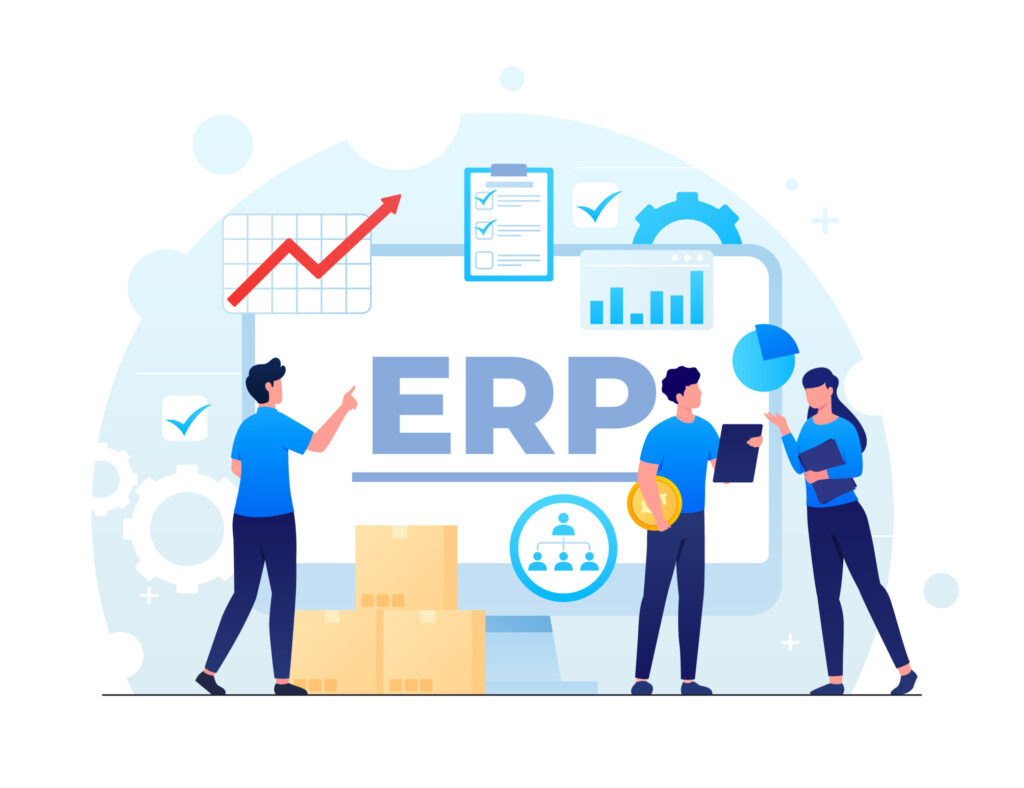
Enterprise Resource Planning system, popularly known as ERP system, the descendant of MRPII offers the answer to the economic and productivity troubles of manufacturing and service enterprises. Thus, the ERP system has become very popular as an enterprise management software tool. ERP is a Software application that provides an organization with functionality for two or more systems. While some ERP packages initially covered two to three functions for an organization most ERP systems today cover almost all the business functions of an organization. As the name suggests, the term ERP referred to how a large organization planned to use a organization’s wide resources. It was the larger companies that have opted to use the ERP systems initially. However, the use of ERP has changed and today the term can refer to any type of company, no matter what industry it falls in. In fact, ERP systems are used in almost any type of organization – large or small. The latest ERP tools available in the market today can cover a wide range of functions and integrate them into one unified database. For instance, functions such as Human Resources, Supply Chain Management, Customer Relations Management, Financials, Manufacturing functions and Warehouse Management functions were all once stand alone software applications, usually housed with their own database and network, can now fit under one umbrella called ERP. Popularity of the ERP system has grown with its vast usage among the all kind of industries, Today majority of the midsize organizations are using ERP to support a variety of business issues, including globalization, lean manufacturing, conducting e-business, consolidation, shared services, collaborating with suppliers and meeting the requirements of new customers. In today’s competitive business world usage of ERP system is becoming a must for any organization to meet the challenges faced in their business process. Studies also reveal that very few midsize companies that don’t already have an ERP implemented are facing numerous problems in their production and sales departments. Web-based ERP Of late many of the organization consider Web-enabled ERP as their most important and strategic platform because it provides a solid foundation and information backbone for eBusiness. When a business application like an ERP system is enhanced with the eBusiness capability, i.e. making it a web-based ebusiness enabled ERP, they supercharge each other. eBusiness is the best vehicle to share business information with partners for creating major B2B synergies. A fully integrated web-based ERP will capture and create accurate, consistent and timely relevant data, and assist in intelligent business decision-making. The impact of ERP/e-Business integration is substantial, ranging from reduced inventory and personnel level to improved order and cash management. It also results in improved customer responsiveness, reduced IT costs and the availability for value-added activities. A clear advantage of the web-based ERP solution is that remote users like executives and sales representatives can access the company system with any browser, which is much more convenient than going through a laptop configured for Terminal Services. A quick and on-time implementation of the solution can be done on your existing configuration set up. That means you do not need to upgrade your network for Windows/Exchange Server and SQL Server database. Web-based ERP removes your headache from the Investment made towards time and cost in the maintenance of the server & other hardware. Also Read – ERP for trading industry