One ERP. Every Industry. Global Presence. Powered by Azaalea AI
22272e9fb58a47b7d605950c6cdff7b550d0b71e
One ERP. Every Industry. Global Presence. Powered by Azaalea AI
Final white Azaalea Ai Middle East FZ LLC logo (1)

Retaining customers makes perfect business sense

7016016 Customer loyalty has a powerful effect on the business bottom line. The dramatic economic power of customer retention is revealed when customers are viewed in terms of lifetime value. The value of retaining customers makes perfect business sense when one considers that a consumer retained for life is more cost-effective, requires less service, provides more business and contributes to new customer acquisition by offering positive referrals. For the average business, studies indicate that repeat customers account for 70 per cent of total revenues. Thus, customer retention, creating longitudinal investment in customers, guarantees significant current and future economic benefit. ERP integration enables businesses to better comprehend and thereby, better serve customers with each and every interaction. The ERP integration is not an easy task. The good news is that there are a growing number of solutions available. Before adopting a course of action there are a few common rules to follow. Firstly, make sure you understand the problem before you undertake the solution. ERP integration is a corporate-level problem requiring a corporate level strategy. Also Read – ERP for civil engineering its role and benefits Enterprises must consider the use of an ERP as an obligation instead of an option in order to be competitive. With old systems the information that comes from daily activities are difficult to handle. This will ultimately affect the relation the company has with its customers. Customer satisfaction is the most important element of a successful business and ERP plays an important role in fulfilling this commitment. Everybody knows that communication improves relationship. Therefore it is important to understand that ERP can bring data from one area to another without any extra effort, and with almost no chance of mistakes. In addition to this, the information becomes available in real time. Therefore, by the time an order is entered, it can be prepared and invoiced at the same time. This helps a lot with customers as they always expect a quick response. Organizations implementing ERP applications have to explore the areas of integrating these applications to the other enterprise applications. What approach to take will depend on the need for integration. Diverse tools and methods available in the market are evaluated and tested professionally before implementation. Organizations have to adopt very cautious approach while selecting these tools and methods to keep their leadership in the market. In small organizations every department has its own needs, and they ask technical department to provide software capable of matching them. Sometimes this is provided from the outside through vendors, and it might not even exist. This is a common mistake happening with many small and mid-sized organizations. For an effective business process and customer relation management, it is necessary to have an efficient ERP system deployed in the organization and it must be done professionally to achieve the expected result in the terms of functional, technical and economical.   Also Read – How ERP system useful in pharmaceutical manufacturing industry?

Adopt global best business practices

7016016 Adopt global best business practices   Best practice is the process of finding and using ideas and strategies from other companies and industries to improve performance in any given area. Business has used best practice bench marking over the decades and realized billions in savings and revenues in all areas of business operations and sales. ‘As-Is’ best practice addresses or includes the present practice followed by the specific company which is planning to implement the changes required to keep itself in the league of other top companies in the industry. This is done in all functional areas like HR, Operations, Finance, and Maintenance. etc. ‘To be’ best business practices are generally the best practices which exist in the industry and have been refined over a period of time. Companies should aim at adopting their industry specific best practices for their future benefit. Preventive maintenance, activity-based costing etc. are considered as best practices. ‘To be’ best practice includes some of the practices which are already adopted globally and are taken as industry standards for swiftly operating businesses in a competitive global scenario.   Also Read – Significant changes in business after using cloud ERP software   Some of the best practices that can be adopted are as follows: Information Liquidity Much like cash liquidity, the liquidity of information is a measure of business success. In a successful company, data flows smoothly and information is transformed into economic value. Information liquidity is obtained by integration of processes and systems at all levels. Integration should be the driving force behind design, methodology, development and deployment of all IT systems. Availability As most companies become more and more dependent on IT, it is very important to ensure the maximum availability of the eservices. This does not mean that all IT systems have to be absolutely flawless and foolproof, but good through has to be given to what could be the consequences for the company if all or part of the IT services are temporarily unavailable, and what can be done to minimize these consequences. Also Read – Best ERP Software in India Agility Market changes constantly and so does legislation and technology. It is said that the product life cycles and their time to reach the market are getting shorter and shorter. As a consequence, IT systems have to be built for maximum agility. Cross-compatibility, reuse and lightweight functionality are the ideas to be considered. Costs Especially in times of economic slowdown, the costs of IT are under constant scrutiny. Unfortunately, it is very difficult to quantify the benefits of IT in terms of money and it is relatively meaningless to approach IT investments singularly from an accountant’s point of view. These costs also have to be related to non-quantifiable benefits for the company.   Also Read – How ERP software is beneficial for pipe manufacturing industry

ERP growth is skyrocketing

7016016 ERP growth is skyrocketing   Demand for Enterprise Resource Planning (ERP) solution growing day by day. Experts are forecasting a huge growth of demand for ERP mostly in mid-sized organizations. The demand is due to the specialty of an ERP system to manage the increased customer service, efficient distribution system and reduced operational costs. Majority of CEOs/Senior managers share the same view that ERP is an important tool to achieve competitive advantage. The number of employees in an organization using the ERP system is increasing and organizations that have started with the basic modules are now expanding their system with subsequent applications. This is also another reason for the ERP growth. Another factor for the growth is many organizations replace customized system with standard application packages. Most of the medium ERP vendors are targeting the mid-sized organizations. This is because many of the mid sized organizations are working with applications which are non-integrated and on disparate technology architectures, built in-house. This has resulted redundant technology, loss of support, non availability of critical information at the right time resulting in overall business loss. ERP vendors in India have found it an ideal market by exploring the SME segment. There are lot of demand persisted in this market, which on the other hand helped to growth the ERP market in substantially. Also Read – How web based ERP software helps remote workers Knowing that majority of Indian manufacturers are small by global standards and requiring easy-to-use ERP solutions to meet their specific process requirements, ERP vendors in India have come out with ideal solutions which can not only match their needs but also their budget. Now almost all small and medium enterprises across industry verticals and micro verticals, such as pharmaceuticals, chemicals, fleet management, automotive, modular kitchen, construction, infrastructure, and textiles, are leveraging ERP solutions to gain sustainable competitive advantages. With the advent of on-demand deployment of ERP software and also web-enabled ERP solution, the user can access the software through license as a Web-based service. The increasing popularity of the web-based applications account for the ERP growth, as the enterprise resources are maintained by a service provider. Growth factor also includes the competition prevailing in Indian ERP market. With the entry of international companies in the local market, the local vendors also steadied their products which are going to be a good sign as far as mid-sized organizations are concerned. Now they can find a wider market with ERP product suitable to their needs also in their limited budget. As the market is getting more competitive reliability and compatibility about the smaller players are unwanted. Today SMEs can choose the right ERP at their will with confidence which is, indeed a good sign.   Also Read – What are the future trends for a construction ERP software?

Evaluation of ERP software is the first step

7016016 Evaluation of ERP software   Lot of articles have been written about preparation, planning and implementation of ERP project. Which organization needs an enterprise resource planning solution (ERP) and at which stage is to be discussed. Every organization which is planning to implement an ERP solution must perform an honest and thorough assessment of business needs and alternatives. This is an important factor of taking ownership in the ERP or any alternative solutions. Though there are plenty of good reasons to implement ERP including many “no brainers”, in most organizations the decision is not so obvious and one must objectively evaluate the validity of the proposed business case and timing, Therefore, businessmen must ask these questions before spending on ERP to bring some sanity to the decision-making process :  Are the business and technical strategies that integrated in the new ERP system compatible with your business? What is the real problem you have with your existing software or your business processes?  Would an ERP project be one of the top two priorities within the organization given other internal and external projects, initiatives, or probable events?  The claims of the new ERP system actually result in better decision-making or make lousy managers more effective?  Does anyone understand the data or capabilities of the current software?  Can the new ERP system bring result-oriented performance so that the existing application which seems to be working fine could be discarded?  Is the current application software gives you a sleepless nights?  Is the current software is too old to be customized and no not supported by any vendor?  Can a few purchased (and integrated) “bolt-on” applications do the trick vs. buying an entirely new package?  Should a limited pilot project to be deployed to check the efficiency of the software before going to the full fledged implementation of new ERP system?  Are the proposed operational benefits and cost savings of new ERP system authentic?  Should all the implementation and support cost in the ROI be considered? It is advisable to hire independent business consultant to analyze the situation comprehensively. A need assessment is the first step which will be followed by the ERP readiness assessment, which are two different things. So think right and act right. No doubt, success will follow you.   Also Read – ERP Software for renewable energy

Make your business process more efficient

7016016 Make your business process more efficient   Organizations must realize that after the implementation of an effective ERP system all of its process becomes more efficient. ERP system will help all the major decision making including retaining a client. However, the organization that plans to implement an ERP system must be well prepare to integrate the system effectively. Organizations are advised to seek the help of an external consultant to find out how suitable is the organization when it comes to working with an ERP system. The external consultants are capable of evaluating and they identify the effective needs of the moment. It is a good idea if the decision about an ERP project could be carried out by a team of professionals from both internal and external for a more adequate design. This is because the main aim is not just about purchasing software, but to order all the pieces to match with it. In most cases some internal processes need to be redesigned before implementing an ERP. In addition to this, software is often modified to fit the ERP according to the enterprise objectives and activities. The combination must be as perfect as possible. Also Read – Top ERP Software solution for food industry In spite of its benefits one of the most important factor to be remembered is that ERP is not a just another software application in your organization. The system involves every internal process and must be preceded by a reevaluation of every section together with its functions. It is also important to note that an ERP will not change the management functioning on its own. You must keep in mind that it is an important and decisive tool, but in order to obtain a correct development you will have to decide carefully who is going to command it, as well as the way in which the data will be saved and how information will flow. Just implementing an ERP solution alone won’t help the organization make any success. Though the effectiveness of an ERP system could be measured by the improvement in the ROI, the goal of measurement is not to measure; rather, it is to improve performance and processes are the point at which this can be best accomplished. A well-performed ERP system can be maintained till about 15-20 years. In the later stages the package will have old architecture. It will become very difficult to make changes in the program code without inflicting hazardous damage to the system’s stability. It is possible to give older systems a ‘facelift’ with modern tools. Though those ‘facelift’ can extend the life cycle of the package for some years, they will certainly speed up the appearance of the useless codes. If your ERP system is under-performing, it is better to go for an overhaul of the system. There are numerous efficient ERP systems available in the market. Do the right evaluation as per your requirement and implement a suitable ERP system that could take your business success to new heights. As the saying goes – “It is better late than never”.   Also Read – The best ERP system for trading distribution business

Effectiveness of ERP Implementation

eresource-ERP-Software-for-Indian-SMBs-31-1024x576 It is quite understandable that the implementation methods used in some ERP systems differ from other ERP methods. Here are some important features for the effective usage of ERP implementation. Don’t modify the system at the early stage but try to maintain the normal software and arrange your action as such. If you are confident that changes in the ERP system will help you quickly then go for the modification or else be with the normal software. Data transfer is one of the most time-consuming aspects. Transfer only the data which is utmost necessary and important, the remaining data can be transferred later on. There will be many employees who will be devoting their time to implementation as well as to their daily routine work, but only one person will be fully committed to the project. Hiring people from outside to train the staff will be time-consuming instead of allotting the company employee itself which will not only save time but also the cost will be spent on an outside trainer. Having cost control is a basic right for an ERP system. Check out your financial status and if it does not fit your budget do not spend more on implementation by way of increasing your budget. Before implementing any ERP system the system has to be tested which is an important factor. Before scheduling one has to make a deep check of an ERP system. It has to be made sure that every person working in the organization must have full knowledge of an ERP system and its implementation process. The complete information must flow from the higher level to the lower level. This will not only build confidence but will also motivate them for the betterment of the business.

eresource Bpro: most cutting-edge and innovative ERP for Process Manufacturing

Businesses are indeed becoming more digitalised. As artificial heads prepare to take over the front desk, businesses must adopt a creative strategy to stay afloat. Old generation ERP software alone will no longer be enough to improve operations. Today, cloud-deployed artificial intelligence-driven No Code ERP solutions are altering the digital foundation of businesses that are eager to innovate and thrive in a complicated, uncertain, and volatile marketplace. By consolidating all of your business operations onto a single AI-driven platform and automating and integrating them from beginning to end, eresource cloud ERP software, which is built on the Azaalea platform —the most cutting-edge and innovative enterprise application assembly and delivery platform—allows you to get a 360-degree view of your company at any time and from any location. Increase efficiency, lower costs and time to market You can increase efficiency, lower costs and time to market, and spur innovation throughout the value chain with this cohesive approach to business. One of the most difficult and competitive company sectors nowadays is the process manufacturing sector, where it is imperative to have an appropriate process management system to oversee administrative and production tasks. Under the Azaalea platform, a unique AI-driven ERP system, eresource, the most respected ERP solution provider in India, the United Arab Emirates, Saudi Arabia, and Nigeria, has further improved its all-inclusive ERP system, Bpro for process manufacturing, with a No Code feature. Pharmaceutical and food processing companies that are involved in process manufacturing are increasingly adopting eresource Bpro, a comprehensive ERP system. Simple to use, flexible, expandable, and adaptable For process manufacturers, eresource Bpro is the only industry-specific ERP solution available. The goal of the system’s construction was to meet every requirement of mid-market manufacturers and distributors. We also make sure that all of our ERP features are delivered at a price that stays within the allocated budget. Our ERP system will give clients a quick return on their investment and is simple to use, flexible, expandable, and adaptable. Our continuous upgrade process guarantees that our solutions are designed by the latest and cutting-edge technology, making our Bpro ERP software for the process manufacturing sector the most dependable and trustworthy. Being a Low Code/ No Code ERP system, changes and improvements can be made as needed in resource Bpro by the user without having any technical support from the vendor. We have a well-organized technology backup that is constantly aware of our clients’ needs thanks to our wizard development staff. Timely implementation is one of our strong points. The straightforward layout and our innovative execution could yield a significant return on investment more quickly. A solution that will assist your business in meeting objectives Once implemented, our solution leads to cost savings, more competitiveness, enhanced operational clarity and service, and better productivity, among many other advantages. Users may experience decreased operational costs as a result of this benefit. In conclusion, it is simple to adapt the eresource Bpro ERP system to your company’s structure using our AI-driven No Code feature. The solution will assist your business in meeting objectives for each operational quarter and rebuilding all of its processes following implementation. Every year, the value and significance of eresource Bpro ERP for the process manufacturing sector will be highlighted. After your company uses it, you as a process manufacturing company, can contribute to greater success. Please contact us at sales@eresourceinfotech.com for more information on eresource Bpro ERP for Process Manufacturing and PRODUCT DEMO.  

eresource HRMS: Empowering your workforce to achieve extraordinary results

All around us, things are changing. All company establishments must adjust to the new, advanced technologies. To achieve the anticipated expansion of its firm, it is now imperative that every department within an organisation work with the latest and fastest technologies. Human resource management is a crucial and occasionally challenging activity from an organisational perspective. Effective personnel management paves the way for advancement within a company. Businesses can no longer afford to treat people like commodities that should be used until they are exhausted and then thrown away. Employees in today’s firms are seen as human resources that require attentive development, nurturing, and accommodations. eresource HRMS, which was developed on the latest NO CODE platform, was created with all of the most recent demands on an organisation’s requirement to operate its HR management successfully. Cutting down on time-consuming administrative workloads The administration of human capital and resources is streamlined by this AI-enabled web-based, cloud-deployed system. The system’s operational functionalities are divided into four key sections: attendance, payroll, training, and recruitment. eresource HRMS regularly keeps an exhaustive personnel database that includes each employee’s contact details, pay information, attendance, performance review, and promotion. eresource HRMS  is a collection of integrated solutions created to streamline HR operations by cutting down on time-consuming administrative duties and implementing self-service apps to save expenses. With the creation of schedules for every project or activity, calendar sharing, and strong group calendaring features, this HRMS can enhance employee collaboration and facilitate more efficient company processes. From local to global, demand grows for eresource HRMS in the UAE, Saudi and Nigeria The ability to adapt to both company-specific and ever-increasing HR requirements is a critical component of an HR management system. eresource HRMS has included all the features needed for business operations, and the NO CODE feature allows users to customise the solution to their company’s requirements. Businesses today transcend national borders and disperse throughout the world.  Keeping this in mind, country-specific versions of the HRMS components are included in this system to accommodate the organisation’s global demands. Businesses that choose to use eresource HRMS are certain to reap significant benefits and business growth with flawless functions of the working environment, since it satisfies all organisational requirements and offers comprehensive assistance for managing all departments in an integrated manner through its web-based technology. Because eresource HRMS is one of the most reasonably priced, dependable, and effective web-based human resource management systems in India and also in many overseas countries like UAE, Saudi Arabia and Nigeria, businesses of all sizes may quickly implement it without worrying about excessive expenses or unsuccessful implementations. eresource HRMS: Highlights Basic time-off administration Human resource software relieves you of this burden by allowing you to approve or reject leave requests with a single click. Establish leave policies and categories and monitor your staff’s vacation time. Safe database Compile and keep all of your personnel data in one central database. It’s simple to use, easy to process, and hard to hack. You may view and access personnel data from all departments, locations, and designations using our HR software. Easy attendance tracking Make better use of your schedules and be aware of who is in and out of the workplace. HR software sets up employees’ shifts and monitors their attendance. Additionally, the software keeps track of their timesheets for accurate reporting. Accurate performance evaluation and education Establish performance standards for staff members using KRAs and goals. Establish expectations, monitor team performance, and give incentives for improved output and involvement. For more information on eresource HRMS and a FREE PRODUCT DEMO, please get in touch with us now: sales@eresourceinfotech.com Read Posts-

AI-enabled eresource Nfra: a constructive ERP system for project-based industry

Every construction project would become more difficult if it weren’t controlled by an AI-enabled system, which would ultimately have an impact on the project’s profit margin. eresource Nfra offers an amazing AI-enabled enterprise resource planning solution that will not only help streamline their business strategy but also serve as a foundation to support their business growth on higher volume. eresource Nfra is an excellent business option for construction organizations that haven’t considered integrating an ERP solution into their operations yet or thinking of upgrading their existing business system. At the systems level, the focus of AI-enabled eresource Nfra ERP for Construction tends to drive a number of distinct and highly granular business needs. This solution involve not only transaction-based processing but also the projection of detailed cost estimations prior to the efficient execution and delivery of the bid-contract-sale chain. In India, the United Arab Emirates, and many African countries, including Nairobi and Nigeria, the eresource Nfra ERP system for construction is currently considered a highly sought-after ERP solution. This is because some important modules that could propel your company to new heights have been cleverly integrated with the system. Why eresource Nfra ERP system is essential for construction companies? Construction workers are aware of how challenging it may be to overcome unforeseen circumstances throughout a project, which can have a negative impact on the project as a whole. To make the work successful and profitable, there are several obstacles to face. Such situations have been greatly alleviated with the advent of specialized AI-enabled ERP software for the construction sector, which enables construction firms to have a well-thought-out working plan for each project. An intelligent and effective ERP system eresource Nfra meets the majority of standards and provides efficiency and risk mitigation is now essential for any construction company. An all-inclusive construction ERP software solution, this ERP system for construction and infrastructure can handle all of a construction company’s requirements. Manage project cost, schedules, and client management effectively The eresource nfra ERP system was created especially to handle the intricacies of job costing, resource management, analysis, and invoicing for civil engineering and construction projects that are project-based. Two key areas that are very challenging to handle in construction and infrastructure projects are labour management and equipment management. Using an effective ERP system, like eresource Nfra, makes it easier for construction companies to manage their workforce and equipment. Without the support of appropriate accounting software, building companies will be unable to generate the necessary profit from each project, not just labour and equipment. With the integration of a robust account module with eresource nfra ERP for the construction industry, project cost, schedules, and client management can be managed effectively. Additionally, the system has CRM (customer relationship management) components that can efficiently handle all of your customer interactions. Every project would become more difficult if it weren’t controlled by an AI-enabled system, which would ultimately have an impact on the project’s profit margin. Here are some advantages of using an ERP system to grow your construction company. 1. Business development: Turn estimates into projects and prospects into clients, 2. Project Execution: Oversee billing, budgets, milestones, and resources. 3. Project management: RFP, RFI, and drawing document and workflow management 4. Labour Management: Productivity, time, and resource management 5. HR and Payroll (Union & Certified Payroll): Automated reporting and processing of time, taxes, and fringe benefits 6. Service Management: In the mobile world of today, dispatch and oversee services 7. Examine and Report: Gain insight into project and business performance to avoid Margin Fade. In addition to the aforementioned, modules including material management, marketing, project planning and control, and others have been integrated into the eresource nfra ERP system. A system tailored for large construction companies Additionally, the system can be tailored to a large construction company’s demands based on their specifications. By segmenting each project into activities, the system also includes a module that aids in project cost estimation. After that, each task is divided into its component parts: labour, equipment, and materials. On the basis of the work projections for a given month or week, another module aids in the planning of material requirements. Project estimating, also referred to as the Job Cost module For an ERP system for construction, the most crucial component is project estimation. Since all building projects, whether they are internal or external, involve the rehabilitation or reclamation of land or facilities, or involve other developmental values, they all start with an overall cost estimate. A primary contract plays a major role in driving construction projects. The ultimate legal cost/revenue baseline agreement between the developer and the client is represented by this contract. Therefore, time and material tasking are among the essential components that need to be calculated in order to determine a desired business outcome. Time and material tasking methodology: 1. Storage tasking and budget comparisons between current and historical,thorough audit monitoring of all budgeting adjustments 2. Category management based on jobs 3. Comparisons between actual and expected costs 4. Calculations of variable costs that range from gross/net revenue to completion percentage 5. Used computations related to earned revenue and cost-of-sales estimations Effective Financial Administration A more detailed approach to finance management is necessary for an effective ERP system.  This advanced ERP system AI-enabled eresource Nfra features the following: > Management of contracts >Indexing of contractors >Management of materials >Management of equipment >Billing and time >GST and other policy management initiatives >Management of purchase and change orders >Management of operational inventories  Capabilities for payroll The eresource Nfra ERP system’s Human Resource Management module now provides payroll capabilities that are further expanded by focusing on hours-expended vs estimated-cost operations and providing well-defined reporting. Real-time payroll processing, labour costing, labour cost control reports, taxes, employee insurance, EEO reporting, and other components have all been successfully integrated with this module. eresource Nfra ERP system keeps the project on track to be finished on schedule. Better control over approved and pending modification orders is made possible by it. To know more about eresource Nfra ERP capabilities and

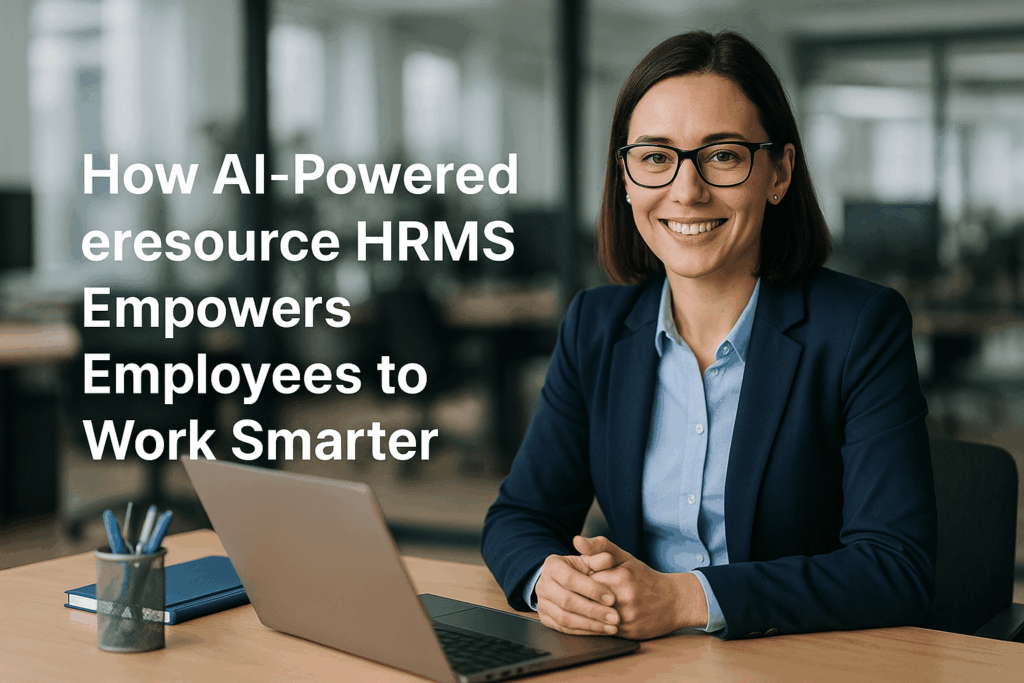
How AI-Powered eresource HRMS Empowers Employees to Work Smarter

How AI-Powered eresource HRMS Empowers Employees to Work Smarter eresource HRMS’s capabilities are enhanced by artificial intelligence (AI), which also assists teams in businesses in achieving greater productivity, growth, and efficiency across HR services. The daily HR operations of an organisation are more effectively managed and automated by a modern eresource HR management system. Additionally, it provides workers with the freedom to perform certain HR-related duties quickly and autonomously. This AI enabled eresource HR application improves HR effectiveness and expedites procedures throughout an employee’s career in the company. Artificial Intelligence in Human Resources An existing HR management system’s capability can be expanded with AI, allowing HR teams to accomplish more tasks with less work. Higher productivity and quicker company growth are experienced by the organisation when HR enhances operational efficiency. AI’s Advantages for the HR Industry 1. Expands an HRMS’s reach and empowers HR teams to accomplish more 2. Boosts the effectiveness of operations 3. Increases growth and productivity 4. Simplifies each essential HR task The following are a few details of the essential operations of an HR department that are improved by AI-powered human resource management. Continue reading to find out how. Increasing the Intelligence of Hiring Finding and employing individuals may be a laborious and difficult process. Hiring managers may uncover the best applicants more quickly by utilising AI in HR. An application tracking system (ATS) driven by AI streamlines the hiring process by: 1. Using Gen AI to write outreach messages, advertisements, and job descriptions2. Matching resumes and job descriptions using natural language processing (NLP)3. Notifying hiring managers and qualified applicants of their status4. Using chatbots to schedule and carry out exploratory interviews5. Estimating the probability that a candidate will accept an offer6. Verifying the references and history of those who made the short list Making Employee Onboarding Easier An AI-driven onboarding module in contemporary HRMS platforms automates the procedures for both HR personnel and workers. Organisations may standardise onboarding procedures, produce interesting experiences, guarantee complete compliance, and produce informative reports thanks to automation. One of the most important uses of AI in human resource management is this. Expectations are high for new hires. Therefore, when welcoming them, HR team members need to present themselves in the best possible light. HR can streamline and expedite the onboarding process while satisfying new hires by utilising an AI-enabled HR management solution. AI can do this in the following ways: > Automating the development of checklists and welcome messages > Automatedly reminding people to acquire documents > Automating virtual onboarding chores for new hires > Holding orientation and induction sessions virtually > Using natural language processing to gather employee feedback > Examining the new hires’ onboarding process Payroll Management Automation The payroll module is integrated with the full-suite eresource HRMS application. The capabilities of this human resource management system are enhanced by a payroll module driven by artificial intelligence. HR departments can therefore improve the accuracy, dependability, and speed of their payroll processes. The outcome will be a positive brand image, contented staff, and stress-free month-ends. When AI is incorporated into HRMS platforms, important payroll tasks become precise and hassle-free. Payroll managers benefit in the following ways: 1. Automating validation, reconciliation, and data entry 2. Helping payroll managers with intricate computations 3. Finding possible mistakes or irregularities in the payroll cycle 4. Instantaneously answering questions via a self-service site 5. Maintaining uniformity in payroll records and procedures 6. Analysing intricate papers and spotting compliance hazards 7. Facilitating prompt decision-making with perceptive analysis Simplifying the Management of Leave and Attendance Various forms of employee leave and attendance requests can be effortlessly handled by HR when artificial intelligence is integrated into a human resource management system.  For HR staff, managing leave and attendance using spreadsheets and email may be a nightmare. The most prevalent issues facing modern HR teams are paperwork, time theft, and buddy punching. The implementation of AI in eresource HRMS has made it simpler to maintain accurate leave accounting and administer consistent leave rules. Additionally, it makes efficient shift management and attendance processing possible. The following strategies will help you reap the rewards of AI in this HRMS leave and attendance management module: > Providing prompt answers to leave-related questions > Automatically tracking staff attendance and leave > Confirming leave details in the HRMS > Identifying trends and stopping leave fraud > Making it possible to record and process attendance in real time > Making use of facial recognition to record attendance Improving Management of Performance HR can monitor, assess, and improve employee performance with the use of a performance management system (PMS), which is made up of procedures and instruments. The following are some ways that AI improves performance management when incorporated into a human resource management system: 1. Automating performance evaluations for employees 2. Examining performance information from many sources 3. Analysing the data at hand to forecast future outcomes 4. Giving staff members both broad and micro-level feedback 5. Quickly summarising assessment data with generative AI 6. Using an AI-powered recommendation engine to customise programs Employee training holds the key Employees must be trained by an organisation to use these tools in a safe, moral, and efficient manner. Additionally, the HR department needs to select a solution that meets the specific requirements of the company. Only then will the company that implements or updates the HRM system see a return on its investment. Please contact sales@eresourceinfotech.com for a LIVE PRODUCT DEMO and additional details about AI-enabled eresource HRMS. Read More-  

A detailed examination of the functional specialties of an AI-enabled ERP system (2025)

When it comes to enterprise resource planning (ERP), artificial intelligence (AI) refers to the incorporation of AI technologies like machine learning (ML), natural language processing, and predictive analytics into ERP systems. Routine chores can be automated by these AI-powered systems, which can also improve decision-making and offer sophisticated data analysis and forecasting. Simplifying corporate procedures and increasing operational efficiency are the objectives of Artificial Intelligence in the Enterprise Resource Planning System. What makes AI in ERP crucial? Traditional ERP systems can become intelligent platforms that learn from data, adjust to shifting circumstances, and maximize business intelligence in real-time with AI, which will boost productivity and cut expenses. Businesses using generative AI solutions are seeing an increase in profitability. The majority of ERP suppliers build their systems as a collection of modular applications. They can collectively handle every aspect of a firm, including supply chain logistics, procurement, and the finance department. With the advent of the word “ERP” in the 1990s, the market for ERP software has expanded widely. Many of the top multinational companies nowadays employ some kind of ERP solution to access data from a centralized system for the whole company. ERP software was embraced by enterprises as part of a unified corporate strategy as its popularity and capabilities grew. ERPs have the ability to provide new insights, have a big impact on company operations, and open up new channels for business intelligence rather than just serving as another piece of software. Additionally, as modern firms generated and collected more information than a single person could ever process, ERP systems became essential for the administration and analysis of big data. Emergence of AI in ERP system Some processes, including data entry and analysis, have been automated by AI-enabled ERP systems within the past ten years. Recent developments, however, such as generative AI, have started to fundamentally alter the ERP market. Stronger AI applications are supported by eresouce cloud ERP systems’ increased processing capacity. A new era of complex business software has begun with ERP systems becoming more accurate and user-friendly thanks to advancements in machine learning models and natural language processing. A few recent commercial transactions demonstrate the promise of today’s AI-enabled ERP systems, including eresource ERP. Various ways of usage of AI in the ERP system ERP software uses AI technology in various ways to enhance and oversee business processes. Among the AI technologies commonly included into ERP systems are: ✔ Predictive analytics ✔ Natural language processing ✔ Robotic process automation ✔ Machine learning ✔ Chatbots and virtual assistants ✔ Image recognition ERP with Generative AI ERP platforms can generate reports or suggestions using AI’s power, giving businesses useful information derived from real-time data collection. Among these applications are: Creation of reports From raw data, generative AI can automatically produce comprehensive business reports, guaranteeing consistency and saving time. Stakeholders can receive information from these reports whenever they require it. Planning for scenarios By creating several business scenarios and analyzing possible outcomes, AI greatly improves the strategic planning capabilities of previous ERP systems. An AI-enabled ERP system, for instance, might examine sustainability laws and generate several tailored suggestions to lower a company’s carbon impact. COMING UP: The benefits of using AI in ERP Please contact us right now at sales@eresourceinfotech.com for additional details on the AI-enabled Low Code eresource ERP system and its deployment methodology. Recent Posts

Why eresource stands out as the Best ERP Consultant?

A real, trustworthy, and all-around good consultant can oversee implementation using the required traits and methods. eresource ERP is unquestionably a strong contender in this regard. Choosing a qualified consultant is crucial, and there’s no use criticizing the consultant afterwards for subpar work. The primary cause of subpar performance is a lack of understanding of the industry, followed by ignorance of the client’s critical success elements. The other factors include little consulting experience and a lack of comprehension of user views. One technique to demonstrate a consultant’s integrity—something that many consultants lack—is to take a gentle approach with clients and users. A slack attitude will only lead to unproductive outcomes. Loyalty and dedication are needed to fix the issues, which will improve user and customer morale. Sadly, this does not always occur with consultants, leading some businesses to assume that “consultants are ignorant; they come here, learn from us, and then disappear one day for their self-betterment without solving our problems.” It’s interesting to note that consultants are frequently criticized for their methodology rather than their inadequate understanding of ERP products. Boost your company’s growth with eresource ERP In contrast to those above, eresource ERP customers are quite satisfied with our strategy and product service. All of our employees have extensive functional experience and are highly qualified. A competent ERP consultant must be a qualified business consultant as well. This could aid in the client’s reengineering of current setups to enhance ERP performance. It is crucial to concentrate on reengineering the client’s existing setup to improve ERP performance. The expected attributes of an ERP consultant include having a sufficient amount of pure functional experience, a thorough understanding of the ERP product, strong HR skills with persuasive abilities, an eye for process improvements rather than automation, and a calm, collected personality. Frequently, the consultant must deal with a variety of “orphan” activities and handle them appropriately. Why do companies need the assistance of an effective ERP expert? The scenario that follows will show why these problems require the assistance of an effective expert. The design department of an engineering firm used to argue that they were responsible for creating the bill of materials, but the buy level decision should be in charge of choosing and organizing the branded components that the customer requested. The issue was that the buyer might choose a less expensive brand, which may have an impact on how well another assembly performs. For this reason, the design department is involved once more. For a single decision, there were numerous back-and-forth exchanges during the ongoing process. Users were demanding the automation of these departmental conversations in ERP. The consultant’s task in this situation is to completely restructure the organization’s BoM structuring procedure. For complex customer configurations, they have to persuade the client to create a cell of BoM structuring. Every user from marketing, engineering, planning, manufacturing, purchasing, and accounts makes up the cell. In actuality, the consultant had redesigned the organization’s functional set into a temporary process set up to increase the speed and quality of decision-making. Implement an ERP system that works internationally Consultants are responsible for taking users’ policy decisions on a variety of scenarios and designing, mapping, and implementing a process that is appropriate for the culture of the users. It is best to steer clear of additional conversations in these situations. For instance, one corporation sold the same product both domestically and internationally. The disparity in cost was substantial. Since the business uses standard costing, it would be ideal for the same item to have distinct identification for pricing variances to account for inventory costs independently, as the Lot Control Module has not been installed. The corporation did not understand the necessity of a different code for each item. In this instance, the consultant needs to persuade the store’s hardline functional man of the accounting implications. Since the user is not fully aware of the commercial, operational, and legal ramifications of the ERP process, consultants should play a leading role in these situations to ensure that the user gets the most out of ERP. A real, trustworthy, and all-around good consultant can oversee implementation using the aforementioned traits and methods. eresource ERP is unquestionably a strong contender in this regard. Recent Posts-

The Most Reliable ERP System Across All Industries

The latest edition of the Low Code/No Code ERP system from eresource offers a lot more There is a big gap between the supply and demand sectors for an appropriate ERP solution. Put another way, customer demands have grown significantly in today’s expanding technological scene, and there aren’t enough ERP solutions to meet the needs of many of these companies. However, it is the ideal moment for companies to use automation to boost growth and development to compete in the difficult business climate of today. Automation in business processes enables easy and quick communication between departments and other quarters. If a company has many departments, there must be quick contact between them all for information to flow properly. This is significantly hampered if data sharing and communication are done by hand. Additionally, the manual method leads to a great deal of inaccuracy, and fixing these faults and bringing the entire data flow to a real finish takes a lot of time. This is one of the main causes of businesses’ ongoing inability to satisfy client demands. Save a significant amount of time to meet client supply deadlines With the implementation of eresource ERP solution, which has introduced its innovative Low Code/No Code application, the flow of data and information may be readily automated, saving a great deal of time in accessing and sharing the data between departments. This would therefore result in more seamless and effective departmental coordination, saving a significant amount of time to meet client supply deadlines. After the automation is finished, the data flow becomes considerably more smooth and the ERP system manages the data related to the several departments. The eresource ERP system also ensures that no erroneous data is generated by the relevant department. Our ERP solutions, which have been proven to be highly beneficial in managing operations and satisfying customer expectations, are available to both small and large businesses. eresource Low Code / No code web-based ERP has advanced features Even midmarket ERP solutions are highly adaptable and complex, but they lack many advanced capabilities in common, which is where industry-specific functionality in eresource ERP systems frequently comes into play. Three cutting-edge features—support for lean manufacturing, SOA capabilities, and on-demand delivery of eresource ERP system —do distinguish the system from other midmarket ERP solutions Support for Lean Manufacturing Lean manufacturing means utilizing less of everything, as the term suggests. This waste reduction in business and manufacturing operations can be a particularly important cost saver for midsize enterprises with limited resources. An organization can prevent overproduction, excess inventory, motion waste, pointless procedures, and idle time by using lean manufacturing. Additionally, lean manufacturing can help a company be more flexible, provide goods to clients faster, and ultimately thrive in a global marketplace. SOA (Service-Oriented Architecture) Web services, or SOA, have been dubbed the next big thing in enterprise architecture. Thanks to SOA, enterprise-grade technology can be assembled, deployed, and maintained more quickly and affordably, making it simple to integrate and reuse software capabilities. Organizations can respond to evolving business processes faster when they use a Service-Oriented Architecture (SOA). eresource Low Code/No Code web-based ERP solution  In contrast to using a laptop set up for Terminal Services, distant users, such as executives and sales representatives, can access the company system using any browser from anywhere, which is a definite benefit of the eresource web-based ERP solution. With your current configuration setup, the solution can be implemented quickly and on schedule on the Cloud. Moreover, with its latest edition of Low Code/ No Code features, users will be able to configure the system as per the requirements of their company business process. This implies that you don’t need to update your network and the users don’t have to have IT experience with program coding. The selection of an ERP system plays a key role in business success The success of ERP would depend on the correct choice in the selection of the application because you would have encountered more ERP recommendations. A web-hosted Low Code / No Code, a cloud-deployed solution like eresource ERP system guarantees a reduced initial investment and a forecasted cost distribution over time. You may better invest in your business process with the significant cost savings you have (on both the software and hardware, licensing. With eresource ERP, you can stop worrying about the time and money you spend maintaining your server and other hardware. Additionally, the newly introduced Low Code/No Code web-based eresource ERP system eliminates your concerns regarding new features and functionalities (such as service packs and updates). You can begin utilizing this Low Code/No Code web-based eresource ERP system immediately, eliminating the concern about deployment time, which has been identified as a primary cause of ERP failure. eresource Low Code / No Code ERP Features & Capabilities · Accounting · Inventory Management · Payroll Management · Reporting and Analytics · Project Financial Management Procurement · Risk Management · Logistics · Manufacturing · Supply Chain Management · Product Lifecycle Management Recent Posts-

eresource Low Code/No Code ERP: Simplify Customization & Implementation

eresource Low Code/ No Code ERP system Implementation and Customization are made simple ERP (Enterprise Resource Planning) packages are becoming increasingly popular among businesses worldwide as a more affordable option to their current manual processes or fragmented software applications. However, several issues with many ERP packages make it particularly challenging for small and mid-sized business processes to take advantage of ERP’s enormous benefits: eresource NC/LC ERP system addresses the following issues: > Expensive Customization Customization is expensive, time-consuming, and frequently impracticable. As a result, the company is forced to modify many of its operational procedures and adjust to the ERP program instead of the other way around.  > Lengthy implementation The lengthy ERP project implementation process takes up valuable time from the company’s key personnel and typically disrupts ongoing business operations. > Inadequate training Inadequate training and inadequate preparation of the company’s staff leads to inadequate utilization of the new technology and bad system usage. > The Problem of Customization eresource is aware of how crucial it is to update the ERP system with the newest technology so that clients can customize their ERP system to suit their particular requirements. This insight led to the creation of the Low Code/No Code eresource ERP system. eresource shows the way to make your ERP active It is very important to have an active ERP system for a successful business process. An active ERP system is equipped with a technology background that allows integration of workflow processes, alerts and triggers into the ERP system’s logic. These vary greatly from client to client and even within the same customer’s various departments. Therefore, to truly customize the ERP system to the demands of the customer, their successful integration into the ERP program is essential. For the users that run the system, our Low Code/No Code ERP solution simplifies everything. Users of this system can modify it to suit their needs without needing to be tech-savvy or have any technical knowledge of program coding. Most of the other ERP systems available today, however, require users to hardwrite triggers, alerts, and workflow procedures that are not preset, even though workflow and business rules are now practically required for ERP systems. When they install the upcoming release (upgrade), they are forced to recode the triggers and procedures. The uniqueness of eresource Low Code/No code ERP system The entire package approach is the term used to describe the LC/NC design of eresource ERP solution. The package could include every feature that is specific to each consumer. A “customizer” is available to “tailor” the massive “main package” to the needs of the client. However, there are limitations on the scope and type of modifications that the “customizer” can do on their own. Any significant changes or modifications to the package will need the development team’s help. Every industry is served by eresource ERP eresource ERP has evolved to meet the needs of every industry, including Discrete Manufacturing, Process Manufacturing, Construction, Contracting and Infrastructure, Logistics & Fleet Management, Trading & Distribution, and Service Industry, while other ERP systems concentrate their functional areas in a specific industrial segment. Because of its unique design, the system can manage any industry and all of its business functions. For more information on eresource ERP and a LIVE DEMO of the product, please get in touch with our sales team: sales@eresourceinfotech.com Recent Posts-

Construction Success Simplified: Avoiding Errors, Delays, and Rework with ERP Solutions

eresource Nfra LC/NC ERP system for construction, contracting and infrastructure development Although the construction industry has historically been sluggish to adopt new technology, eresource ERP’s Nfra LC/NC (Low code/No Code) solutions are especially well-suited to the sector since building is a fragmented process that involves many different teams, procedures, and elements. Because this ERP system unifies those diverse components into a single system, it has become increasingly common in the construction industry. This ERP system helps to improve cost-value reconciliation, or CVR, and prevent rework in construction projects. eresource Nfra helps eradicate poor communication Poor communication is responsible for the majority of the expensive rework in the construction industry. Separate teams operating under separate systems might cause poor communication; this issue can be fixed with the Nfra ERP system. Ineffective collaboration between teams working on different project components is another major reason for rework. Inaccurate materials, poorly coordinated labour, or design flaws discovered too late can all result in construction problems, which can cause the dreaded delays and rework. eresource Nfra ERP system reduces the amount of rework on a project by enabling leaders to spot problems early, coordinating teams, and offering a single communication platform. Risk management: Control and minimize risks Our ERP system comes with a risk management module, that enables risk assessment, the development of mitigation plans, and monitoring. Construction firms can lessen the effects of unanticipated incidents by anticipating possible risks and creating backup plans. In construction projects, centralized document management, incident reporting, and contract management all help to control and minimize risks. Automate all construction processes and increase productivity With eresource Nfra ERP system for the construction industry, construction companies may boost productivity and function more effectively by standardizing processes and procedures across many projects and locations. Construction workers will be able to concentrate on more worthwhile activities like planning, taking on additional work, and growing a construction company by automating manual operations like scheduling and data input. Boost the Management of Construction Projects Construction project management can be an extremely difficult task that ignores a lot of moving components. eresource Nfra ERP can serve as your company’s primary system, providing project managers with the resources they need to perform their jobs more effectively. This ERP system makes it possible to allocate resources, assign tasks, and create comprehensive project plans. It keeps projects on track by assisting in the identification of possible bottlenecks and modifying timetables accordingly. Additionally, it automates monotonous processes like progress reports, material requisitions, and document approvals. Project managers can focus on more strategic activities and free up crucial time as a result. Project managers can spot problems early, make wise decisions, and act swiftly to address them when they have access to real-time data on project progress, resource usage, and possible delays. Improves customer relationship In the construction sector, eresource Nfra ERP system can be quite helpful in building better client relationships. The system enables construction organizations to provide outstanding customer service, efficiently manage projects, and ultimately gain the trust and happiness of their clients by encouraging transparency, communication, cooperation, and data-driven decision-making. Within the ERP system, clients can be given access to a client portal where they can view papers, updates, and real-time project progress. By keeping clients informed and fostering confidence, this transparency helps to avoid misunderstandings and disappointments. eresource Nfra LC/NC ERP system also makes it easier for the client and the construction company to communicate. The ERP system’s document sharing and progress report features facilitate client engagement and communication. Customers may quickly ask for concerns, get clarifications, or monitor developments. For more information on eresource Nfra LC/NC ERP system and a FREE PRODUCT DEMO, please write to us now: sales@eresourceinfotech.com Recent Posts-

eresource 3GL – The Best fleet management systems for optimal vehicle utilization

ERP for Fleet Management eresource 3GL fleet management system helps maximize profitability and effective utilization of the fleet of vehicles. Logistic firms should use an efficient ERP system when they see that their current methods are not producing the intended results and are preventing them from trying anything new. The lack of an ERP system may cause information to get lost or sit in the wrong location, frequently resulting in poor decision-making. However, if an ERP system is implemented properly, it should be able to address any logistical issue related to paperwork in an organization. Improvements will undoubtedly result from an efficient ERP system, but completing this requires a committed management team. Logistics firms that operate their fleets of trucks or other transport vehicles require an effective and adaptable FMS for their management. A fleet manager needs the eresource fleet management system to maximize profitability, availability, and effective utilization of the fleet of vehicles. 3GL is a comprehensive fleet management solution The logistics business can benefit from eresource’s unique fleet management ERP system. eresource 3GL is a comprehensive fleet management solution that can give fleet management organisations an advantage in their operational techniques.  Major issues facing the fleet management business today are addressed by eresource 3GL. The industry hasn’t had a suitable and functional ERP solution to address its business issues up until now. The industry has discovered an appropriate ERP system that meets their needs and budget since the release of eresource 3GL. eresource 3GL ERP system is comprised of numerous modules that work together to form the final configuration. These modules will cover all things to do with the operations of a logistics firm and managers to make decisions based on the job at hand. HR module in this ERP system takes care of the personnel of the organization including driver management and this human resource module should allow managers to put workers who are best qualified into important positions so that the workload is taken care of better. It will also keep an eye on the drivers, alerting supervisors to any issues. Customer relationship management, also known as a CRM module, handles all customer relations chores. This is crucial for businesses because serving consumers directly generates all of their revenue. This is extremely significant since it gives Customer Service desks documentation and processes and gathers data on complaints, returned goods, and pretty much anything customer-related. Why is eresource 3GL unique? Your fleet can be virtualized using eresource 3GL, an exclusive web-based fleet management system. It is a complete solution that has been linked with the necessary modules to give fleet owners and operators virtual remote control visibility and security over mobile resources in real time. Here are a few of the features of the eresource 3GL system > By using a variety of optimization strategies, the system may maximize fleet utilization while managing rising fleet operating and maintenance costs. > It makes it possible to locate a car on a map and track it in real-time > Get real-time data feeds on the operation of the vehicle’s parts, driving habits, and cargo-hold specifications. > Automating the work dispatch process. > Act fast to fulfil orders and requests from customers > Give clients access to order fulfilment progress updates in real-time as well as delivery timetable forecasts. You may avoid overhead costs, unforeseen break-fix situations, and downtime brought on by poorly maintained fleet vehicles and equipment by implementing a 3GL ERP system for fleet management. Fuel use, driver details, and fleet maintenance history are all easily handled using the system. The system makes it simple to handle crucial areas like auto insurance, asset management, tyre management, inventory management, LR management, and all other costs related to running your fleet of cars and other mechanical assets. With the help of eresource ERP for Fleet Management, a robust business tool built on master configuration, you can quickly and simply construct maintenance schedules and specific vehicle configurations. eresource 3GL has an efficient Driver Management module The system’s driver management feature will make it possible for fleet management firms to effectively plan and oversee drivers. The system will assist you in monitoring each driver’s time spent behind the wheel, as well as ensure that necessary breaks are taken and that all legal criteria are met simultaneously. Your fleet’s drivers are crucial, and our system lets you keep tabs on their most recent driver’s license status and accident history. One of the most important aspects of the eresource 3GL ERP system for fleet management is the ability to record and monitor costs to operate your fleet. can also maintain a record of every vehicle’s maintenance. It will be simple for you to determine which car requires more maintenance than the others, identify the cause of this, and take the appropriate action to prevent such needless costs. For fleet management, eresource 3GL is a unique ERP solution. You can contact us by phone or email sales@eresourceinfotech.com to learn more and to get a LIVE DEMO of the system. Recent Posts-
Search

Request Demo Access
Fill in your details