One ERP. Every Industry. Global Presence. Powered by Azaalea AI
22272e9fb58a47b7d605950c6cdff7b550d0b71e
One ERP. Every Industry. Global Presence. Powered by Azaalea AI
Final white Azaalea Ai Middle East FZ LLC logo (1)

Is your ERP system ripe for replacement?

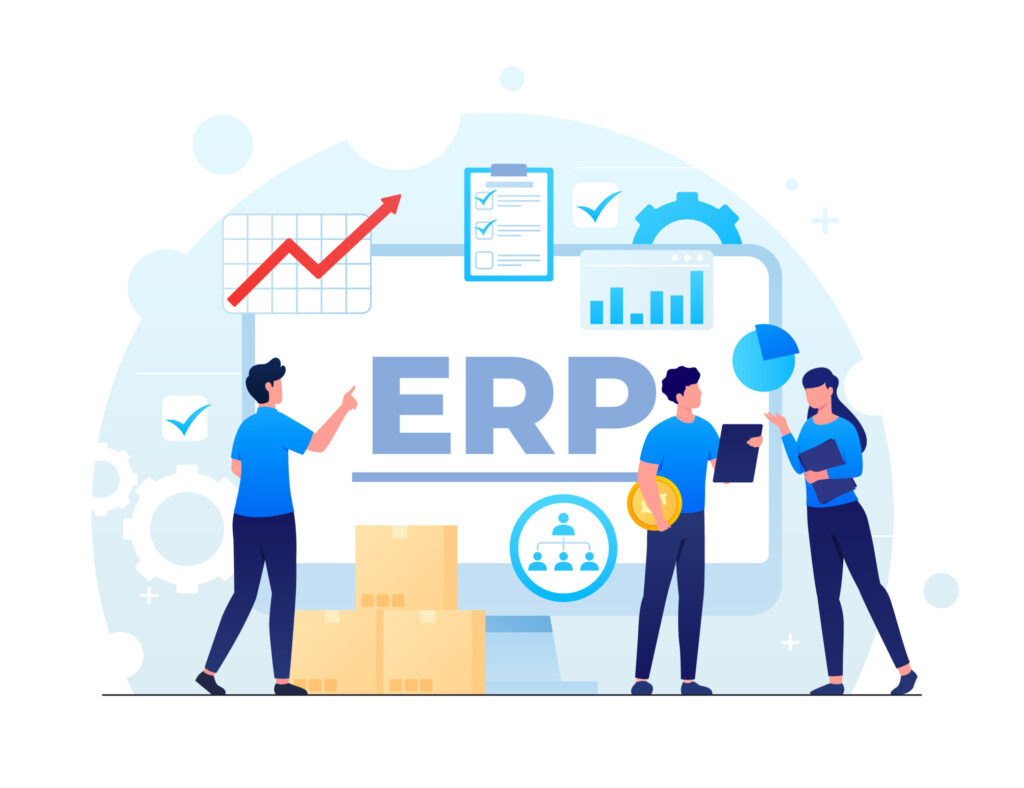
7016016 What is the need of ERP software? Some may ask. The answer is not simple. Though we must understand that today there are lots of midsize companies face challenges specific to their industries. Businesses that make consumer product goods are concerned about regulations and reporting requirements, while public-sector organizations are worried about maintaining customer loyalty. Also, manufacturers are concerned about the commoditization of their products. A robust ERP package can help address these issues, as well. Though some companies have already implemented an ERP there are still many who don’t have any of these systems. At the same time, it is also to be noted that many ERP implementations in the midmarket are quite mature and ripe for replacement. Many midmarket companies must now also choose an ERP system on which to standardize after multiple systems were installed, perhaps through mergers, across the enterprise. Although it’s not necessary, midsize companies seem to prefer consolidating their business-management applications in one ERP package, at least in part to cut down on integration headaches. Vendors are aggressively vying for customers, launching new ERP solutions designed to meet needs particular to the midmarket and pricing them to meet a midmarket company’s budget. To further entice midmarket customers, vendors are also developing vertical solutions that target certain industries, such as manufacturing, pharmaceuticals, fleet management and construction, with built-in functionality that cuts down on customization. In an effort to simplify the notoriously difficult implementation process, vendors are also developing ERP systems that can be delivered in ways friendly to organizations with limited IT resources. Web-based ERP solution has become an ideal system for many of these mid-sized organizations as it is very cost-effective with easy implementation process. There are some companies that may try to develop its own ERP system in-house. Since designing and implementing ERP systems is not the business of most companies, the systems developed by the team will never equal in quality, scope, functionality, or technology with those created by software firms. These software firms or ERP package vendors can produce sophisticated packages and provide their clients with products that allow them to maintain a focus on their own chief activities, thus improving revenues, profits and shareholder returns. Thus, it always better to buy ERP packages ERP systems are getting better, bigger and have more features. Also, people who are specialized in developing such types of tools have developed them. Most of the tools would be customized to suit your needs. So unless and until your project or organization has a need that cannot be fulfilled by the available tools, it is better to buy the tools rather than make them.   Also Read – Live ERP Software Demo

Make your business process more efficient

7016016 Make your business process more efficient   Organizations must realize that after the implementation of an effective ERP system all of its process becomes more efficient. ERP system will help all the major decision making including retaining a client. However, the organization that plans to implement an ERP system must be well prepare to integrate the system effectively. Organizations are advised to seek the help of an external consultant to find out how suitable is the organization when it comes to working with an ERP system. The external consultants are capable of evaluating and they identify the effective needs of the moment. It is a good idea if the decision about an ERP project could be carried out by a team of professionals from both internal and external for a more adequate design. This is because the main aim is not just about purchasing software, but to order all the pieces to match with it. In most cases some internal processes need to be redesigned before implementing an ERP. In addition to this, software is often modified to fit the ERP according to the enterprise objectives and activities. The combination must be as perfect as possible. Also Read – Top ERP Software solution for food industry In spite of its benefits one of the most important factor to be remembered is that ERP is not a just another software application in your organization. The system involves every internal process and must be preceded by a reevaluation of every section together with its functions. It is also important to note that an ERP will not change the management functioning on its own. You must keep in mind that it is an important and decisive tool, but in order to obtain a correct development you will have to decide carefully who is going to command it, as well as the way in which the data will be saved and how information will flow. Just implementing an ERP solution alone won’t help the organization make any success. Though the effectiveness of an ERP system could be measured by the improvement in the ROI, the goal of measurement is not to measure; rather, it is to improve performance and processes are the point at which this can be best accomplished. A well-performed ERP system can be maintained till about 15-20 years. In the later stages the package will have old architecture. It will become very difficult to make changes in the program code without inflicting hazardous damage to the system’s stability. It is possible to give older systems a ‘facelift’ with modern tools. Though those ‘facelift’ can extend the life cycle of the package for some years, they will certainly speed up the appearance of the useless codes. If your ERP system is under-performing, it is better to go for an overhaul of the system. There are numerous efficient ERP systems available in the market. Do the right evaluation as per your requirement and implement a suitable ERP system that could take your business success to new heights. As the saying goes – “It is better late than never”.   Also Read – The best ERP system for trading distribution business

ERP is an essential application for business growth

7016016 ERP Application for Business Growth The latest reports shows that majority of the midsize organizations are using ERP to support a variety of business issues, including globalization, lean manufacturing, conducting e-business, consolidation, shared services, collaborating with suppliers and meeting the requirements of new customers. Further studies reveal that very few midsize companies that don’t already have an ERP implemented are facing numerous problems in their production and sales departments. For those businesses, the reasons to take a leap into ERP, which is largely considered necessary infrastructure for midsize companies, are many and compelling. Many midsize companies cited the availability of low-cost options; pressure from the parent company, suppliers or customers; “explosive” growth; compliance with regulatory requirements; and a “disastrous event” as factors convincing them of the value of ERP. Just implementing an ERP system alone wont’ do any miracles. To get the most benefits from an ERP application, an organization has to use it to its fullest capabilities. But surprisingly this is not happening with every case. Considering the expense of acquiring and deploying an ERP package, in most of the cases it is being underutilized. As per the available survey reports from the market, the average midsize company uses only about 11 out of 24 generic ERP modules, or approximately 72 % of the available functionality. Today the ERP market is sufficiently occupied with some effective and efficient ERP products apart from the more popular Oracle and SAP, that are dominating the market among large global companies. But it’s not an easy fight – several vendors that cater to the midmarket are entrenched, including Infor, Lawson Software, Epicor Software, QAD, Sage Software and Microsoft apart many others. On the other hand some of underplaying mid-market ERP vendors offers their business-management applications on a modular basis, so they usually can be deployed individually and integrated as more ERP modules are phased in. What is more important is the investment in ERP solution which should be planned efficiently. ERP is somewhat expensive, and the cost is highly variable depending on the organization. Company size, number of ERP users, the depth and breadth of purchased functionality, and the business benefits gained from the ERP deployment all contribute to the TCO (total cost of ownership) of an ERP package. As midmarket companies extend their reach into markets around the world, they require increasingly sophisticated systems to support and run their business. With ERP, they can use enterprise-grade technology as a competitive weapon, managing costs, introducing efficiencies throughout the supply chain and manufacturing processes, and streamlining and automating business processes across the organization. For some companies, ERP can mean the difference between success and failure.   Also Read – Benefits of ERP Software in the pharma sector

Selection of right ERP holds key to success

7016016 ERP Selection How to select the ERP brand perhaps becomes difficult today. Most of the time budget was the main criteria for elimination round and then companies used to see the live customer list of ERP vendor. We can very well say that the ERP buying decision is like any other procurement decision. For example, when a buyer purchases bearing, normally he analyzes quality, cost, service and response time to choose the particular vendor. All these parameters were applied in ERP buying also. In fact, a few ERP vendors have come up with industry specific solutions, which, in the true sense, Is more of a marketing strategy than an operations specificity. Secondly, because of the very competitive environment and market saturation, ERP vendors have decreased their prices and hence the SME segment is also aspiring for such world-class solutions. While selecting the ERP brand, the focus should be the availability of the best practices or the world-class practices in the software. If we examine closely, we find various ERP products are strong in various functional modules. This strength could be in terms of availability of various planning opinions, tight control on orphan processes, excellent functions flow, easy and user-friendly reporting, graphical presentation, automatic routing through world-class valued added processes. The problem is how to know which ERP is strong where and how that will synergize the client’s business results. To solve the first question, to some extent, we can refer literature in the form of reports and articles. The commercial presentation of the ERP vendor and later discussions may help further. The commercial presentation of ERP vendor and later discussions may help further. The main question is which strength one should look for. This problem has to be handled with a detailed case study of the organization. From the strategic point of view, the organization has to understand the vital processes for the revenue impact as well as the bottom-line. Thus efforts should be directed to find the thrust area with proper reasoning. Accordingly, one can match the requirement with the strengths of ERP to proceed further. It is also observed that some clients go for multiple ERP products to get equipped with all the strengths available. ERP packages have different architectures, concepts and sets of functionality and they are designed to address a variety of user requirement. The marketing literature from ERP vendors will no doubt give the impression that their tool is just as good as any other. Such literature is valuable for giving the reader an overview of functionality and a glimpse at the differentiator for that vendor’s offering. But, if you compare the literature or listen to a vendor’s presentation, it would be very difficult to evaluate which package is the best or which would be most suitable for your organization. So if you go by what is written in the product brochure or what the salespeople say, you will find it very difficult to make a decision and might end up with the wrong choice. So ERP package selection is something that should be done on a systematic and scientific manner. While studying the history of ERP packages and finds out how each package evolved, it becomes evident that every ERP package grew out of the experience or opportunity of a group of people working in a specific business who created systems that could deal with certain business segments. It is generally accepted that most ERP packages are stronger in certain areas than in others and each one is trying hard to add functionality in areas where they have been lacking. So after the decision to go for an ERP package is taken, the company needs to develop the ERP selection criteria that will permit evaluation of all the available packages on the same scale. To choose the best system, the company should identify the system that meets the business needs, matches the business profile and identifies with the business practices of the company. It is impossible to get a system that will perform, exactly as the company does business, but the aim should be to get the system that has the least number of differences.   Also Read – Best ERP Software In India

ERP benefits for the midmarket businesses

7016016 Businesses all around the world are increasing their reliance on ERP systems as a cost efficient alternative to their software applications. However, high cost involved in deployment of this marvelous technology prevents the small/mid size organizations enjoy the tremendous benefits of ERP. Since the introduction of an affordable, low-cost ERP from eresource ERP, many of the midmarket organizations also started to administer their businesses effectively using this latest technology. An ERP package should provide an organization with a solid foundation, incorporating all of the fundamental aspects of running a business. Expectations run high when an organization deploys an ERP package – if the solution is a good fit for the company, the company stands to gain tremendous cost savings and service improvements across the enterprise. Manual processes are automated, production scheduling is more efficiently managed and inventory is more accurately assessed. Also, business performance can be measured in a much more holistic fashion than ever before. This gives executives real-time visibility into all business processes, enabling them to make better strategic decisions. In short, with the right ERP package, a midmarket company can compete more aggressively in global markets. According to a survey an ERP implementation can reduce costs in three primary categories: inventory costs, manufacturing operating costs and administrative costs. The survey’s best-in-class respondents reported a 21 percent decrease in inventory costs, a 17 percent decrease in manufacturing operating costs and a 16 percent decrease in administrative costs. The average respondents’ reductions were 11 percent, 8 percent and 9 percent, respectively. Because an ERP solution has its fingers in all aspects of running a business, its benefits are myriad and go beyond tangible cost reductions. It can improve an organization’s customer service and response time when solving issues. It can solve issues of interoperability among multiple manufacturing locations. It can standardize and accelerate manufacturing processes in all of a company’s manufacturing sites. It can streamline a manufacturer’s order-fulfillment processes. It can facilitate connecting with ‘partners’ and ‘suppliers’ enterprise systems. ERP can even help an organization maintain compliance with government regulations, from hiring practices to environmental laws. Case studies done on specific ERP implementations reveal a variety of different business-specific benefits. One of the case studies revealed that by replacing legacy systems with an integrated ERP package, one travel-accessories manufacturer reduced its inventory levels by 30 percent, reduced its warehouse space requirements by 38 percent, improved its month-end close process by five days, reduced its DSO (Days Sales Outstanding) by 44 percent and increased sales by 100 percent without hiring new employees.   Also Read – Best ERP Software for Construction Industry

Set targets, Establish Budget and Make It Happen

7016016 Set targets and Budget Before ERP Implementation   1. Phased approach: It is important to break as ERP project down to manageable pieces by setting up pilot programs and short-term milestones. Depending on the IT experience, some organizations choose the easiest piece as the pilot project, while others may implement a mission-critical application first. The pilot project can both demonstrate the benefits of ERP and help gain hands-on ERP implementation experience.   2. Data conversion: Second generation ERP systems use relational database management systems (RDMBS) to store enterprise data. If large amounts of data are stored in other database systems or in different data formats, data conversion is a daunting task, which is often underestimated in ERP implementation. A two-hour data conversion task could be turned into a two-month effort as a result of the DBA group’s lack of technical experience and the management’s incompetence or ignorance. Also Read – Why is ERP system important for solar industry   3. Organization commitments: The involvement of ERP implementation goes far beyond the IT department to many other functional departments. The commitment and smooth coordination from all parties is the key to the success of ERP project. The commitments come from the understanding of how ERP can benefit each functional department. For example, if the warehouse staff is not completely sold on the benefits of the inventory control module, they may not input the kind of usage data that is essential to the project’s success.   4. Create partnership between your software vendor and your stakeholders: While this concept may seem obvious, it has been found that the vendor-client relationship is often contentious and sometimes outright hostile. This fact is particularly true if the organization is severely divided regarding the choice of vendor software. As problems arise during implementation, and they will arise, the blame game often begins. Before long, the project evolves into a standoff with neither vendor nor client willing to admit fault. A third-party project director or manager is often the best solution for this dilemma. This person can usually serve as an objective mediator to bring the parties together, finding solutions, rather than allowing the project to slow down to a crawl. Also Read – How ERP software is beneficial for pipe manufacturing industry   5. Sell, sell, and continue to sell the ERP to your stakeholders: Implementing ERP systems are extremely complex and take months or even years, to implement it. If your stakeholders understand the long-term benefits of the system, they are much more willing to accept any perceived temporary steps backward.   6. Build and leverage process expertise: Process focus is if anything, more important after going live since the company now has an even greater core of process expertise. Successful companies fully capitalize on this expertise and the power of ERP-enabled process. One way is by sending process experts from the implementation team back into the organization, or by having some serve at centers of excellence, some as key process performers and some as business managers. Successful companies never forget the point of the integrated enterprise – that it is not about ERP so much as it is about people involved in ERP-enabled processes.   7. Adequately resource your project: Ensure that replacements are in place to release key team participants. The people who do the daily work of running functional departments are the same people who will be essential to implementing an ERP system. No surprise. The people with the most knowledge will be needed for the majority of the project. Priorities will conflict between the demands of the office and demands of the project. The most effective solution we have seen is hiring or contracting with additional resources to serve as back-fill for key office personnel. Admittedly a new resource cannot do everything that an experienced resource normally does; however, the replacement can handle routine work and coordinate with the experienced person for critical decision. Also Read – How can ERP system help the cosmetic manufacturing process?   8. Define metrics and manage them: ERP systems are capable of producing dramatic productivity improvements if successfully implemented and properly operated. But expecting ERP to perform miracles will be asking for trouble. The management and employees should be made aware of the benefit so that there are no over expectations. If ERP is touted as a panacea, then there will be dissatisfaction and disappointment about it, which can lead to failure of the system.   9. Communicate and manage expectations at go-live: Many stakeholders in the organization expect the ERP to be an ‘everything for everybody’ solution. Even in the best-case scenario, this is rarely true. And inevitably, some functionality must often be re-scheduled into a post “go-live” phase. All of this combined could crate disillusionment with the new system. If the project teams are struggling to meet deadlines, they may have to make decisions on the functionality that needs to be delayed in order to meet the original “go-live” date and avoid delays. These decisions must be communicated and “sold” in the stakeholders to ensure expectations are effectively managed. The organization needs to know what will be in place at “go-live” and when they can expect the additional functionality.   Read More – ERP Software In India

A competitive ERP system for industries in Coimbatore

7016016 A competitive ERP system for industries in Coimbatore   Serving a wide range of industrial segments: Our manufacturing ERP product, eresource Xcel, that is being designed to match with all kind of business process of manufacturing companies going to be a big assistance for companies in Coimbatore. With the implementation of eresource Xcel ERP system in manufacturing companies, every function of these companies will become quick, flawless and transparent. The system is made to suit industries like Engineering, Manufacturing, Textile and Food Processing that have huge presence in Coimbatore. All these industries in Coimbatore need quick exchange of critical information between various sections, branches and locations that will enable the managers and other decision makers to act promptly and timely. This timely action can help companies achieve steady growth. Once implemented, eresource ERP system will support you every step of the way in your business functions. Being one of the most trusted ERP solution provider in India and in many other overseas countries, eresource ERP system has the appropriate architecture, customization features, installation procedures, and level of complexity. Also Read – Significance of construction ERP software in UAE and India   Deep understanding of industry best-practice Our professionals work closely with your company IT heads to ensure that you have the correct suite of integrated applications to suit your needs and budget. eresource ERP system helps to identify and plan the enterprise-wide resources you need to best serve your customers. With a deep understanding of industry best practice, our professionals can guide you to procure and help you go for right modules and customization wherever required. Our cost-effective system could bring a tremendous changes and growth in your business in a short span of period. eresource, one of the most widely accepted ERP solution in India has many clients in Tamil Nadu that includes Coimbatore. Having our registered office in Mumbai, we have a branch office in Chennai. Our wide range of enterprise solutions includes various exclusive ERP product for many industry verticals CRM Software and HRMS. We also serve the logistic industry with our unique ERP solution known as eresource 3GL, which a very popular among transportation companies. Our services are customized to suit the preferences of our customers and enable optimum efficiency and performance. eresource product is also famous for its affordable prices and quick implementation process.   For more information on all our ERP products, please calls us now or write to us. Also Read – ERP Software in India

eresource ERP 360 – an Enterprise Solution that can take you to new business heights

7016016 eresource ERP 360 – an Enterprise Solution that can take you to new business heights eresource ERP, one of India’s leading and award-winning Enterprise solutions is a web-based business software that is designed to benefit the entire workforce in your organization to work together smoothly and efficiently with one integrated system. eresource offers both Off The Shelf and industry-specific customisable applications to meet the exact requirement of customers’ business process and terminology. You can request for a LIVE DEMO of this economical, powerful and easily implementable web-based ERP system and feel how this application can be helpful to your organization. eresource, a ERP 360 system provides a lot of working freedom to organizations. Many major organizations as well as as small and medium companies are in our clients’ list. These companies have implemented eresource ERP system as a cost effective alternative to their manual procedures or their piecemeal software applications. Under-performed legacy system and cost-factor involving the customization of existing outdated ERP systems in many companies are making the business process a time consuming exercise and, in many cases, impractical. Also Read – ERP for Plastic industry Keeping with our practice of moving ahead with the changing technology environment, eresource applications are getting updated on on regular intervals. Our aim to provide industry-specific ERP system for every Industrial verticals are getting fulfilled with introduction of eresource Xcel, eresource nfra, eresource Life Science, eresource e-Trade, eresource 3GL and eresource WMS etc. We have also recently developed exclusive system for Accounts and Finance, HRMS, PMS and Excise etc. that are the products that have been placed under our Off The Shelf option. All our systems have been incorporated with triggers, alerts and workflow procedures that ensures operational efficiency for any business. Being a web-based ERP system, implementation is not a cucumbersome process like in many other ERP packages. All customer-specific functionality has been included in the system effectively. Although eresource ERP systems have been developed in keeping with the Small and Medium Enterprises in mind many large-scale organizations in India and in Middle Eastern countries are opting for eresource today. Also Read – How cloud based erp software help the construction industry? The prime reason why eresource is concentrating more on SMEs is that the SME segments are the ignored sector by the large players in the ERP market. However this attitude of big ERP players towards SME segment has helped ERP firms like eresource Infotech realise the need of an economical and reliable ERP system for this sector. And the result is the birth of one of the most flexible and affordable ERP software in India — that is eresource. It must be admitted that developing such a package was not easy. As everyone knows that meshing the specific needs of thousands of customers into a single coherent package was not that easy. But eresource’s top quality expert to sift through this mature package, incorporating a massive volume of functionality processes as required by the customer. Being a web-based ERP solution, eresource has simplified the implementation process and it brings efficient operational methods and return on investment (ROI). Also Read – ERP for automotive In spite of its benefits one of the most important factor to be remembered is that ERP is not a just another software application in your organization. The system involves every internal process and must be preceded by a reevaluation of every section together with its functions. It is also important to note that the ERP system will not change the management functioning on its own. You must keep in mind that it is an important and decisive tool, but in order to obtain a correct development you will have to decide carefully who is going to command it, as well as the way in which the data will be saved and how information will flow. Just implementing an ERP system alone won’t help the organization make any success. Though the effectiveness of an ERP system could be measured by the improvement in the ROI, the goal of measurement is not to measure; rather, it is to improve performance and processes are the point at which this can be best accomplished. A well-performed ERP system can be maintained till about 15-20 years. In the later stages the package will have old architecture. It will become very difficult to make changes in the program code without inflicting hazardous damage to the system’s stability. It is possible to give older systems a ‘facelift’ with modern tools. Also Read – Key benefits of ERP software for the food and beverage industry? Though those ‘facelift’ can extend the life cycle of the package for some years, they will certainly speed up the appearance of the useless codes. If your ERP system is under-performing, it is better to go for an overhaul of the system. Do the right evaluation as per your requirement and implement a suitable ERP system that could take your business success to new heights. As the saying goes – It is better late than never.   Mail Us at sales@eresourceinfotech.com for Live ERP Software Demo

AI-Driven No-Code eresource 3GL for Early Issue Detection and Preventive Actions

AL-Driven-Blog For a number of reasons, including increased visibility, increased productivity, better customer service, cost savings, improved teamwork, regulatory compliance, scalability, data analytics, customization, and integration, logistics & Logistics & Fleet Management companies are looking for an ERP system. These businesses can increase their competitiveness in the market, streamline operations, and cut expenses by using the AI-powered No-Code eresource 3GL ERP system. AI-powered eresource 3GL ERP for Logistics & Fleet Management promises to completely transform the way you manage logistics and transportation problems. It can be very helpful for real-time traffic updates, weather forecast prediction, and information filtering that produces insights that can be put to use. Your fleet can adapt dynamically, avoid delays, and optimize routes with artificial intelligence. Another intriguing aspect of AI in Logistics & Fleet Management is its capacity for prediction. Artificial intelligence can anticipate potential issues and facilitate preventative measures by analyzing historical data. Think about identifying a potential repair issue before it becomes a costly malfunction. Artificial intelligence is not simply a sci-fi fiction; it is a real, tangible reality that empowers you. Knowing the business of logistics and fleet management Logistics & Fleet Management is the process of organizing, leading, and supporting a business or organization’s fleet of automobiles in its use and maintenance. Transportation is a strategic function as well as a procedural need for businesses and organizations whose supply of goods or services depends on it. Its primary objectives are to save costs, boost productivity, and reduce risk associated with fleet vehicle operations. This systematic strategy can provide a company with a number of important benefits, including improved fleet compliance, reduced carbon emissions, safer workplaces, more effective fuel management, and more economical automobile purchases. Fleet managers oversee a variety of tasks that make up Logistics & Fleet Management. These duties include vehicle upkeep, careful monitoring of fuel usage and related expenses, efficient driver management, asset optimization, route planning, and the implementation of initiatives meant to increase overall business productivity while reducing waste. Machine learning and artificial intelligence will probably have the most impact on Logistics & Fleet Management in the near future. From increasing fleet efficiency and lowering operational costs to improving driver and vehicle security, artificial intelligence integration helps transform data into a powerful strategic tool for managing challenges. The following are some crucial things to consider: Predictive Maintenance A range of vehicle data, such as component wear rates, mileage, and performance, are precisely assessed by AI-based eresource 3GL system. The system scans for recurring patterns that signal impending failures using machine learning models such as Random Forests to precisely forecast maintenance requirements. Furthermore, these employ digital twin technology to generate virtual automobile models, enabling simulation-based maintenance forecasts and optimization. Optimization of Routes The incorporation of machine learning into this Logistics & Fleet Management system has made it possible to process real-time traffic data, weather forecasts, road closure information, and historical route performance. This AI-powered route planning system use sophisticated dynamic routing algorithms to continuously adjust routes while accounting for delivery windows and fuel efficiency. This dynamic optimization leads to a significant boost in both fuel economy and delivery efficiency. Efficiency of Fuel AI-driven eresource 3GL ERP system looks at a variety of factors that affect fuel consumption, including driver behavior, vehicle specifications, and route characteristics. Based on the acceleration, braking, and idling patterns of the fleet, they may suggest specific driver training or vehicle modifications. Implementing these AI-generated insights can eventually result in a large reduction in fuel costs. Compliance and safety in the Fleet Advanced AI-powered system monitor driver behavior in real-time and give drivers urgent guidance by accurately identifying driving conditions like hard braking, rapid acceleration, or even fatigue. ML models collect and evaluate this data to foresee safety dangers, automate regulatory reporting, and generate proactive compliance alerts. By producing thorough data, fleet managers can track and improve accident rates, reduce compliance violations, monitor and improve overall fleet protection, and reduce associated costs. Integrated operations and increased visibility Artificial intelligence solutions collect data from all facets of fleet operations, including GPS tracking, fuel cards, and maintenance logs, in addition to external data like weather and traffic. Through the use of these multiple streams of data, artificial intelligence helps fleet managers make better decisions, tracks real-time statistics, and identifies trends or issues that may not be immediately apparent when looking at individual data sources. For more information and a PRODUCT DEMO of AI-powered eresource 3GL for Logistics and Fleet Management, please get in touch with now: sales@eresourceinfotech.com

How ERP with AI Capabilities Benefits Customized Manufacturing Businesses

These days, intelligent systems powered by AI form the core of Manufacturing, while information and communication technologies provide the foundation of smart manufacturing. New theories, models, algorithms, and applications aimed at mimicking, expanding, and improving human intellect are constantly being produced as AI technologies advance.   Deep learning and large data analysis advancements have sped up AI’s transition into the second stage. Data-driven deep reinforcement learning intelligence, network-based swarm intelligence, technology-oriented hybrid intelligence of human-machine and brain-machine interaction, cross-media reasoning intelligence, and other forms of artificial intelligence are examples of today’s AI technology. As a result, AI has a lot to offer to smart manufacturing, particularly customised manufacturing in smart factories. AI solutions are generally applicable to a number of smart manufacturing domains. In a smart factory, AI algorithms may manage the production of customised goods. The goal of the AI-assisted Customised Manufacturing (CM) is to build intelligent manufacturing systems that are backed by autonomous decision-making, real-time data analysis, machine status sensors, and cognitive computing. Every link in the CM value chains—design, production, management, and service—is impacted by AI. The application of AI in the smart factory for CM involving architecture, manufacturing equipment, information interchange, flexible production line, and smart manufacturing services is the main topic of this article, which is based on these CM and AI insights. AI-driven customized manufacturing Industrial practitioners and researchers have started implementing AI technologies as they have shown promise in fields like market analysis, logistics, after-sales service, customer management, manufacturing management, manufacturing maintenance, and customized product design. Thus, the implementation of AI technology may make customized manufacturing a reality. Such customized manufacturing powered by AI is referred to as AI-driven CM. In conclusion, AI-driven ERP for CM offers the following benefits. Enhanced product quality and production efficiency Automated machines may be able to make choices in CM manufacturing with fewer human inputs. Cognitive abilities, learning, and reasoning are made possible by technologies like machine learning and computer vision (e.g., analysis of order quantities, lead time, flaws, errors, and downtime). Computer vision and foreign object identification are useful tools for identifying process irregularities and product flaws. Process irregularities can be reported to human operators. Making predictive maintenance easier The best possible condition of the equipment is guaranteed by scheduled maintenance. A production line’s sensors gather data for analysis using machine learning techniques, such as convolutional neural networks. For instance, it is possible to identify a machine’s wear and tear in real time and send out a message. The creation of intelligent supply chains Machine Leaning (ML) algorithms can be used to forecast the supply chains’ unpredictability and variability for CM. Additionally, the information gathered can be utilized to forecast abrupt shifts in consumer preferences. In summary, smart manufacturing benefits from the integration of AI with industrial IoT. AI-powered technologies increase the productivity of production. Products with greater value can be released into the market in the interim. We cannot, however, ignore the fact that when AI technologies are formally applied to real-world manufacturing scenarios, they still have limits. On the one hand, algorithms for AI and ML frequently have high demands on computer infrastructure.  Features of specialized production  Notwithstanding the advancements, the manufacturing sector still faces several obstacles, such as the inability of traditional mass production to keep up with the quick production of customized goods and the growing prominence of resource constraints, environmental contamination, global warming, and an aging world population. In order to overcome these obstacles, a new manufacturing paradigm is required. The notion of customer-to-manufacture embodies the features of customized production, in which a manufacturing system communicates directly with a client to satisfy his or her specific requirements. Realizing the quick customisation of customized goods is the aim. Better flexibility, transparency, resource use, and manufacturing process efficiency are all provided by the latest generation of intelligent manufacturing technology. The production structure of CM is more complicated, quality control is more challenging, and energy use requires attention when compared to mass manufacturing. The production limits in classical automation were strict in order to guarantee efficiency, cost, and quality. CM differs from traditional production in the following ways. Intelligent interconnectivity: Intelligent manufacturing encompasses a cyber-physical environment, such as storage, processing, detection, and assembly equipment, all of which function within a diverse industrial network. Dynamic reconfiguration: The goal of the smart factory concept is to quickly manufacture a range of goods in small quantities. System resources must be constantly rearranged since product types can change at any time. To negotiate a new system configuration, a multi-agent system is presented. Large amounts of data: An intelligent manufacturing system is made up of linked devices that produce data about process parameters and device status. Data analysis is now possible for decision-making, active preventative maintenance, and failure prediction thanks to cloud computing and big data science thorough integration. Cloud platforms, edge servers, upper monitoring terminals, and underlying intelligent manufacturing entities are all interconnected. In Cyber-Physical Systems (CPS), where information barriers are removed, data processing, control, and operations can all be carried out concurrently, achieving a deep integration of the information and physical environments.   For more information on AI-powered ERP for customized manufacturing, please get in touch with now: sales@eresourceinfotech.com  

eresource Bpro: most cutting-edge and innovative ERP for Process Manufacturing

Businesses are indeed becoming more digitalised. As artificial heads prepare to take over the front desk, businesses must adopt a creative strategy to stay afloat. Old generation ERP software alone will no longer be enough to improve operations. Today, cloud-deployed artificial intelligence-driven No Code ERP solutions are altering the digital foundation of businesses that are eager to innovate and thrive in a complicated, uncertain, and volatile marketplace. By consolidating all of your business operations onto a single AI-driven platform and automating and integrating them from beginning to end, eresource cloud ERP software, which is built on the Azaalea platform —the most cutting-edge and innovative enterprise application assembly and delivery platform—allows you to get a 360-degree view of your company at any time and from any location. Increase efficiency, lower costs and time to market You can increase efficiency, lower costs and time to market, and spur innovation throughout the value chain with this cohesive approach to business. One of the most difficult and competitive company sectors nowadays is the process manufacturing sector, where it is imperative to have an appropriate process management system to oversee administrative and production tasks. Under the Azaalea platform, a unique AI-driven ERP system, eresource, the most respected ERP solution provider in India, the United Arab Emirates, Saudi Arabia, and Nigeria, has further improved its all-inclusive ERP system, Bpro for process manufacturing, with a No Code feature. Pharmaceutical and food processing companies that are involved in process manufacturing are increasingly adopting eresource Bpro, a comprehensive ERP system. Simple to use, flexible, expandable, and adaptable For process manufacturers, eresource Bpro is the only industry-specific ERP solution available. The goal of the system’s construction was to meet every requirement of mid-market manufacturers and distributors. We also make sure that all of our ERP features are delivered at a price that stays within the allocated budget. Our ERP system will give clients a quick return on their investment and is simple to use, flexible, expandable, and adaptable. Our continuous upgrade process guarantees that our solutions are designed by the latest and cutting-edge technology, making our Bpro ERP software for the process manufacturing sector the most dependable and trustworthy. Being a Low Code/ No Code ERP system, changes and improvements can be made as needed in resource Bpro by the user without having any technical support from the vendor. We have a well-organized technology backup that is constantly aware of our clients’ needs thanks to our wizard development staff. Timely implementation is one of our strong points. The straightforward layout and our innovative execution could yield a significant return on investment more quickly. A solution that will assist your business in meeting objectives Once implemented, our solution leads to cost savings, more competitiveness, enhanced operational clarity and service, and better productivity, among many other advantages. Users may experience decreased operational costs as a result of this benefit. In conclusion, it is simple to adapt the eresource Bpro ERP system to your company’s structure using our AI-driven No Code feature. The solution will assist your business in meeting objectives for each operational quarter and rebuilding all of its processes following implementation. Every year, the value and significance of eresource Bpro ERP for the process manufacturing sector will be highlighted. After your company uses it, you as a process manufacturing company, can contribute to greater success. Please contact us at sales@eresourceinfotech.com for more information on eresource Bpro ERP for Process Manufacturing and PRODUCT DEMO.  

Find out why eresource Nfra is essential to the success of construction business

successful ERP for the Distribution and Trading Sector An effective ERP platform for comprehensive project management and analysis is AI-powered Low Code/No Code eresource Nfra ERP, specifically designed for the construction and infrastructure sectors. Construction enterprises in India, UAE, Saudi Arabia and Nigeria may find this all-inclusive project-based ERP solution useful for estimating upcoming projects, managing resources, managing time and expenses, and adhering to accounting standards and contract requirements.  With accurate and current standing data, significant alarms, and integrated project analysis and coverage, eresource Nfra ERP for Project-Based Industries aims to simplify project administration. The system is designed with large and medium-sized businesses in mind This Low Code/No Code eresource Nfra is an effective project management system that offers flexible work breakdown structure capabilities and project phase structure. It was created to serve the needs of the construction sector with a project orientation. The ERP system is designed to support the evolving accounting needs of project-based businesses, including engineering, construction, and skilled services. The eresource Nfra ERP solution is not limited to large corporations. This ERP system was created to meet the demands of small and medium-sized businesses across a range of industries. An effective ERP system for EPC Contractors Any Engineer-Procure-Construct (EPC) firm wants to control risk, prevent value overruns, and complete the project on schedule. These tasks will run more smoothly and efficiently with the help of this enterprise resource planning (ERP) solution. Since eresource has extensive experience in building and managing EPC clients and offering cutting-edge solutions to meet their demands, eresource Nfra ERP for Engineering, Procurement & Construction will be a useful tool to run your construction firm efficiently. With the help of the eresource Nfra ERP system, businesses in this sector will be able to increase the efficiency of all business operations and work closely with suppliers, subcontractors, operators, and customers. Also, track requests from both in-house and contract workers, manage their equipment, and efficiently deliver goods to meet the business objectives of their clients. eresource Nfra tackles the difficulties posed by the construction sector From building infrastructure to building road networks, construction enterprises have unique difficulties among their fiercely competitive competitors. With its in-depth knowledge of the operations of infrastructure and construction enterprises, eresource Nfra ERP for Construction and Contracting helps them resolve problems and manage changes efficiently. By giving them full and immediate access to the project’s progress, eresource Nfra ERP assists these businesses in managing budgeting, scheduling, and cost accounting. It also allows them to take real-time snapshots of their project’s progress, including a thorough analysis of prices, a statement of incoming and outgoing funds, revenues, liabilities, and contractor performance. With its Artificial Intelligence (AI) capability, start-to-end automation approach, eresource nfra ERP makes it easier to handle the intricate business processes of infrastructure and construction sectors. Intelligent management of the practical departments Construction enterprises might better coordinate their operations with the help of the eresource Nfra ERP for building and contracting. This would allow intelligent management of the practical departments. This will be an additional benefit and help with internal control and strategic execution in all departments, either directly or indirectly. By giving construction organisations the means to locate and secure new project prospects, efficiently manage resources and subcontractors, work together on project activities and documentation, and properly report on employee performance, eresource Nfra ERP will make things easier. Easy resource and business capabilities management is made possible by eresource Nfra. Gain insight into your resources and capabilities across time, and make the most of your potential by scheduling work at the project or business level. Obtain time-period visibility throughout the construction industry The construction industry must reassess its IT and business plans in order to prosper in this cutthroat environment. Currently, construction companies worldwide are striving for the highest possible levels of asset utilization and operational efficiency. The eresource Nfra ERP solution for the construction sector is a key component in helping them advance their IT strategy. Use the eresource Nfra ERP system to obtain time-period visibility across construction company operations. For small and medium-sized businesses, eresource Nfra ERP for Construction and Contracting is an industry-specific ERP software. The client will benefit from reduced risk, cost-effective operations, continued regulatory changes, increased profitability, and more with this ERP software system. The eresource Nfra ERP for the construction industry can quickly deliver the system on a guaranteed on-time live implementation strategy thanks to a committed customer support team of excellence and the ideal blend of technological experience. The system includes all dependable and responsive solutions designed to satisfy our client’s particular needs. For more information on eresource Nfra ERP for Construction & Infrastructure and a LIVE PRODUCT DEMO, please get in touch with now: sales@eresourceinfotech.com

eresource HRMS: Empowering your workforce to achieve extraordinary results

All around us, things are changing. All company establishments must adjust to the new, advanced technologies. To achieve the anticipated expansion of its firm, it is now imperative that every department within an organisation work with the latest and fastest technologies. Human resource management is a crucial and occasionally challenging activity from an organisational perspective. Effective personnel management paves the way for advancement within a company. Businesses can no longer afford to treat people like commodities that should be used until they are exhausted and then thrown away. Employees in today’s firms are seen as human resources that require attentive development, nurturing, and accommodations. eresource HRMS, which was developed on the latest NO CODE platform, was created with all of the most recent demands on an organisation’s requirement to operate its HR management successfully. Cutting down on time-consuming administrative workloads The administration of human capital and resources is streamlined by this AI-enabled web-based, cloud-deployed system. The system’s operational functionalities are divided into four key sections: attendance, payroll, training, and recruitment. eresource HRMS regularly keeps an exhaustive personnel database that includes each employee’s contact details, pay information, attendance, performance review, and promotion. eresource HRMS  is a collection of integrated solutions created to streamline HR operations by cutting down on time-consuming administrative duties and implementing self-service apps to save expenses. With the creation of schedules for every project or activity, calendar sharing, and strong group calendaring features, this HRMS can enhance employee collaboration and facilitate more efficient company processes. From local to global, demand grows for eresource HRMS in the UAE, Saudi and Nigeria The ability to adapt to both company-specific and ever-increasing HR requirements is a critical component of an HR management system. eresource HRMS has included all the features needed for business operations, and the NO CODE feature allows users to customise the solution to their company’s requirements. Businesses today transcend national borders and disperse throughout the world.  Keeping this in mind, country-specific versions of the HRMS components are included in this system to accommodate the organisation’s global demands. Businesses that choose to use eresource HRMS are certain to reap significant benefits and business growth with flawless functions of the working environment, since it satisfies all organisational requirements and offers comprehensive assistance for managing all departments in an integrated manner through its web-based technology. Because eresource HRMS is one of the most reasonably priced, dependable, and effective web-based human resource management systems in India and also in many overseas countries like UAE, Saudi Arabia and Nigeria, businesses of all sizes may quickly implement it without worrying about excessive expenses or unsuccessful implementations. eresource HRMS: Highlights Basic time-off administration Human resource software relieves you of this burden by allowing you to approve or reject leave requests with a single click. Establish leave policies and categories and monitor your staff’s vacation time. Safe database Compile and keep all of your personnel data in one central database. It’s simple to use, easy to process, and hard to hack. You may view and access personnel data from all departments, locations, and designations using our HR software. Easy attendance tracking Make better use of your schedules and be aware of who is in and out of the workplace. HR software sets up employees’ shifts and monitors their attendance. Additionally, the software keeps track of their timesheets for accurate reporting. Accurate performance evaluation and education Establish performance standards for staff members using KRAs and goals. Establish expectations, monitor team performance, and give incentives for improved output and involvement. For more information on eresource HRMS and a FREE PRODUCT DEMO, please get in touch with us now: sales@eresourceinfotech.com Read Posts-

AI-enabled eresource Nfra: a constructive ERP system for project-based industry

Every construction project would become more difficult if it weren’t controlled by an AI-enabled system, which would ultimately have an impact on the project’s profit margin. eresource Nfra offers an amazing AI-enabled enterprise resource planning solution that will not only help streamline their business strategy but also serve as a foundation to support their business growth on higher volume. eresource Nfra is an excellent business option for construction organizations that haven’t considered integrating an ERP solution into their operations yet or thinking of upgrading their existing business system. At the systems level, the focus of AI-enabled eresource Nfra ERP for Construction tends to drive a number of distinct and highly granular business needs. This solution involve not only transaction-based processing but also the projection of detailed cost estimations prior to the efficient execution and delivery of the bid-contract-sale chain. In India, the United Arab Emirates, and many African countries, including Nairobi and Nigeria, the eresource Nfra ERP system for construction is currently considered a highly sought-after ERP solution. This is because some important modules that could propel your company to new heights have been cleverly integrated with the system. Why eresource Nfra ERP system is essential for construction companies? Construction workers are aware of how challenging it may be to overcome unforeseen circumstances throughout a project, which can have a negative impact on the project as a whole. To make the work successful and profitable, there are several obstacles to face. Such situations have been greatly alleviated with the advent of specialized AI-enabled ERP software for the construction sector, which enables construction firms to have a well-thought-out working plan for each project. An intelligent and effective ERP system eresource Nfra meets the majority of standards and provides efficiency and risk mitigation is now essential for any construction company. An all-inclusive construction ERP software solution, this ERP system for construction and infrastructure can handle all of a construction company’s requirements. Manage project cost, schedules, and client management effectively The eresource nfra ERP system was created especially to handle the intricacies of job costing, resource management, analysis, and invoicing for civil engineering and construction projects that are project-based. Two key areas that are very challenging to handle in construction and infrastructure projects are labour management and equipment management. Using an effective ERP system, like eresource Nfra, makes it easier for construction companies to manage their workforce and equipment. Without the support of appropriate accounting software, building companies will be unable to generate the necessary profit from each project, not just labour and equipment. With the integration of a robust account module with eresource nfra ERP for the construction industry, project cost, schedules, and client management can be managed effectively. Additionally, the system has CRM (customer relationship management) components that can efficiently handle all of your customer interactions. Every project would become more difficult if it weren’t controlled by an AI-enabled system, which would ultimately have an impact on the project’s profit margin. Here are some advantages of using an ERP system to grow your construction company. 1. Business development: Turn estimates into projects and prospects into clients, 2. Project Execution: Oversee billing, budgets, milestones, and resources. 3. Project management: RFP, RFI, and drawing document and workflow management 4. Labour Management: Productivity, time, and resource management 5. HR and Payroll (Union & Certified Payroll): Automated reporting and processing of time, taxes, and fringe benefits 6. Service Management: In the mobile world of today, dispatch and oversee services 7. Examine and Report: Gain insight into project and business performance to avoid Margin Fade. In addition to the aforementioned, modules including material management, marketing, project planning and control, and others have been integrated into the eresource nfra ERP system. A system tailored for large construction companies Additionally, the system can be tailored to a large construction company’s demands based on their specifications. By segmenting each project into activities, the system also includes a module that aids in project cost estimation. After that, each task is divided into its component parts: labour, equipment, and materials. On the basis of the work projections for a given month or week, another module aids in the planning of material requirements. Project estimating, also referred to as the Job Cost module For an ERP system for construction, the most crucial component is project estimation. Since all building projects, whether they are internal or external, involve the rehabilitation or reclamation of land or facilities, or involve other developmental values, they all start with an overall cost estimate. A primary contract plays a major role in driving construction projects. The ultimate legal cost/revenue baseline agreement between the developer and the client is represented by this contract. Therefore, time and material tasking are among the essential components that need to be calculated in order to determine a desired business outcome. Time and material tasking methodology: 1. Storage tasking and budget comparisons between current and historical,thorough audit monitoring of all budgeting adjustments 2. Category management based on jobs 3. Comparisons between actual and expected costs 4. Calculations of variable costs that range from gross/net revenue to completion percentage 5. Used computations related to earned revenue and cost-of-sales estimations Effective Financial Administration A more detailed approach to finance management is necessary for an effective ERP system.  This advanced ERP system AI-enabled eresource Nfra features the following: > Management of contracts >Indexing of contractors >Management of materials >Management of equipment >Billing and time >GST and other policy management initiatives >Management of purchase and change orders >Management of operational inventories  Capabilities for payroll The eresource Nfra ERP system’s Human Resource Management module now provides payroll capabilities that are further expanded by focusing on hours-expended vs estimated-cost operations and providing well-defined reporting. Real-time payroll processing, labour costing, labour cost control reports, taxes, employee insurance, EEO reporting, and other components have all been successfully integrated with this module. eresource Nfra ERP system keeps the project on track to be finished on schedule. Better control over approved and pending modification orders is made possible by it. To know more about eresource Nfra ERP capabilities and

Make the move to the ERP with AI and seize every commercial opportunity

Azaalea AI with eresource ERP modernizes systems to make your business sustainable and intelligent Azaalea AI with eresource ERP modernises systems to make your business sustainable and intelligent Presenting Azaalea AI with eresource ERP, an accelerator for digital transformation that gives you the cloud tools you need to expand. Azaalea AI with eresource ERP modernises systems to make your business sustainable and intelligent. For maximum profitability, get flexibility and agility in the cloud. Take the initiative to boost business growth in the top, bottom, and green lines. Take advantage of every business opportunity and outperform your rivals. As a platinum ERP implementation partner, we provide managed services, support, and end-to-end ERP implementation services. Together, let’s develop your cutting-edge businesses using one of the world’s top ERP software. By now, eresource ERP on Cloud is more than just a cloud ERP. Now combined with state-of-the-art Azaalea AI capabilities, it is the next-generation corporate planning superpower that is revolutionising business operations. Businesses can now make smarter, faster, and more efficient decisions thanks to the numerous new AI capabilities that eresource has integrated. More on Azaalea AI with eresource ERP Operational Data Transformation Transform your operational data into AI-friendly formats to unleash the potential of AI. Assure real-time insights through contextualization of richer data and smooth integration. Safe Access to Data eresource’ unbreakable security will help you safeguard your private information. Enable AI-driven solutions while maintaining access control and compliance without sacrificing effectiveness or safety. Contextualization of Data eresource ERP’s all-in-one solution can help you streamline your data processing. Take advantage of quick deployment, lower expenses, and effective management of AI projects throughout your company. Processes in critical areas like finance, procurement, and supply chain must be streamlined to save costs, reduce risks, and speed up decision-making in order to sustain seamless corporate operations. Professionals can spend more time on strategic tasks like planning and decision-making and less time on manual labor by using autonomous agents to carry out a variety of tasks around the clock. The system’s Supply Chain Management’s Supplier Communications Agent independently coordinates with suppliers to verify order delivery and help avoid any delays. Procurement specialists may concentrate on managing supplier relationships and enhancing supply chain resilience when agents handle all the duties associated with verifying purchase orders. Unique features improve the customer service facility To reliably and efficiently serve clients, contact centres must overcome many interrelated and compounding problems. For instance, a manual procedure is used to maintain important knowledge base items up to date. Chat logs, phone recordings, case notes, and other data silos frequently include priceless insights from seasoned customer support agents. Furthermore, self-service solutions depend on rigid, hard-coded dialogue with knowledge incorporated in it that needs to be predefined for possible customer problems. Contact centres can improve customer experiences in both self-service and human-assisted support by utilising the Customer Intent and Customer Knowledge Management Agents. By continuously identifying new intents from previous and ongoing customer discussions across all channels and mapping problems and their accompanying fixes that the agent keeps in a library, the Customer Intent Agent makes evergreen self-service possible. Through the analysis of case notes, transcripts, summaries, and other artefacts from human-assisted cases, the Customer Knowledge Management Agent contributes to the ongoing updating of knowledge articles. Together, these agents are taught to handle new and developing issues through self-service, enhance the standard of issue resolution across channels, and contribute to time and cost savings. Strong data governance makes eresource a strong ERP Strict security procedures and controls are followed by the data sources connected to the system. Azaalea AI with eresource ERP covers strong authentication procedures, preventing data loss, and other things. IT managers can use a wide range of functionalities after the systems are implemented. Customers want to be sure they have strong data governance and security as agents proliferate throughout the business. Reach Out eresouce has been recognised as one of the top ERP software development firms worldwide. eresource has been assisting clients of all sizes and in all sectors with company transformation and simplification. You can contact us at sales@eresourceinfotech.com  for additional details and a LIVE PRODUCT DEMO.

eresource Nfra LC/NC ERP with mobile-friendly design gives construction industry a cutting-edge solution

For construction companies in India, UAE, Nigeria and Saudi Arabia, seeking real-time project reports, financial management, and communication capabilities, eresource provides cutting-edge, cloud-based construction industry ERP software.  Due to its high degree of customization, eresource ‘s Low Code/No Code feature is well-liked by land developers and general contractors. Its mobile-friendly design keeps everyone in sync by facilitating simple field-to-office communication. The most cost-effective method of managing business solution-based IT services in the construction industry is through ERP cloud computing with a web-enabled ERP system. It is understandable why eresource ERP system is becoming more and more well-liked every day. However, when used with ERP systems, the cloud server approach necessitates cautious preparation despite its many benefits and development prospects. Here’s where eresource Nfra ERP comes into play. Since its beginning, eresource ERP has used the cloud computing method in the construction and infrastructure segment, in contrast to many other ERP packages in the market today. eresource’s base technique, being a web-based ERP system, validates this formula. Know your system before you implement it! Businesses that intend to deploy an ERP system need to be aware of some key ERP on-cloud features that can benefit their operations. The commercial advantages of ERP cloud computing are the crucial element. eresource Nfra ERP users find that ERP on the cloud’s dynamic provisioning is appealing. ERP cloud computing techniques in eresource ERP systems allow IT managers to release computing capacity from the cloud anytime. On the other hand, purchasing a new server, installing software, and getting everything operational would take weeks or months for on-premise applications. With the help of eresource Nfra ERP as construction industry ERP software and also being a cloud computing service, businesses may deploy the system more quickly and anticipate a quicker return on investment. It can also assist businesses in cutting capital expenditures. Companies can maintain a consistent and methodical approach to spending instead of always purchasing new hardware and software. The industries that stand to gain the most from the eresource Nfra Low Code/No Code ERP system deployed through cloud servers are small and medium-sized construction businesses. Since they are in the process of expanding, any unnecessary costs that arise from investing in a dedicated IT department and hiring executives to oversee and manage its profitable operations will undoubtedly put a dent in their finances. They will be able to redirect their resources to other areas that may aid in their further growth by using this system which is web-based with a cloud-server application strategy. Have a communication with our experts to get the best! When a company decides to deploy an ERP, they need to have a lengthy conversation and thoroughly assess their needs about the ERP system. Any questions about our Low Code/No Code feature cloud-server facility in particular or the eresource Nfra ERP system, in general, can be answered by our consultants at any time. An ongoing dialogue between our experts and company executives will pave the path for a deeper understanding of our system. Point to note: Companies have different requirements as well. In certain situations, only a few modules need to be updated. Instead of purchasing a whole ERP suite, businesses may occasionally choose to subscribe to a demand-planning module or a production-planning package for a foreign factory. eresource Nfra ERP construction industry software will be the greatest solution in every situation. eresource Nfra: Construction Industry ERP software: Benefits at a glance: Recent Posts –
Search

Request Demo Access
Fill in your details