One ERP. Every Industry. Global Presence. Powered by Azaalea AI
22272e9fb58a47b7d605950c6cdff7b550d0b71e
One ERP. Every Industry. Global Presence. Powered by Azaalea AI
Final white Azaalea Ai Middle East FZ LLC logo (1)

Basic concept of ERP (Enterprise Resource Planning)

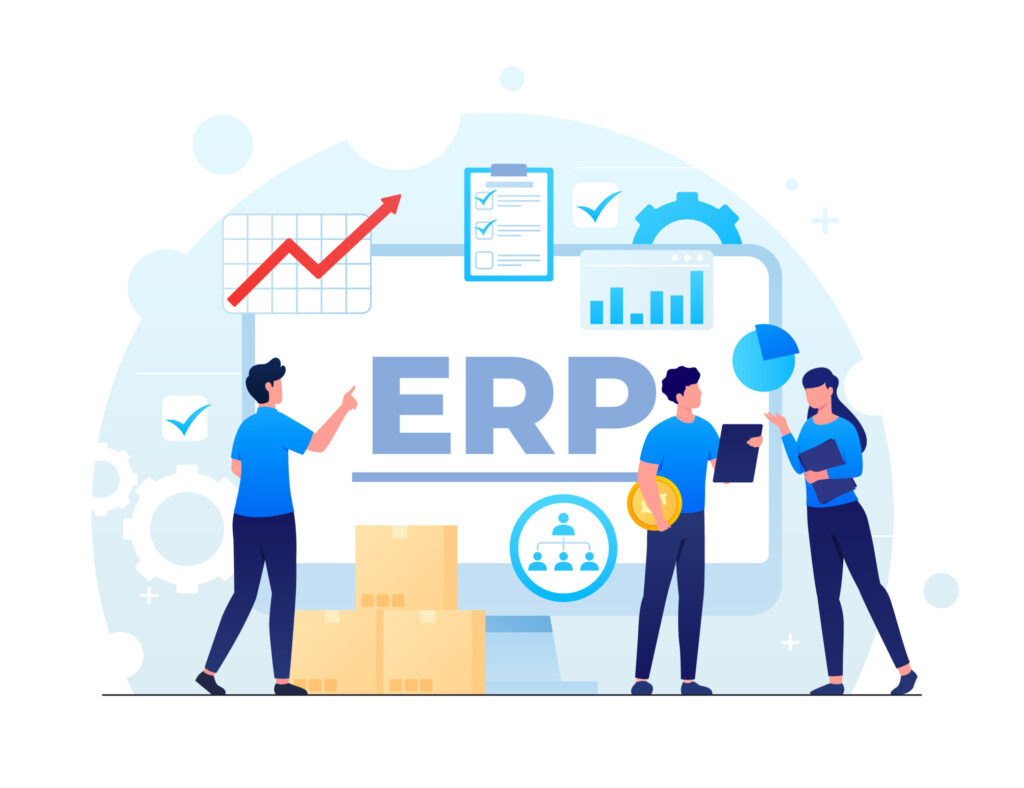
7016016 Basic Concept of ERP In today’s competitive world many major companies have decided to use a popular tool that has evolved over the past few decades. ERP, the descendant of MRP II offers the “answer” to the economic and productivity troubles of manufacturing and service enterprises. Thus, understanding the basic concept of ERP software is very important. In order for a software system to be considered ERP, it must provide an organization with functionality for two or more systems. While some ERP packages exist that only cover two functions for an organization (QuickBooks: Payroll & Accounting), most ERP systems cover several functions. The term ERP originally referred to how a large organization planned to use organizational wide resources. In the past, ERP systems were used in larger more industrial types of companies. However, the use of ERP has changed and is extremely comprehensive, today the term can refer to any type of company, no matter what industry it falls in. In fact, ERP systems are used in almost any type of organization – large or small. ERP systems today can cover a wide range of functions and integrate them into one unified database. For instance, functions such as Human Resources, Supply Chain Management, Customer Relations Management, Financials, Manufacturing functions and Warehouse Management functions were all once stand alone software applications, usually housed with their own database and network, can now fit under one umbrella As in any integrated System or Unit, the performance of each one of the parts of an Enterprise has an impact in his cumulative performance results. Specifically, we can say that a 95% performance in independent vital enterprise elements (Item master, Bills of Materials, Production Master Schedule Adherence, Inventories Accuracy, Production Orders Accuracy and Purchase Orders Accuracy), will reflect a cumulative 75% in a ERP environment. This means a percentage of failure possible in productivity terms. Here is where we should support and combine this useful tool with a business strategy based on the desired administration tendency or theory. On this sense, it is vital to note the point on administration before deciding which ERP solution is the one you will be using, you need to have solid administration principles (no matter which administration tendencies you decide to choose) and strong knowledge of ERP methodology. This will translate into synergy between areas that will allow organizations to have highly effective processes with a continuous success. Only by creating a deep understanding of this philosophy you will have the certainty of obtaining the best results, as well as being in position to face and take proactive actions for any obstacle you could find in the road. If you have not this reference point, your efforts will deliver the wrong results.   Also Read – Best ERP Software for Manufacturing in India

Cloud-based ERP with Artificial intelligence (AI) capabilities holds the key to successful corporate processes in 2025

AI-enabled ERP is the Future of Scalable, Intelligent Business Operations Artificial intelligence (AI), especially machine learning (ML), makes possible more corporate process optimization, fresh insights, and customized consumer interactions. ERP is progressively integrating with other technologies, including social media and internet of things (IoT) devices, to increase automation, boost visibility, and improve customer satisfaction. As businesses depend more and more on distributed workforces, solutions that facilitate remote work using mobile devices have become essential. AI-enabled Cloud ERP system In the past, a lot of businesses relied on on-premises ERP programs and were hesitant to trust the cloud with critical business applications, but this is quickly changing. The most reliable Cloud ERP systems like eresource is being adopted by businesses for several reasons, including easier deployment, reduced costs, elasticity (i.e., the ability to use only the resources required at any given time), new functionality, reduced reliance on internal IT resources (Low Code/No Code features), and the ease with which users and functions can be added to accommodate business growth. Additionally, as more companies move toward more decentralized models, both geographically and functionally, AI-enabled eresource cloud ERP will help facilitate edge computing, which processes data closer to the point of generation rather than sending it to far-off centralized data centers. This improves dependability, security, and speed regardless of the location of employees. Two-tier ERP is the best option for growing business Two-tier ERP is still a popular ERP concept for business growth. A two-tier ERP strategy allows businesses to use their corporate investments in current ERP systems (tier 1) while subsidiaries and divisions use a separate ERP solution (tier 2), which is frequently cloud-based. While smaller company divisions go to solutions that cater to their specific needs, larger firms may still use their core ERP system for financials and other fundamental functions. The capacity to share data between the tiers is one factor that determines how effective this strategy is; increasingly, tier 2 cloud solutions come with built-in integration features for corporate ERP systems, and sophisticated APIs make the integration process easier. There are several advantages to this strategy. Compared to upgrading the corporate ERP system to function for the entire company, it is frequently less expensive. Implementing a tier 2 solution might be easier, and subsidiaries would have greater freedom to adapt to shifting market conditions. Additionally, companies in the high-growth phase might benefit more from the two-tiered approach. Additional technology combined with ERP Modern ERP is a key component of a business’s digital transformation, but it is only one aspect of a larger technological investment. To increase operational efficiency and streamline key procedures, businesses are combining their business apps with other emerging technologies like AI-enabled Cloud ERP systems. Manufacturers can forecast maintenance requirements before a breakdown stops operations by using ERP systems that are AI-enabled to track equipment performance in real time. ERP systems like eresource enabled with AI features and cloud deployment with automated warehouse solutions can also streamline delivery and inventory management in the logistics industry. Additionally, integration with e-commerce platforms is still essential, particularly as companies keep growing their online presence. eresource ERP system, for example, can facilitate the end-to-end order fulfillment process by integrating with e-commerce platforms to speed order processing, inventory updates, payment management, and delivery. All firms place a high priority on digital transformation Digital transformation is still a top priority in all major businesses since it is an ongoing process rather than a one-time project. Modern ERP systems are essential to this shift because they incorporate digital technology into every aspect of business operations, enhancing daily operations, generating income, and boosting competitiveness while also boosting employee productivity and enhancing communication and customer service. eresource ERP system is a sensible place to start or continue with digital transformation because it usually affects the majority of an organization. In order to support and actively promote business innovation and efficiency and align enterprises with the strategic, value-driven goals of digital transformation, the eresource ERP system is progressively integrating AI, IoT, and advanced analytics. Low-Code/ No-Code ERP system makes customization easy and quick In the past, it was challenging to adapt ERP platforms with intricate programming languages to the unique requirements of every company. However, businesses can now benefit from AI-enabled eresource cloud ERP solutions that are developed on quicker to set up “low-code” and “no-code” platforms. Without requiring a great deal of technical know-how, these tools enable businesses and their users to quickly customize the ERP system to meet their unique requirements. ERP solutions with capabilities like highly customized dashboards are necessary as businesses concentrate on providing customers with increasingly individualized, relevant experiences. The increasing usage of AI-based conversational and assisted user interfaces, such as chatbots, which can comprehend user text or voice input and reply to inquiries using customer and order data kept in the ERP system. AI-Driven Understanding and Advancements AI technologies, which are integrated into the ERP, operate in the background to enhance a variety of corporate operations and satisfy the growing demand for customization. In addition to offering AI capabilities as standard features, ERP vendors are now developing these capabilities to take advantage of the newest advancements in AI technology, like generative AI. AI can benefit organizations in several ways, such as: More insights: As businesses collect more operational and customer data than ever before, they are turning to artificial intelligence (AI) to provide insightful business analysis. Large volumes of unstructured data can be scanned by sophisticated AI algorithms, which can then swiftly recognize patterns and forecast different trends that would be impossible to detect with manual number crunching alone. Better procedures: AI aids in the automation and enhancement of several procedures. Take, for instance, a factory that uses a just-in-time inventory strategy, which seeks to reduce inventory carrying costs by delivering components at the last minute. AI in the form of machine learning (ML) can improve labor and supply delivery schedules to boost efficiency and cut expenses. Analytics for Prediction: Organizations’ growing desire to mine their operational and customer data for fresh and pertinent insights that will improve their top and bottom
Search

Request Demo Access
Fill in your details