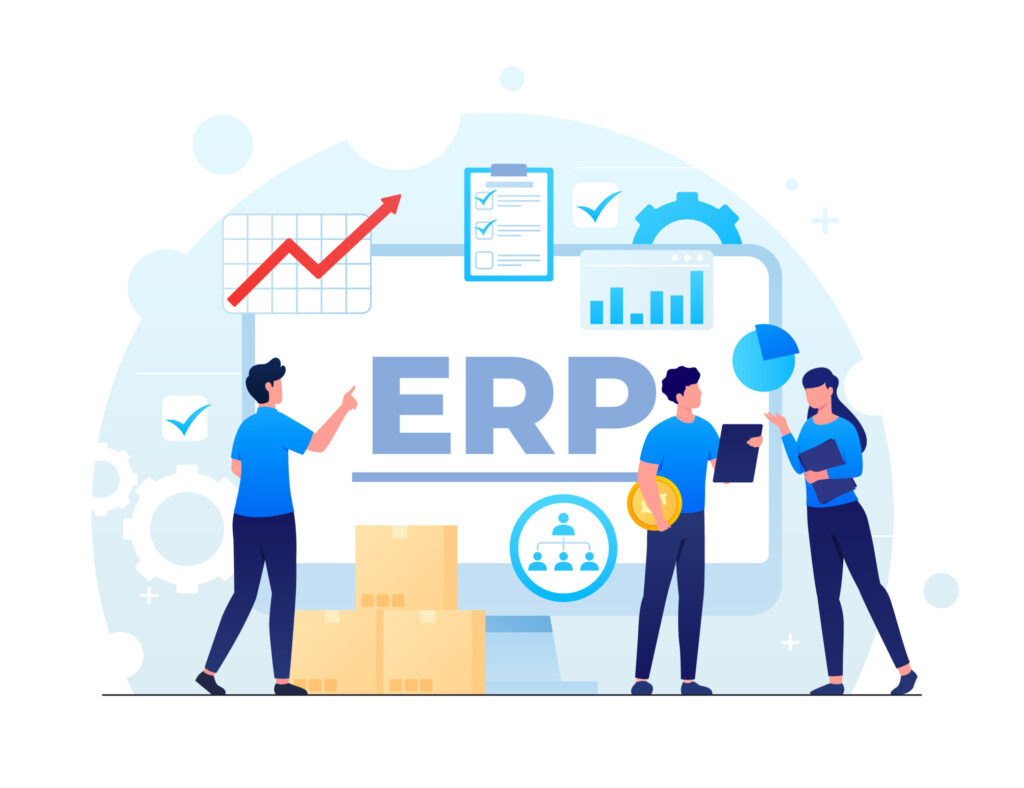
Basic Features of ERP Comparing mid-market ERP packages is not exactly an apples-to-apples type of exercise. Each vendor wraps its mid-market offering with different functionality, tailored to the needs of the kinds of companies the solution is intended for and based on the vendor’s particular areas of expertise. However, almost every mid-market ERP suite shares several basic features of ERP modules: BI, CRM, Financial Management, HCM, Manufacturing Operations and SCM. The differences among solutions tend to be quite granular within these modules. Also, even if different packages offer the same feature – say, sales-order management – it might not be bundled in the same module; some vendors include sales-order management in their CRM suites while others package it in their SCM suites. Key to an ERP package is tight integration between modules, so that all of the core business modules are related. For instance, manufacturing operations are integrated with customer service, logistics and delivery. Also Read – Advantages of ERP solution in printing industry Basic Features of ERP Software are: • Business Intelligence One of the newer components of most modern mid-market ERP packages, BI shines a bright light into the heart of a company’s performance. In general, an ERP suite’s analytics or BI tools allow users to share and analyze the data that the ERP applications collect from across the enterprise from a unified repository. The end result is more informed decision making by everyone from executives to line managers to human-resources professionals to accountants. A variety of automated reporting and analysis tools can help streamline operations, as well as improve an organization’s business performance. With greater control and visibility of data across the enterprise, business leaders can better align the company’s operations with its overarching strategic goals. • CRM (Customer Relationship Management) CRM has long been a core component of any ERP offering, giving manufacturers a way to improve customer service by pulling together tools to fulfill customers’ orders, respond to customers’ service needs, and often, create marketing campaigns to reach customers. Most vendors include sales tools to provide customers with sales quotes, process their orders and offer flexible pricing on their products. Another important CRM component is service management, which may arm customer-service agents with scripts for talking to customers, as well as allow them to authorize product returns and search a knowledge base of support information. The third main component is usually marketing, which may include tools to manage campaigns, create sales literature and develop a library of marketing collateral. Additionally, CRM often has tools for account management, SFA, and opportunity or lead management, as well as self-service tools for customers and an e-commerce storefront builder. Also Read – ERP Software streamline the cosmetic manufacturing process? • Financial Management Of all the ERP modules, the financials applications tend to be the most frequently utilized. Across the board, these include general ledger, accounts receivable and accounts payable, billing, and fixed asset management. Because many mid-market companies deploy ERP to support efforts at breaking into global markets, it is imperative that their ERP packages support multiple currencies and languages. The financial-management applications may also include tools for creating and adhering to budgets, cash-flow management, expense management, risk management and tax management. • HCM (Human Capital Management) For the most part, the HCM module includes tools for human-resources management, performance management, payroll, and time and labor tracking. Some vendors also provide functionality for administering benefits, managing compensation, dealing with salary taxes, recruiting new employees and planning workforce needs. Some also include self-service tools for managers and employees. Even though HCM is generally considered core ERP functionality, some vendors offer it as an add-on module. Also Read – ERP Software in India • Manufacturing Operations The manufacturing module is where much product differentiation happens, including industry-specific functionality. In general, these applications are intended to make manufacturing operations more efficient and simple. Most vendors support different modes of manufacturing, include configurable product capabilities, perform different types of job costing and offer a BOM (bill of materials) tool. Applications often include PDM (Product Data Management), CRP (Capacity Requirements Planning), MRP (Materials Requirements Planning), forecasting, MPS (Master Production Scheduling), work-order management and shop-floor control. Also Read – How can cloud ERP help solar installers reduce soft costs?
An efficient ERP system should be used when businesses begin to see that their current methods are not producing the intended results and are preventing them from trying anything new. The lack of an ERP system may cause information to get lost or sit in the wrong location, frequently resulting in poor decision-making procedures. However, if eresource ERP system is implemented properly, it should be able to address any logistical issue related to paperwork in an organization. Improvements will undoubtedly result from this ERP system, but seeing this through to completion requires a committed management team. eresource ERP system is comprised of numerous modules that work together to form the final configuration. The module for the sales department will encompass all aspects of sales invoices, accounting, creditors, and debtors, among other things. It should enable managers to make decisions based on current tasks, incoming debt, and anticipated sales volume soon. Everything would work much more smoothly with eresource eresource system’s human resource module manages the workforce for the business. It should enable managers to assign the most competent employees to critical roles, improving workload distribution. It will also keep an eye on the employees, alerting supervisors to any issues. It is critical for the stores in a manufacturing organization to be aware of when products are needed and when inventory is running low. The managers should therefore be able to determine what products to order and when to order them by working with sales to ensure that production does not stall. Any factory’s downtime is accounted for as an expense because there are still workers to pay, electricity bills to pay, building upkeep to complete, etc. Then, everything would go much more smoothly if there had been some kind of advance notice. Customer relationship management, also known as a CRM module, handles all customer relations chores. This is crucial for businesses like chains of stores because serving consumers directly generates all of their revenue. This is extremely significant since it gives Customer Service desks documentation and processes and gathers data on complaints, returned goods, and pretty much anything customer-related. eresource ERP serves all industrial sectors The deployment of these modules can first seem a little intimidating because there are numerous of them that are integrated for use by various departments, sections, or branches. The management team and the implementation team must be resolute to get them to operate as a unit and ensure the system’s success. Once an organization has decided to implement eresource ERP system, it is necessary to choose an appropriate package from the range of packages. Today eresource ERP serves many industrial verticals, such as manufacturing, pharmaceuticals, chemicals, automotive, the kitchen industry, fleet management, construction, and infrastructure, among others. eresources ERP software programs interface with many helpful modules, including human resources management, plant management, production management, engineering, finance (which includes robust forecasting and general ledger capability), and so on. The purpose of each of these ERP modules is to enhance the efficiency, communication, and coordination of these crucial back-office departments. The first sector to profit from the usage of eresource ERP software was manufacturing. With improved inventory management, intellectual property tracking, and input/output control, many manufacturing organizations have been using eresource Xcel ERP software applications to optimize production processes and minimize related costs for the past few years. Businesses may also maximize labor utilization, do away with production schedule lag times, and enhance the efficiency of materials management with the help of eresource Xcel ERP software. Please email sales@eresourceinfotech.com to learn about eresource ERP and its variations for different industrial verticals.